

Article details
Aerospace propulsion systems are the heart of aircraft and spacecraft operations. These systems generate the thrust required to move vehicles through the atmosphere and outer space. Over the years, advancements in aerospace propulsion have revolutionized aviation, defense, and space exploration by improving speed, efficiency, reliability, and environmental sustainability.
Traditional propulsion systems such as turbojet and rocket engines laid the foundation for modern aerospace engineering. However, increasing demands for fuel efficiency, reduced emissions, higher speeds, and deep-space exploration have encouraged researchers and industries to develop advanced propulsion technologies.
Today, innovations such as electric propulsion, hypersonic engines, reusable rocket systems, hybrid propulsion, and sustainable aviation fuels are shaping the future of aerospace transportation.
Fundamentals of Aerospace Propulsion
Propulsion systems work based on Newton’s Third Law of Motion:
“For every action, there is an equal and opposite reaction.”
When high-speed gases are expelled backward from an engine, an equal and opposite force called thrust propels the aircraft or spacecraft forward.
The basic thrust equation is:
F = \dot{m}(V_e - V_0)
Where:
( F ) = Thrust force
( \dot{m} ) = Mass flow rate
( V_e ) = Exit velocity of exhaust gases
( V_0 ) = Initial velocity
Modern propulsion systems aim to maximize thrust while minimizing fuel consumption and environmental impact.
Evolution of Aerospace Propulsion Systems
1. Turbojet Engines
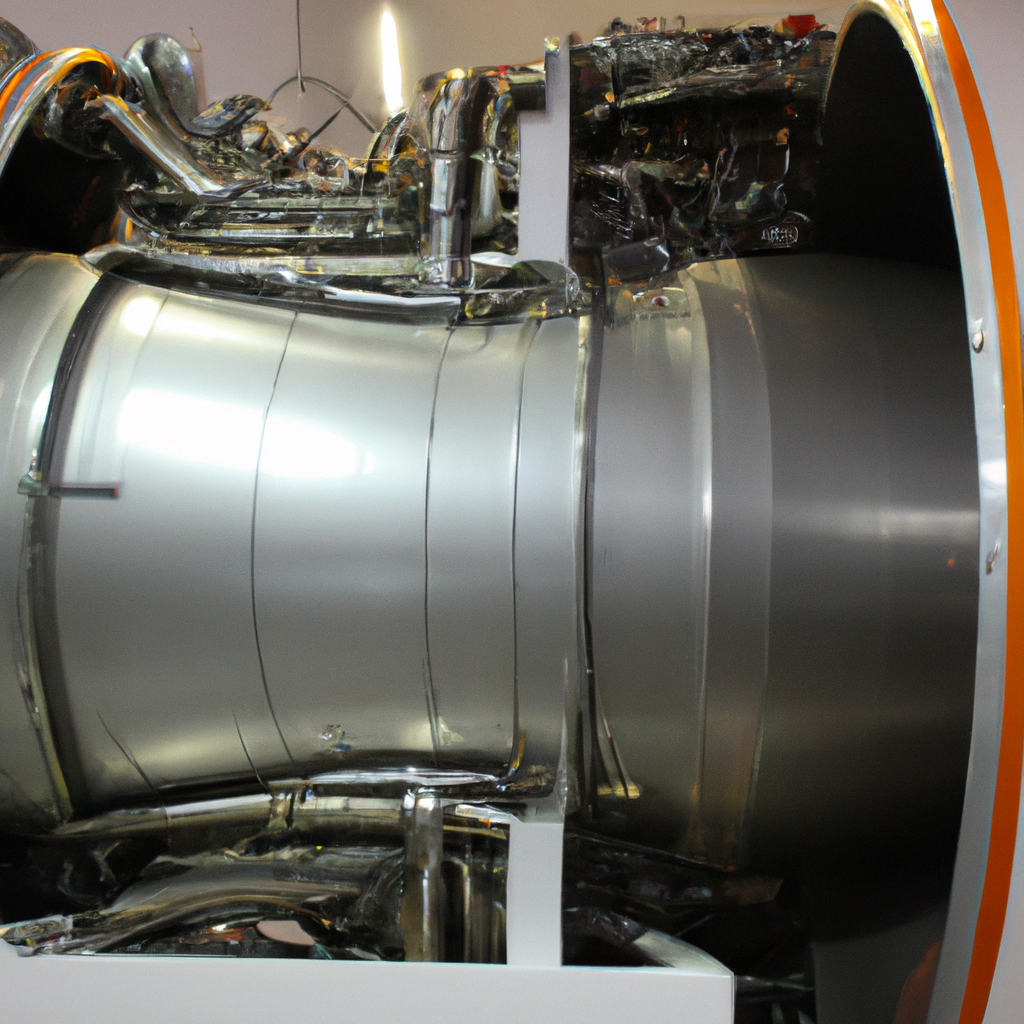
Turbojet engines were among the earliest jet propulsion systems used in military and commercial aviation. They generate thrust by compressing air, mixing it with fuel, and expelling high-speed exhaust gases.
Advantages:
High-speed performance
Simple design
Suitable for supersonic aircraft
Limitations:
High fuel consumption
Excessive noise
Lower efficiency at low speeds
2. Turbofan Engines
Modern commercial aircraft primarily use turbofan engines because of their high efficiency and lower noise levels.
Features:
Large fan produces additional thrust
Better fuel economy
Reduced emissions
Quieter operation
High-bypass turbofan engines have significantly improved commercial aviation efficiency.
Advancements in Rocket Propulsion
Rocket propulsion is essential for space missions because rockets can operate without atmospheric oxygen.
Reusable Rocket Technology
One of the biggest advancements in aerospace propulsion is reusable rocket systems developed by companies such as SpaceX and Blue Origin.
Benefits include:
Lower launch costs
Faster mission turnaround
Improved sustainability
Increased access to space
Reusable boosters have transformed the economics of space exploration.
Cryogenic Rocket Engines
Cryogenic engines use liquid hydrogen and liquid oxygen at extremely low temperatures.
Advantages:
High specific impulse
Greater efficiency
Higher thrust capability
These engines are widely used in advanced launch vehicles and deep-space missions.
Electric Propulsion Systems
Electric propulsion is emerging as a revolutionary technology for both aircraft and spacecraft.
Electric Aircraft Propulsion
Electric propulsion systems use electric motors powered by batteries or fuel cells.
Advantages:
Zero direct emissions
Lower noise pollution
Reduced operating costs
Improved energy efficiency
Many aerospace companies are developing hybrid-electric and fully electric aircraft for short-distance travel.
Ion Propulsion Systems
Ion propulsion systems are widely used in spacecraft for deep-space missions.
Working principle:
Electrically charged ions are accelerated to generate thrust
Advantages:
Extremely fuel efficient
Long operational life
Suitable for long-duration missions
Although ion engines produce low thrust, they can operate continuously for extended periods.
Hypersonic Propulsion Systems
Hypersonic propulsion is one of the most advanced areas in aerospace engineering.
Hypersonic vehicles travel at speeds greater than:
Mach \ 5
Scramjet Engines
Supersonic Combustion Ramjet (Scramjet) engines are designed for hypersonic flight.
Advantages:
Extremely high-speed capability
Efficient at hypersonic speeds
Potential for rapid global travel
Applications:
Military defense systems
Space access vehicles
High-speed transportation
Countries around the world are actively researching hypersonic propulsion technologies.
Sustainable Aviation Fuels (SAF)
Environmental concerns have encouraged the aerospace industry to adopt sustainable aviation fuels.
SAF is produced from:
Biomass
Waste oils
Agricultural residues
Synthetic fuel technologies
Benefits:
Reduced carbon emissions
Compatibility with existing engines
Improved environmental sustainability
Many airlines and aircraft manufacturers are investing heavily in SAF research.
Nuclear Propulsion for Space Exploration
Future deep-space missions may rely on nuclear propulsion systems.
Nuclear Thermal Propulsion (NTP)
Nuclear reactors heat propellant gases to produce thrust.
Advantages:
High efficiency
Reduced travel time to distant planets
Better fuel economy for space missions
Potential applications include:
Mars missions
Deep-space exploration
Long-duration human spaceflight
Artificial Intelligence in Propulsion Systems
Artificial intelligence and digital technologies are improving propulsion system performance through:
Predictive maintenance
Real-time monitoring
Engine optimization
Autonomous flight systems
AI helps reduce maintenance costs and improves operational safety.
Challenges in Advanced Propulsion Systems
Despite rapid advancements, several challenges remain:
High development costs
Thermal management issues
Battery limitations
Material strength at extreme temperatures
Environmental regulations
Safety concerns
Continuous research and innovation are required to overcome these limitations.
Future of Aerospace Propulsion
The future of aerospace propulsion will likely include:
Hydrogen-powered aircraft
Fully electric regional airplanes
Hypersonic passenger transport
Advanced reusable launch systems
Interplanetary propulsion technologies
Green aviation technologies
These developments will reshape global transportation and space exploration.
Conclusion
Advancements in aerospace propulsion systems are driving major technological progress in aviation and space engineering. Innovations such as electric propulsion, reusable rockets, hypersonic engines, and sustainable fuels are improving efficiency, reducing costs, and minimizing environmental impact.
As technology continues to evolve, aerospace propulsion systems will become faster, cleaner, safer, and more efficient, opening new possibilities for air travel and deep-space exploration. These advancements will play a vital role in the future of transportation, defense, and scientific discovery.


 Aug 29, 2026