

Article details
Introduction
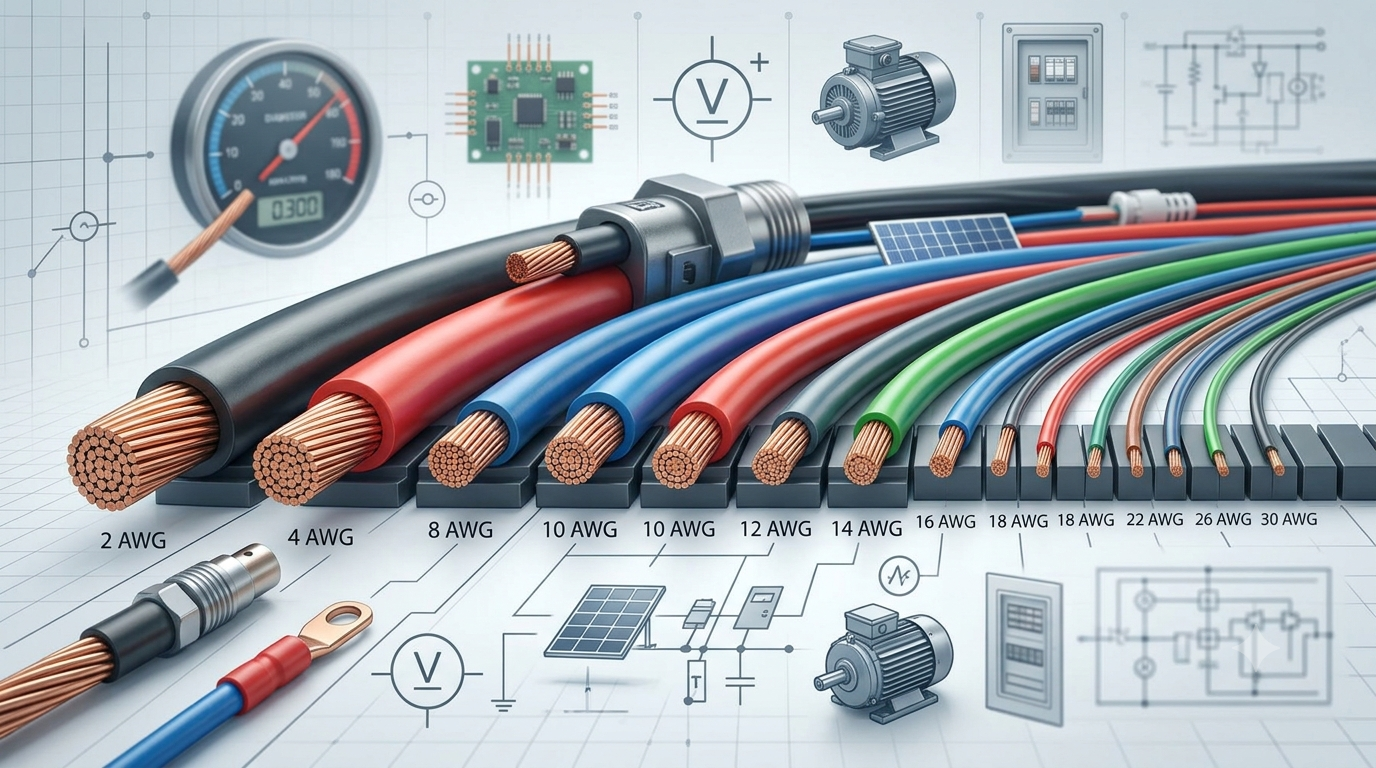
American Wire Gauge (AWG) is a standardized system used to measure the diameter of electrical wires. It is widely used in electrical engineering, electronics, telecommunications, and industrial applications to identify wire sizes and select suitable conductors.
The AWG system helps engineers determine wire diameter, cross-sectional area, electrical resistance, and current-carrying capacity. Selecting the correct wire size is essential for ensuring electrical efficiency, reducing voltage drop, and preventing excessive heating.
What Is American Wire Gauge (AWG)?
American Wire Gauge is a wire-sizing standard developed in the United States. It is also known as Brown & Sharpe wire gauge. The system uses numerical values to represent the diameter of a conductor, excluding its insulation.
One important feature of AWG is that a higher gauge number represents a thinner wire, while a lower gauge number represents a thicker wire. For example, 14 AWG wire is thicker than 22 AWG wire.
The system includes sizes ranging from very thin wires, such as 40 AWG, to larger conductors, such as 4/0 AWG. The notation 4/0 is read as “four aught” and represents a large conductor.
AWG Wire Sizes and Dimensions
AWG charts provide the diameter and cross-sectional area of different wire sizes. These values help engineers compare conductors and select appropriate dimensions for specific applications.
Some commonly used AWG sizes are listed below:
AWG Size | Diameter (mm) | Cross-Sectional Area (mm²) |
|---|---|---|
10 AWG | 2.59 | 5.26 |
12 AWG | 2.05 | 3.31 |
14 AWG | 1.63 | 2.08 |
16 AWG | 1.29 | 1.31 |
18 AWG | 1.02 | 0.82 |
20 AWG | 0.81 | 0.52 |
22 AWG | 0.65 | 0.33 |
24 AWG | 0.51 | 0.20 |
These values are approximate dimensions for solid, round conductors. Stranded wires may have a larger overall diameter because of the spaces between individual strands.
Electrical Resistance and Current Capacity
Wire size directly influences electrical resistance. Thicker wires generally have lower resistance than thinner wires of the same material and length. Lower resistance reduces energy losses and voltage drop during electrical transmission.
The current-carrying capacity, also called ampacity, indicates how much electrical current a conductor can safely carry under specified conditions.
However, ampacity does not depend on wire diameter alone. It is affected by conductor material, insulation type, ambient temperature, installation method, and the number of bundled conductors.
Engineers should therefore consult applicable electrical codes and manufacturer specifications before selecting a wire for a particular application.
Applications of American Wire Gauge
The AWG system is used across several industries:
Electrical installations: Selecting conductors for building wiring and power distribution.
Electronics: Choosing suitable wires for circuit boards, instruments, and electronic devices.
Telecommunications: Sizing conductors for communication and telephone systems.
Automotive engineering: Selecting wires for vehicle electrical circuits and control systems.
Industrial equipment: Identifying conductors for machinery, control panels, sensors, and instrumentation.
Conclusion
American Wire Gauge is an important reference system for identifying electrical wire sizes and comparing conductor dimensions. Understanding AWG numbers, diameter, cross-sectional area, resistance, and current capacity helps engineers make informed wire-selection decisions.
For safe and efficient electrical installations, AWG charts should be used alongside electrical design requirements, applicable standards, and manufacturer recommendations.
