


Article details
Boiling is a heat transfer process in which a liquid changes into vapor when heated to its saturation temperature. It is one of the most effective modes of heat transfer because large amounts of energy are absorbed during the phase change. Boiling can be classified in different ways based on the movement of the fluid and the conditions under which vapor bubbles are formed.
1. Pool Boiling
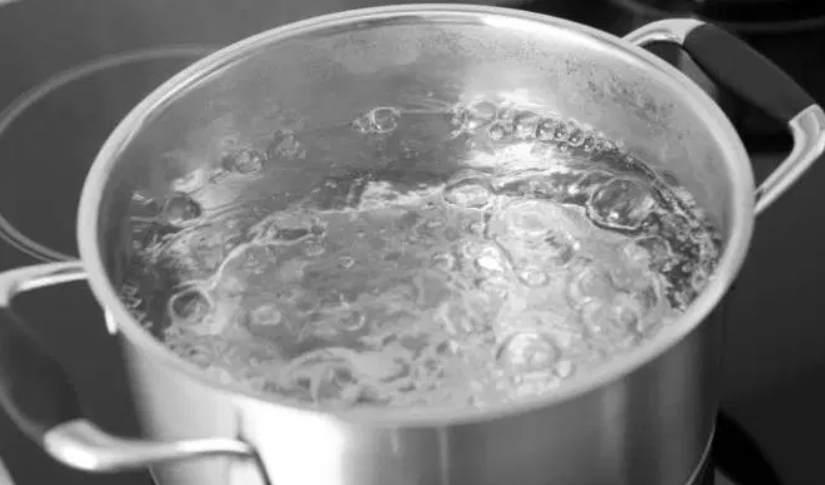
Pool boiling occurs when a heated surface is immersed in a stationary liquid, and the fluid motion is caused only by natural convection and bubble movement. No external force is used to circulate the liquid.
Characteristics:
Liquid remains essentially stagnant.
Heat transfer depends on bubble formation and buoyancy effects.
Commonly studied in laboratories for understanding boiling phenomena.
Examples:
Boiling water in a kettle.
Heating water in an open container.
2. Flow Boiling
Flow boiling occurs when the liquid is forced to move over a heated surface by an external device such as a pump.
Characteristics:
Fluid motion is induced by external forces.
Higher heat transfer rates than pool boiling.
Widely used in industrial heat exchangers and boilers.
Examples:
Steam generators in power plants.
Refrigerant flow in evaporators.
Cooling systems in chemical processing industries.
3. Subcooled Boiling
In subcooled boiling, the bulk liquid temperature is below its saturation temperature, but the heated surface temperature is high enough to generate vapor bubbles.
Characteristics:
Vapor bubbles form near the heated surface.
Bubbles collapse when they move into the cooler liquid.
Enhances heat transfer significantly.
Applications:
Nuclear reactor cooling systems.
High-performance heat exchangers.
4. Saturated Boiling
Saturated boiling occurs when the liquid temperature is equal to its saturation temperature corresponding to the system pressure.
Characteristics:
Vapor bubbles continue to grow and reach the liquid surface.
Large-scale vapor generation takes place.
Most common form of industrial boiling.
Applications:
Steam boilers.
Evaporators.
Power generation systems.
5. Nucleate Boiling
Nucleate boiling occurs when vapor bubbles form at specific nucleation sites on the heated surface and detach into the liquid.
Characteristics:
Very high heat transfer rates.
Efficient cooling and heating.
Stable boiling operation.
Importance:
Nucleate boiling is considered the most desirable boiling regime because it provides maximum heat transfer efficiency.
6. Film Boiling
Film boiling occurs when the heated surface temperature becomes extremely high, creating a continuous vapor layer between the surface and the liquid.
Characteristics:
Vapor film acts as an insulating layer.
Heat transfer rate decreases significantly.
Surface temperatures become very high.
Example:
Water droplets skittering across a red-hot pan due to the Leidenfrost effect.
Comparison of Major Types of Boiling
Type of Boiling | Liquid Motion | Heat Transfer Rate | Typical Application |
|---|---|---|---|
Pool Boiling | Natural circulation | Moderate to High | Kettles, laboratory experiments |
Flow Boiling | Forced circulation | High | Boilers, heat exchangers |
Subcooled Boiling | Forced or natural | Very High | Reactor cooling systems |
Saturated Boiling | Natural or forced | High | Steam generation |
Nucleate Boiling | Bubble-induced mixing | Very High | Industrial boilers |
Film Boiling | Vapor film present | Low | High-temperature surfaces |
Conclusion
Boiling can be classified into pool boiling and flow boiling based on fluid motion, and into subcooled and saturated boiling based on liquid temperature conditions. From a heat transfer perspective, nucleate boiling and film boiling are the most significant regimes. Among all types, nucleate boiling provides the highest heat transfer efficiency and is preferred in most engineering applications, while film boiling is generally undesirable due to its poor heat transfer characteristics.