

Article details
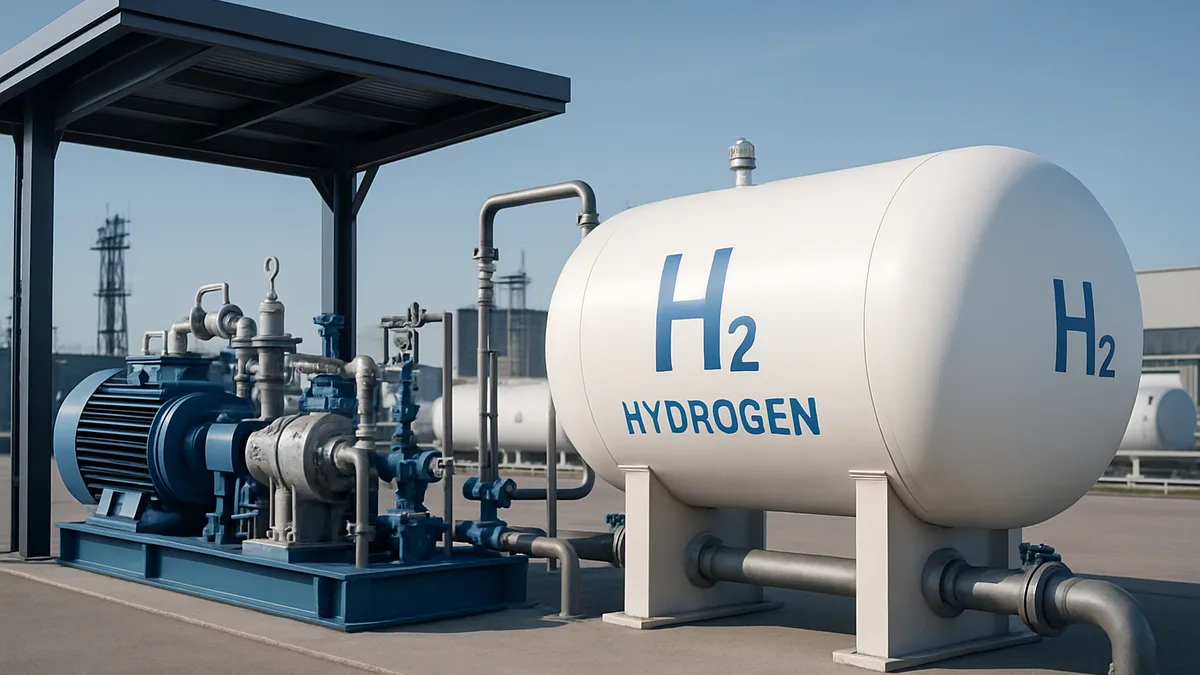
Hydrogen compression is a core part of most hydrogen energy systems. Whether hydrogen is produced by electrolysis, steam reforming, or recovered from industrial processes, it usually must be compressed before storage, transport, or end use. Compression raises the gas pressure so more hydrogen can be stored in a given volume and moved through pipelines or dispensing systems efficiently.
Because hydrogen behaves differently from many industrial gases, compressor selection and operating conditions require careful engineering. Its low molecular weight, high diffusivity, and tendency to leak through small gaps create challenges that influence equipment design, materials, efficiency, and safety.
Engineers working with hydrogen infrastructure often study compression together with purification and storage because these systems are closely linked. A broader overview is available in hydrogen energy introduction and more detailed storage topics are covered in hydrogen energy liquefaction and storage.
Why Hydrogen Compression Matters in Energy Systems
Hydrogen has a high energy content by mass but a low energy density by volume at atmospheric pressure. Compressing the gas solves a practical problem: it allows useful amounts of hydrogen to be stored and transported without extremely large tanks.
Compression appears at several stages in a hydrogen system:
- After hydrogen production, to prepare the gas for storage or distribution
- Before pipeline transport, to maintain flow and overcome pressure losses
- At refueling stations, where vehicle tanks require high-pressure dispensing
- Inside industrial processes that use hydrogen as a feedstock or reducing gas
In many systems, compression is also linked to purification. For example, pressure swing adsorption and membrane separation processes often depend on pressure differences to separate hydrogen from other gases. Related concepts are discussed in hydrogen energy separation and purification methods.
The energy required for compression can be significant. In some hydrogen systems, compressor power becomes a major operating cost, especially at high outlet pressures. For that reason, engineers try to balance storage pressure, transport requirements, and compressor efficiency during system design.
How Hydrogen Is Compressed
Hydrogen compression works by reducing the gas volume and increasing its pressure. The process follows the same thermodynamic principles used for other gases, although hydrogen's properties change the equipment design and operating limits.
During compression, gas temperature rises because work is added to the gas. If the temperature becomes too high, efficiency decreases and materials may be damaged. Most industrial systems therefore use multistage compression with intercooling between stages.
A simplified multistage process looks like this:
- Hydrogen enters the first compressor stage at low pressure.
- The gas is compressed, increasing both pressure and temperature.
- An intercooler removes heat from the gas.
- The cooler gas enters the next stage for additional compression.
- The cycle repeats until the target pressure is reached.
Cooling between stages reduces the work required for later compression and helps protect seals, valves, and lubricants.
Hydrogen compression systems also include:
- Filters to remove contaminants
- Dryers to control moisture
- Pressure relief devices
- Storage vessels or buffer tanks
- Instrumentation for leak detection and temperature monitoring
Understanding gas behavior during compression requires knowledge of fluid properties such as pressure, temperature, density, and compressibility. These fundamentals are reviewed in properties of fluids.
Types of Hydrogen Compressors and Their Applications
Several compressor technologies are used for hydrogen service. The best choice depends on required pressure, flow rate, purity, maintenance needs, and operating environment.
Reciprocating Compressors
Reciprocating compressors use pistons moving inside cylinders to compress gas in stages. They are common in hydrogen applications because they can achieve high pressures and handle varying flow conditions.
Typical applications include:
- Hydrogen refueling stations
- Industrial gas systems
- Pipeline boosting
- High-pressure storage filling
These compressors are mechanically mature and widely available, but they require regular maintenance because valves, seals, and piston rings wear over time.
Diaphragm Compressors
Diaphragm compressors isolate hydrogen from moving mechanical parts using a flexible membrane. This design reduces contamination risk and minimizes leakage.
They are often used where gas purity is critical, such as fuel cell systems or laboratory applications. Their flow rates are usually lower than large reciprocating machines, but they can reach very high pressures safely.
Ionic Liquid Compressors
Ionic liquid compressors use a nearly nonvolatile liquid piston instead of conventional mechanical seals. The liquid helps reduce leakage and contamination while managing heat during compression.
These systems are relatively specialized but are attractive for high-purity hydrogen and reduced maintenance applications.
Centrifugal Compressors
Centrifugal compressors use rotating impellers to accelerate the gas and convert velocity into pressure. They are common in large industrial gas systems but are less common for very high-pressure hydrogen applications because hydrogen's low molecular weight limits achievable pressure rise per stage.
They are best suited to high-flow, moderate-pressure systems.
Electrochemical Compressors
Electrochemical compressors move hydrogen using proton-conducting membranes and electrical potential rather than mechanical pistons.
Advantages include:
- Low contamination risk
- Few moving parts
- Potentially quiet operation
- Direct integration with fuel cell technologies
These systems are still developing for wider industrial deployment but are promising for compact and high-purity applications.
Pressure Levels for Storage, Pipelines and Refueling
Hydrogen systems operate across a wide pressure range depending on the application.
Industrial pipelines may operate at moderate pressures that balance flow requirements, infrastructure cost, and safety considerations. Compressor stations maintain pressure as the gas moves through the network.
Compressed gas storage uses much higher pressures because storage density increases with pressure. Cylinders, tube trailers, and stationary tanks are designed around specific pressure classes.
Vehicle refueling systems generally require very high dispensing pressures to fill onboard storage tanks within practical times. Refueling stations often use cascading storage banks at different pressures so hydrogen can be transferred efficiently into vehicle tanks.
Higher pressure improves storage density but also increases:
- Compressor energy consumption
- Mechanical stress on equipment
- Heat generation during filling
- Material fatigue concerns
For this reason, pressure selection becomes a system-level optimization problem rather than simply maximizing pressure.
Challenges in Compressing Hydrogen
Hydrogen compression creates several engineering challenges that are less severe with heavier industrial gases.
Leakage
Hydrogen molecules are very small and diffuse rapidly through tiny gaps. Seals that perform adequately for natural gas or air may leak significantly in hydrogen service.
Engineers often use specialized sealing systems, welded joints, and continuous leak monitoring to reduce losses and improve safety.
Hydrogen Embrittlement
Some metals become brittle after exposure to hydrogen, especially under high pressure and cyclic loading. This phenomenon can lead to cracking or premature failure.
Material selection therefore becomes critical for compressor cylinders, valves, piping, and storage vessels. Austenitic stainless steels and certain nickel alloys are commonly used where hydrogen compatibility is required.
Heat Generation
Compression increases gas temperature. Because hydrogen has high thermal conductivity and unique thermodynamic behavior, managing heat transfer is important for both efficiency and safety.
Intercoolers, staged compression, and temperature monitoring help control thermal loads.
Lubrication and Contamination
Lubricants can contaminate hydrogen streams, especially in fuel cell applications where impurities may damage catalysts. Oil-free compressor designs are therefore common in high-purity systems.
However, eliminating lubrication can increase wear and maintenance requirements, so engineers must balance purity against mechanical durability.
Safety Standards and Material Considerations
Hydrogen systems require careful safety engineering because hydrogen is flammable across a wide concentration range and has low ignition energy.
Compression systems are typically designed with:
- Pressure relief devices
- Hydrogen leak detectors
- Ventilation systems
- Explosion-resistant electrical equipment
- Emergency shutdown systems
Because hydrogen flames can be difficult to see in daylight, facilities often rely heavily on sensor-based monitoring rather than visual inspection alone.
Material compatibility is equally important. Engineers evaluate metals, elastomers, seals, and coatings for resistance to:
- Hydrogen embrittlement
- Permeation
- Fatigue cracking
- Chemical degradation
High-pressure systems also experience repeated pressure cycling during filling and discharge operations. Fatigue life assessment is therefore an important part of compressor and vessel design.
Codes and standards vary by region and application, but they generally define requirements for pressure vessel design, hazardous area classification, testing, inspection, and leak prevention.
Hydrogen Compression Efficiency and Energy Consumption
Compression consumes a noticeable fraction of the total energy handled in a hydrogen system. The required energy depends mainly on inlet pressure, final pressure, gas temperature, compressor efficiency, and flow rate.
Higher compression ratios generally require more stages and more cooling. If cooling is insufficient, gas temperatures rise and efficiency decreases.
Several approaches improve efficiency:
- Using multistage compression with intercooling
- Reducing unnecessary pressure drops in piping
- Selecting compressors that operate near their design point
- Recovering or reusing waste heat where practical
- Matching storage pressure to actual operational needs
System integration also matters. For example, electrolyzers that produce hydrogen at elevated pressure may reduce downstream compression requirements. Similarly, optimized storage and transport strategies can lower total compression work across the supply chain.
As hydrogen infrastructure expands, improving compressor reliability and efficiency will remain an important engineering challenge. Compression affects nearly every part of the hydrogen value chain, from production and storage to transport and final use. A detailed study of these systems is available in hydrogen energy compression and storage.