

Article details
Introduction
DC motors are widely used in industrial machinery, conveyors, pumps, automation systems, electric vehicles, and material handling equipment. Understanding full load current (FLC) helps engineers select suitable electrical components and ensure reliable motor operation.
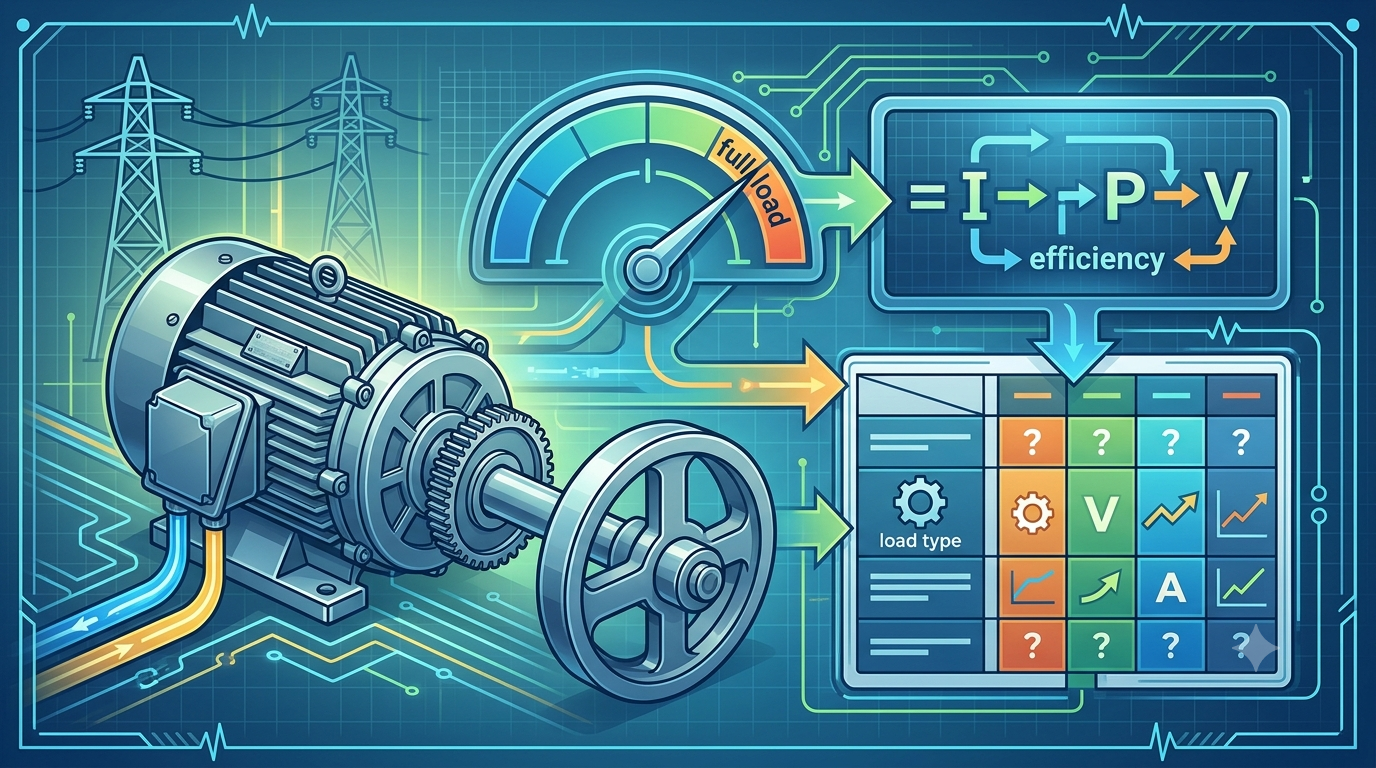
Full load current is the current drawn by a motor when delivering its rated mechanical output under specified operating conditions. It is useful for selecting cables, motor controllers, protective devices, and power supplies.
The current drawn by a DC motor depends on its power rating, supply voltage, efficiency, and mechanical load. Common voltage ratings include 120 V and 240 V.
What Is DC Motor Full Load Current?
DC motor full load current is the electrical current required when a motor operates at its rated load and voltage. It is measured in amperes (A).
Full load current helps engineers:
Select suitable electrical cables and conductors.
Determine motor controller ratings.
Choose appropriate overload protection.
Estimate power supply requirements.
Monitor motor performance during maintenance.
Reduce the risk of overheating and electrical damage.
Continuous operation under excessive load can increase current, damage winding insulation, and shorten motor service life.
DC Motor Current at 120 V and 240 V
Supply voltage affects the current required to deliver a particular power output. For motors with the same output power and similar efficiency, a higher voltage generally results in lower current.
120 V DC Motors
A 120 V DC motor draws current according to its power rating, efficiency, and operating load.
Important considerations include:
Selecting cables with sufficient current-carrying capacity.
Checking voltage drop across the conductors.
Installing suitable overload and short-circuit protection.
Ensuring compatibility with the DC power supply.
240 V DC Motors
A 240 V DC motor generally draws less current than a comparable 120 V motor delivering the same output power at similar efficiency.
Important considerations include:
Lower current demand for equivalent power output.
Reduced conductor losses under comparable operating conditions.
Correct selection of motor controllers and protective devices.
Compliance with manufacturer specifications and electrical standards.
Actual current depends on motor design, efficiency, load, and operating conditions.
DC Motor Full Load Current Formula
The basic electrical power formula is:
P(in) = V × I
Therefore:
I = P(in) / V
Where:
I = Current in amperes (A).
P(in) = Electrical input power in watts (W).
V = Supply voltage in volts (V).
When the motor output power is specified in horsepower, the estimated current can be calculated using:
I = (HP × 746) / (V × η)
Where:
HP = Motor output power in horsepower.
746 = Approximate watts per horsepower.
V = Rated DC voltage.
η = Motor efficiency expressed as a decimal.
For example, an efficiency of 85% is represented as 0.85.
Example Calculation
Consider a 2 HP DC motor operating at 120 V with an efficiency of 85%.
Step 1: Calculate the mechanical output power.
P(out) = 2 × 746 = 1492 W
Step 2: Calculate the electrical input power.
P(in) = 1492 / 0.85
P(in) ≈ 1755.3 W
Step 3: Calculate the current.
I = 1755.3 / 120
I ≈ 14.63 A
The estimated full load current is approximately 14.63 A. Actual current should be verified against the motor nameplate and manufacturer specifications.
DC Motor Full Load Current Table
The following table provides indicative reference values for DC motors operating at 120 V and 240 V.
Motor Rating (HP) | Current at 120 V (A) | Current at 240 V (A) |
|---|---|---|
1/4 | 3.1 | 1.6 |
1/3 | 4.1 | 2.0 |
1/2 | 5.4 | 2.7 |
3/4 | 7.6 | 3.8 |
1 | 9.5 | 4.7 |
1.5 | 13.2 | 6.6 |
2 | 17.0 | 8.5 |
3 | 25.0 | 12.2 |
5 | 40.0 | 20.0 |
7.5 | 58.0 | 29.0 |
10 | 76.0 | 38.0 |
Note: These values are illustrative reference figures and may not represent every DC motor. Actual current varies with motor design, efficiency, and manufacturer specifications.
How to Use the Current Table
Identify the motor's rated horsepower.
Check the rated DC voltage on the nameplate.
Find the corresponding horsepower in the table.
Read the current under the correct voltage column.
Verify the value using manufacturer documentation.
Consider starting current and applicable electrical standards when selecting equipment.
If the required motor rating is not listed, estimate the current using the power, voltage, and efficiency formula.
Factors Affecting DC Motor Current
Several electrical and mechanical factors influence the current drawn by a DC motor.
1. Motor Power Rating
Higher-power motors generally draw more current at the same voltage.
Current requirements depend on mechanical output and motor efficiency.
Correct motor sizing helps prevent continuous overloading.
2. Supply Voltage
Higher voltage generally reduces current for an equivalent power requirement.
Lower voltage may increase current demand when the same output must be maintained.
The operating voltage must remain within the manufacturer's specified limits.
3. Motor Efficiency
Efficient motors require less electrical input power for the same mechanical output.
Higher energy losses increase input power and current requirements.
Winding resistance, friction, and magnetic losses affect efficiency.
4. Mechanical Load
Increasing mechanical load generally increases motor current.
Excessive loading can cause overheating and reduced performance.
Current monitoring helps identify overloads and mechanical problems.
5. Starting Current
DC motors may draw significantly higher current during startup.
Starting current depends on armature resistance, motor design, and starting conditions.
Suitable starters and controllers can limit starting current and reduce electrical stress.
Importance of Full Load Current in Motor Design
Full load current supports several electrical engineering activities.
Cable selection: Determines the required conductor current-carrying capacity.
Motor protection: Helps engineers select suitable overload protection.
Controller selection: Helps match the controller to the motor's voltage and current requirements.
Power supply sizing: Assists in estimating the capacity required from the DC source.
Preventive maintenance: Helps identify abnormal current consumption and possible faults.
Energy management: Supports the assessment of motor loading and operating efficiency.
Full load current alone is not sufficient to determine every protective-device rating. Starting conditions, equipment characteristics, installation requirements, and applicable electrical codes must also be considered.
Applications of DC Motor Current Tables
DC motor current tables are useful in several engineering applications.
Industrial automation: Selecting motors and controllers for production machinery.
Material handling: Designing conveyor systems, lifting equipment, and transport machinery.
Electric vehicles: Estimating current requirements for DC drive systems.
Maintenance and troubleshooting: Identifying overloads, mechanical resistance, and electrical faults.
Electrical system design: Estimating conductor, switching equipment, and power supply requirements.
These tables provide preliminary guidance but should not replace verified manufacturer data.
Common Mistakes in DC Motor Current Calculation
Avoid the following errors when estimating motor current.
Ignoring motor efficiency when calculating current from output power.
Using incorrect horsepower or voltage ratings.
Applying AC motor current data directly to DC motors.
Overlooking the higher current that may occur during startup.
Selecting cables and protective devices using estimated current alone.
Failing to check the motor nameplate and manufacturer specifications.
Correct calculations and appropriate equipment selection improve motor safety, reliability, and operating performance.
Conclusion
DC motor full load current is an important parameter in motor selection, electrical design, and preventive maintenance. It helps engineers estimate electrical requirements and choose suitable cables, controllers, and protective equipment.
Motor current depends on horsepower, supply voltage, efficiency, and mechanical load. Formulas and reference tables provide useful starting points, but final equipment selection should be based on verified manufacturer specifications and applicable electrical standards.
