

Article details
1. Introduction: The Failure of Conventional Urban Drainage
Urban areas are increasingly vulnerable to flash flooding driven by severe cloudbursts and intense storm events. Traditional urban stormwater management relies heavily on static, gravity-fed infrastructure—such as underground pipe networks and concrete channels—designed using historical rainfall return periods. However, rapid urbanization, expanding impervious surfaces, and changing climate patterns frequently overwhelm these legacy systems.
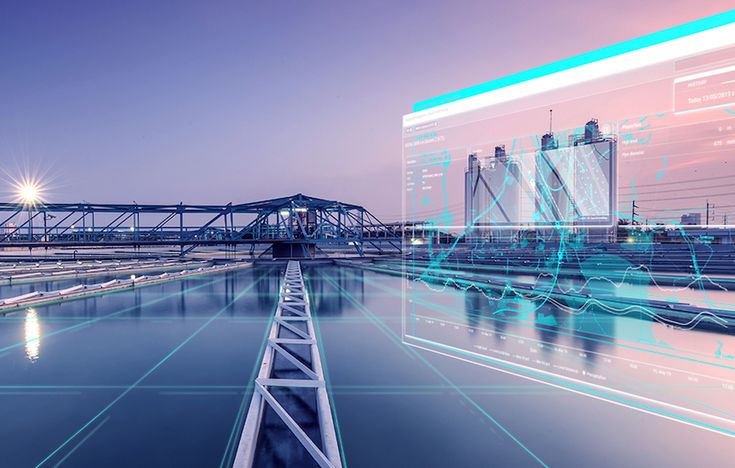
When heavy rainfall strikes a densely built environment, traditional networks often suffer from localized pipe surcharging, capacity bottlenecks, and surface runoff accumulation. To overcome these limitations, modern civil and water resources engineering is turning toward Digital Twins of urban stormwater networks. A digital twin creates a living, virtual 3D replica of a city's drainage infrastructure, merging real-time IoT sensor telemetry with advanced hydrodynamic simulation to predict floods before they occur and automate emergency response.
2. Technical Mechanism: Coupling IoT Telemetry with 1D-2D Hydrodynamic Models
A fully functional stormwater digital twin relies on the real-time integration of live field data and high-performance numerical modeling.
A. Real-Time IoT Sensor Integration
The digital twin continuously ingests live data streams from a dense sensor network deployed across the urban watershed:
Rain Gauges & Radar Feeds: Track spatial rainfall distribution and intensity in real time.
Ultrasonic Water Level Meters: Monitor surcharging levels inside manholes, junction boxes, retention basins, and open drainage channels.
Smart Actuators: Provide status feeds and remote control over automated sluice gates, retention basin pumps, and flow-control valves.
B. Coupled 1D-2D Hydrodynamic Modeling
To simulate water movement accurately, the digital twin couples two distinct numerical domains:
1D Pipe Network Modeling (e.g., SWMM): Simulates pressure flow, open-channel flow, and pipe surcharging within the underground sewer and stormwater network.
2D Overland Flow Modeling: Solves the shallow water equations across an unstructured digital surface mesh. When underground pipes surcharge, excess water overflows onto the surface, where the 2D engine models complex street-level inundation paths, pooling, and flow velocities.
By utilizing GPU-accelerated computing, these coupled models can ingest live weather data and forecast surface flooding 30 to 60 minutes in advance with high spatial accuracy.
3. Practical Applications in Municipal Flood Management
Integrating digital twins into municipal stormwater management transforms how cities handle severe weather events:
A. Proactive Asset Operation and Automated Control
Rather than reacting to floods after streets are already submerged, digital twins allow automated control systems to optimize retention capacities proactively. When heavy rainfall is forecasted, the system can automatically trigger pre-emptive sluice gate openings to drain retention basins, maximizing underground storage before peak runoff arrives.
B. Emergency Response and Evacuation Planning
During extreme storms, real-time inundation mapping helps municipal emergency services identify impassable underpasses, flooded intersections, and vulnerable critical infrastructure. This data enables authorities to deploy mobile pumps, reroute traffic, and issue targeted evacuation warnings well in advance.
Conclusion
Digital Twins for urban stormwater networks represent a major leap forward in water resources engineering. By coupling real-time IoT sensor data with advanced 1D-2D hydrodynamic modeling, cities can transition from reactive flood management to proactive, predictive control. Embracing digital twin technology ensures that modern urban centers can effectively mitigate flash floods, protect municipal assets, and build long-term hydrological resilience.