

Article details
1. Introduction: Overcoming EV Infrastructure Hurdles
As global transportation shifts rapidly toward electrification, the widespread adoption of electric vehicles (EVs) faces persistent infrastructure hurdles. Chief among these are range anxiety, long charging downtimes at stationary plug-in stations, and the massive battery sizes required to support long-distance freight and passenger travel.
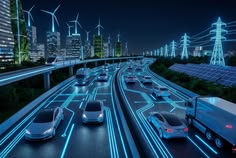
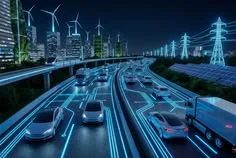
To overcome these limitations, civil and electrical engineers are pioneering Dynamic Wireless Power Transfer (DWPT) embedded directly into smart highway networks. Rather than forcing vehicles to pull over and plug in, dynamic wireless charging enables EVs to receive a continuous flow of electricity while driving at highway speeds.
2. Technical Mechanism: How Wireless Charging Roads Work
Dynamic wireless charging relies on resonant inductive coupling technologies to transfer electrical energy across an air gap from the road surface to a moving vehicle.
A. Core System Architecture
A smart wireless charging highway integrates several core electrical and mechanical components:
Primary Coils: Inductive transmitter coils embedded beneath the wearing course of the pavement surface.
Power Supply & Conversion Units: Substation hardware that converts standard grid alternating current (AC) into high-frequency AC suitable for efficient wireless power transfer.
Switching & Controller Units: Smart electronic switches that activate coil segments only when an authorized vehicle is directly overhead.
Vehicle Receiver Coils: Underbody coils mounted on the EV that capture the magnetic field and convert it back into direct current (DC) to charge the battery.
3. Pavement Engineering and Structural Integration
Integrating electrical coils and wiring harnesses directly into highway pavements introduces unique civil engineering challenges. Pavement layers must be engineered to withstand heavy axle loads (Equivalent Single Axle Loads, or ESALs) without compromising structural integrity or electrical efficiency.
Pavement structures incorporate high-durability, non-magnetic fiber-reinforced concrete or specialized composite layers to house embedded hardware safely.
Materials are selected to prevent micro-cracking and differential settlement around coil enclosures caused by continuous heavy truck traffic.
Waterproofing membranes and drainage layers protect internal electrical connections from moisture ingress and freeze-thaw degradation.
4. Smart Infrastructure and IoT Integration
Modern dynamic charging highways merge transportation electrification with the Internet of Things (IoT) to ensure safety, efficiency, and automated billing.
Roadside and in-pavement sensors detect vehicle presence, speed, and alignment in real time.
Intelligent switching units automatically magnetize primary coils only when a vehicle passes overhead and instantly demagnetize them once the vehicle exits, ensuring total safety for pedestrians and non-equipped vehicles.
Cloud-based platforms handle automated authentication, energy metering, and dynamic billing as vehicles travel along the electrified corridor.
Conclusion
Dynamic Wireless EV Charging embedded in smart highways represents a revolutionary leap forward in civil and transportation engineering. By transforming roads into active energy-delivery networks, DWPT eliminates range anxiety, reduces the need for massive onboard vehicle batteries, and streamlines long-distance commercial logistics. As global pilot projects continue to scale, electrified smart highways are set to redefine the future of sustainable mobility.