

Article details
Introduction
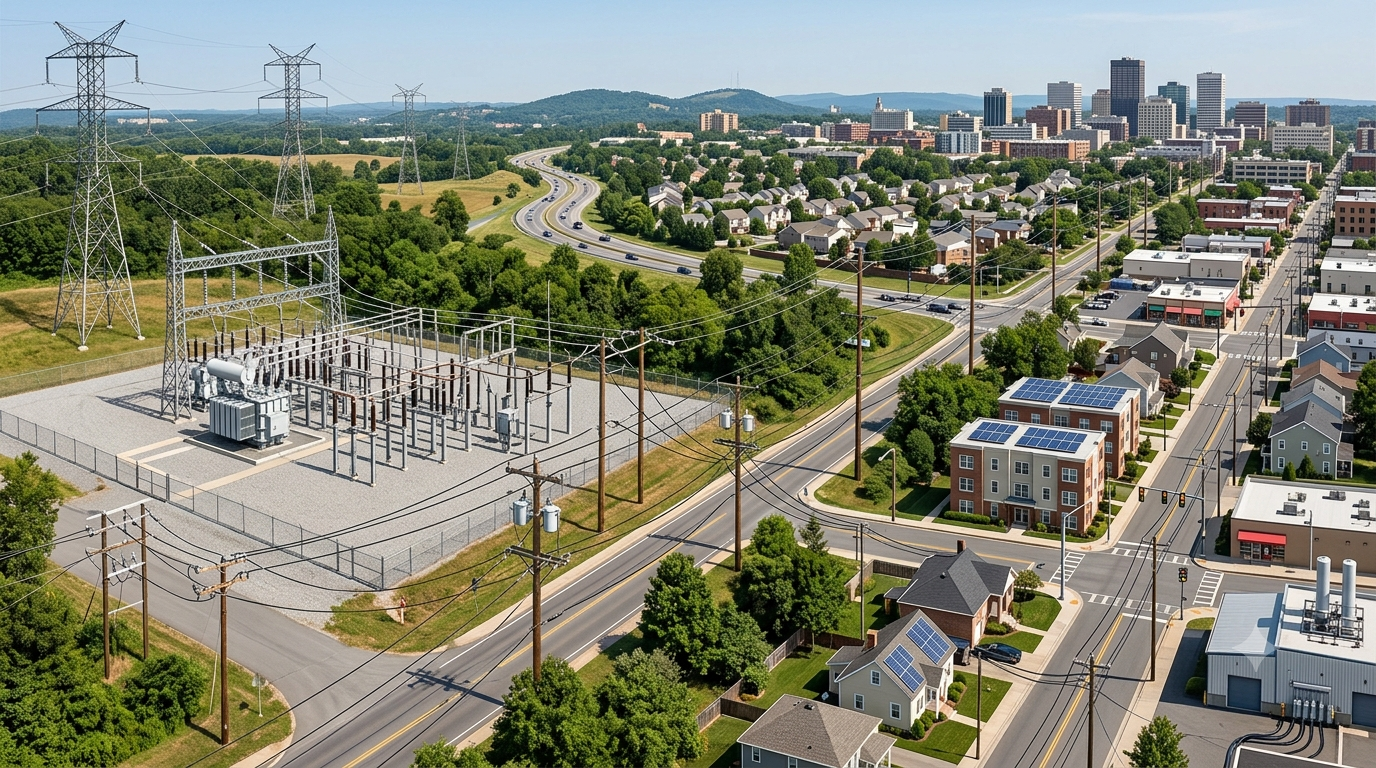
An electrical distribution system is an essential part of the power supply network that delivers electricity from substations to homes, commercial buildings, industries, and other consumers. It ensures that electrical power generated at power plants reaches end users safely, reliably, and efficiently.
Electricity is transmitted over long distances at high voltages to reduce power losses. Before reaching consumers, the voltage is reduced through substations and transformers to suitable levels for different applications. The electrical distribution system manages this final stage of power delivery.
A well-designed distribution system helps maintain a stable power supply, improves operational safety, reduces energy losses, and supports the growing demand for electricity in residential, commercial, and industrial sectors.
What Is an Electrical Distribution System?
An electrical distribution system is a network of electrical equipment, conductors, transformers, switchgear, and protective devices that transfers electricity from a distribution substation to individual consumers.
Its primary purpose is to deliver electricity at the required voltage while maintaining safety, reliability, and power quality.
Electrical distribution systems are designed according to factors such as consumer demand, geographical location, load density, operating voltage, and the level of reliability required.
Main Components of an Electrical Distribution System
An electrical distribution network consists of several interconnected components that work together to deliver electricity efficiently.
1. Distribution Substation
A distribution substation receives electrical power from the transmission network and reduces the voltage to a level suitable for local distribution.
It contains transformers, circuit breakers, isolators, busbars, and protection systems. These components help control power flow, isolate faulty equipment, and maintain reliable operation.
2. Distribution Transformers
Distribution transformers reduce medium-voltage electricity to the voltage required by end users. For example, they may supply low-voltage electricity to residential buildings, commercial facilities, and small industrial loads.
Transformer ratings and configurations are selected according to the expected electrical demand and the characteristics of the connected loads.
3. Feeders
Feeders carry electrical power from substations to distribution areas. They generally have limited intermediate tapping compared with distributors, allowing their current-carrying capacity to be designed around the expected load.
Feeders may be installed overhead on poles or underground through insulated cables.
4. Distributors
Distributors are conductors from which connections are provided to individual consumers. Electrical loads are connected at different points along a distributor.
Because current is drawn at multiple locations, the current varies along its length. Voltage drop is therefore an important factor when designing distributors.
5. Service Mains
Service mains connect the local distribution network to an individual consumer's premises. They supply electricity to residential buildings, offices, shops, and industrial facilities.
Meters, main switches, and other protective equipment are installed as required to support safe electricity usage and monitoring.
6. Switchgear and Protective Devices
Switchgear and protection equipment help control the distribution network and protect it against electrical faults.
Common devices include:
Circuit breakers for interrupting fault currents.
Fuses for protecting circuits against excessive current.
Isolators for safely disconnecting equipment during maintenance.
Relays for detecting abnormal electrical conditions.
Surge protection devices for limiting damaging voltage transients.
Correctly coordinated protection reduces equipment damage and helps limit power interruptions.
How Does an Electrical Distribution System Work?
The electrical distribution process involves several stages, beginning with power received from the transmission network and ending with electricity consumption.
Power reception: A distribution substation receives electricity from the high-voltage transmission network.
Voltage reduction: Power transformers reduce the incoming voltage to a suitable medium-voltage distribution level.
Feeder distribution: Feeders carry electricity from the substation to different local distribution areas.
Local transformation: Distribution transformers reduce the voltage further to meet consumer requirements.
Consumer connection: Distributors and service mains deliver electricity to homes, offices, and industrial facilities.
Protection and monitoring: Circuit breakers, relays, meters, and monitoring systems help maintain safe and reliable operation.
The voltage levels used at each stage depend on the country's electrical standards, utility practices, and the type of consumer being supplied.
Types of Electrical Distribution Systems
Electrical distribution systems can be classified according to their construction, network arrangement, and method of supplying power.
1. Overhead Distribution System
An overhead distribution system uses conductors supported by poles or towers to deliver electricity.
It is commonly used in suburban, rural, and many urban areas because it is comparatively economical to install and easier to inspect.
Advantages:
Lower initial installation cost in many locations.
Easier access for inspection and maintenance.
Faults can often be identified visually.
Repairs may be completed without extensive excavation.
Disadvantages:
Greater exposure to storms, lightning, falling trees, and other environmental conditions.
Visual impact on the surrounding area.
Potential safety risks if conductors are damaged or accessible.
2. Underground Distribution System
An underground distribution system uses insulated cables installed below ground in trenches, ducts, or cable tunnels.
It is commonly preferred in densely populated urban areas, commercial developments, and locations where appearance or restricted space is important.
Advantages:
Reduced exposure to wind, falling trees, and certain weather-related faults.
Improved visual appearance.
Better protection against accidental contact in properly designed installations.
Disadvantages:
Higher installation costs in many applications.
Fault location and cable repair can be more difficult.
Excavation and specialised equipment may be required for maintenance.
The choice between overhead and underground distribution depends on cost, site conditions, reliability requirements, and long-term maintenance considerations.
3. Radial Distribution System
In a radial distribution system, electricity flows from a single source through one main path to consumers.
This arrangement is simple and economical, making it suitable for many residential areas and small distribution networks.
However, a fault on the main supply path may interrupt electricity to all consumers downstream of the fault. Reliability can be improved through suitable protection and sectionalising equipment.
4. Ring Main Distribution System
A ring main distribution system connects distribution points in a closed-loop arrangement. Electricity can potentially reach consumers from different directions, depending on the network configuration and switching arrangement.
If a fault occurs on one section, the affected section can be isolated and supply may be restored through an alternative path.
Ring main systems are useful in urban networks, commercial complexes, and industrial facilities where improved supply continuity is important.
5. Interconnected Distribution System
An interconnected distribution system connects multiple substations or distribution networks. This arrangement provides alternative power supply paths and allows utilities to transfer loads between network sections.
It can improve reliability, operational flexibility, and the use of available network capacity. However, planning, protection coordination, and system control are more complex than in a simple radial network.
AC and DC Distribution Systems
Electrical distribution systems can also be classified according to the type of electrical current supplied.
AC Distribution System
Alternating current (AC) distribution is widely used in public electricity networks. AC voltage can be increased or reduced efficiently using transformers, making it suitable for power transmission and distribution.
Single-phase AC is commonly used for many residential applications, while three-phase AC is widely used in commercial buildings and industrial facilities.
DC Distribution System
Direct current (DC) distribution supplies electricity with current flowing in one direction. DC systems are used in applications such as data centres, telecommunications, battery storage, electric vehicles, and renewable energy installations.
Although conventional electricity networks predominantly use AC distribution, DC systems are gaining attention for specialised applications because many electronic devices, batteries, and renewable energy components operate internally on DC.
Important Factors in Distribution System Design
Engineers consider several factors when designing an electrical distribution network.
Load demand: The system must support present demand and anticipated future growth.
Voltage regulation: Voltage must remain within acceptable limits under different loading conditions.
Power losses: Conductor sizing and transformer selection help reduce resistive and other electrical losses.
Reliability: Appropriate network configurations and backup supply arrangements help minimise interruptions.
Safety: Earthing, insulation, protective devices, and safe clearances are essential.
Cost: Installation, operation, maintenance, and equipment replacement costs must be considered.
Environmental conditions: Temperature, humidity, pollution, flooding, and weather can affect equipment selection and installation methods.
Future expansion: The network should accommodate additional consumers and increasing electrical demand.
Challenges in Modern Electrical Distribution Systems
Modern distribution networks face increasing pressure due to population growth, industrial development, electric vehicle charging, and the integration of renewable energy sources.
One major challenge is maintaining voltage stability when loads fluctuate or distributed generation changes. Another is managing ageing infrastructure and reducing power interruptions.
Smart meters, automated switches, digital protection relays, remote monitoring, and advanced distribution management systems can help utilities detect faults faster and manage power flow more effectively.
Integrating rooftop solar systems, battery storage, and electric vehicle chargers also requires careful planning to prevent overloading and maintain power quality.
Conclusion
An electrical distribution system plays a vital role in delivering electricity safely and reliably from substations to end users. Its main components include distribution substations, transformers, feeders, distributors, service mains, and protective devices.
Different configurations, such as radial, ring main, and interconnected systems, offer varying levels of cost, flexibility, and reliability. Overhead and underground installations also serve different practical requirements.
As electricity demand increases and modern technologies become more widespread, efficient distribution system design, proper maintenance, and intelligent monitoring will remain essential for a stable and dependable power supply.
