


Article details
Decarbonisation in the downstream sector is increasingly defined not by individual breakthrough technologies, but by how effectively different solutions can be integrated across the value chain. From feedstock selection and pretreatment to energy management and the deployment of low-carbon process technologies, refiners are under pressure to reduce emissions while maintaining operational reliability and economic performance.
In Europe, rising energy costs, tightening environmental regulations and growing competition from regions with lower operating expenses are forcing petrochemical and refining companies to rethink how existing assets can be adapted for a low-carbon future. Measurable progress now depends on system-level improvements.
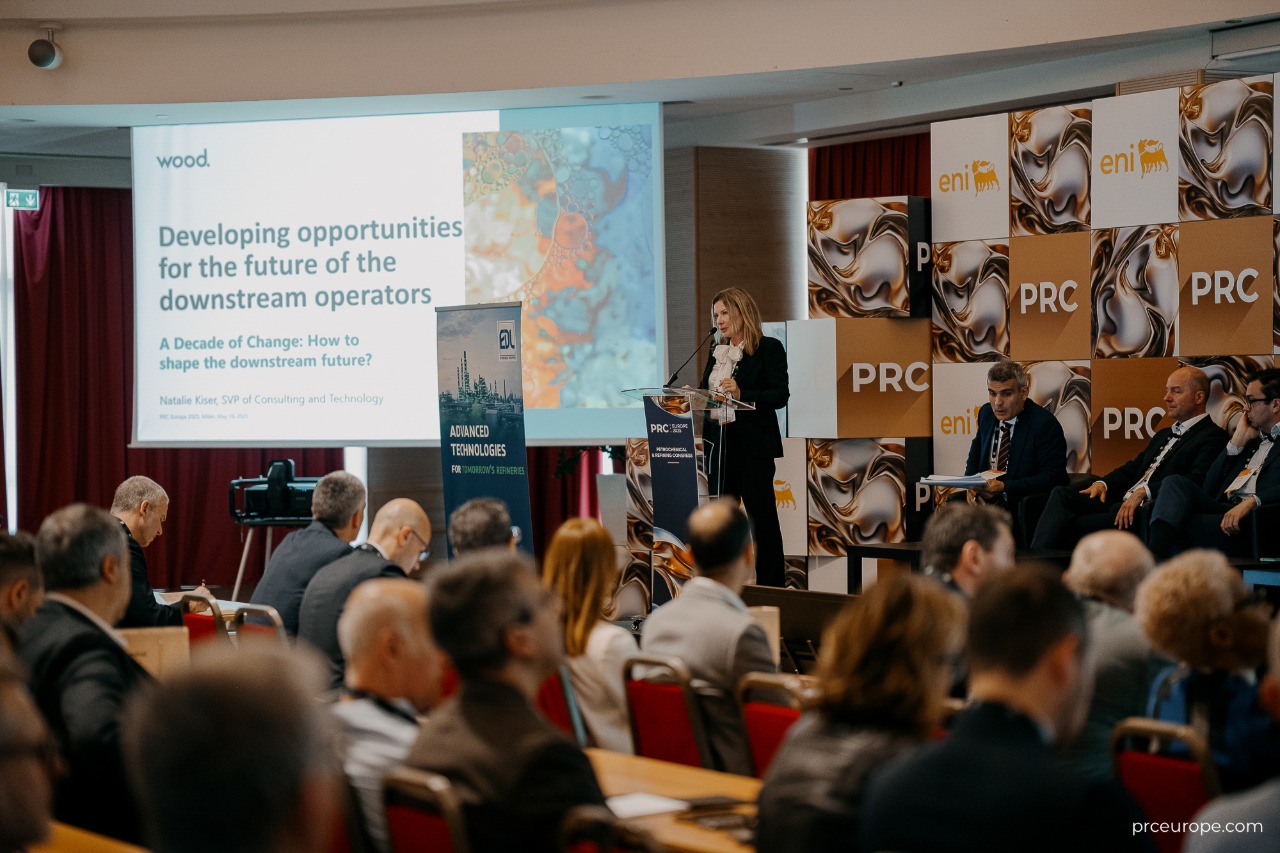
These challenges are going to be central to the discussions at the Petrochemical and Refining Congress: Europe 2026 (May 18-19, Amsterdam). During the event, oil and chemical companies, refineries and petrochemical plants, EPC and licensors together with service providers and equipment manufacturers are going to discuss and examine practical pathways to decarbonisation grounded in real operating conditions.
This article outlines key topics for upcoming PRC Europe 2026 and frames the role of integrated approaches in aligning environmental targets with long-term profitability.
Feedstock flexibility as the foundation for scalable biofuels
In the current landscape, the scalability of low-carbon fuels depends less on demand-side incentives and more on the industry’s ability to widen the range of raw materials that can be processed reliably and economically. By expanding the usable input window and reducing operational constraints, advanced pretreatment technologies form the first pillar of scalable biofuel production. Waste-derived and unconventional materials such as used cooking oil (UCO), animal fats and palm oil mill effluent (POME) offer significant potential, but they also introduce higher levels of contaminants that can disrupt downstream units, shorten catalyst life and increase operating costs.
The NX PTU pretreatment technology developed by NextChem addresses this challenge by providing a robust solution for highly contaminated waste-based feedstocks. Enzo de Biase (Licensing Business Development Manager at NextChem) is joining PRC Europe 2026 to tell more about NX PTU.
This technology is specifically designed to remove impurities such as metals and phosphorus, ensuring that challenging raw materials can be upgraded to a quality suitable for conversion into SAF and Renewable Diesel. Its defining characteristic is its flexibility - the modular design allows the system to be adapted to different feedstock types and varying contamination levels, enabling refiners and biorefineries to optimise operations regardless of the material’s origin or composition. This flexibility also extends to integration: NX PTU can be coupled with different HEFA process configurations available on the market, supporting both Renewable Diesel and SAF production pathways.
NX PTU also targets operating cost reduction: the technology minimises equipment count, eliminates the need for a bleaching section and reduces feedstock losses, simplifying the overall process scheme. Energy efficiency is further improved through the integration of multi-effect evaporation units for water recovery, using steam generated within the HEFA section itself.
“An amazing example of implementation of NX PTU technology is given to the North Sumatra SAF project in Indonesia, where this application allows to convert 100% of locally sourced feedstock to SAF”, - Enzo de Biase.
This case illustrates how advanced pretreatment can unlock regional feedstock potential and support industrial-scale SAF production without reliance on imported or premium-grade raw materials.
Energy efficiency as a hidden lever for decarbonisation
One of the largest and often underestimated opportunities for improvement lies in refinery steam grids. Steam systems typically account for around half of a refinery’s total energy consumption, supplying heat to multiple units through a tightly interconnected network of boilers, headers and end users. Despite their scale and importance, steam grids are frequently operated with limited system-wide visibility, making optimisation difficult.
A physics-based Digital Twin of the steam grid, such as the solution developed by Gradyent (PRC Europe 2026 Session Sponsor), provides a real-time, end-to-end representation of the entire system. Hervé Huisman (CEO at Gradyent) joins PRC Europe 2026 as a speaker to showcase on a real industrial case how deploying a Digital Twin can result in a 4% annual reduction in CO2 emissions and ~1 million euro annual savings in fuel costs.
“Refiners are increasingly turning to digitalisation as a means to improve energy efficiency, and Digital Twin technology offers a powerful opportunity to optimise and decarbonise their steam grids”, - Hervé Huisman.
By relying on physical principles, the model generates reliable insights across the network, including areas where sensor coverage is limited. Cloud-based deployment enables the computational intensity required to run these high-resolution models continuously and in real time. By applying a Digital Twin, refiners can move beyond static optimisation and gain the ability to actively manage their steam systems. Real-time monitoring and predictive analytics allow operators to anticipate changes in demand, assess system constraints and adjust operating conditions accordingly. One practical application is boiler dispatch optimisation, where production schedules are dynamically adjusted to minimise fuel costs while maintaining steam quality and meeting process requirements.
Energy efficiency improvements of this kind represent a hidden reserve for decarbonisation that complements feedstock flexibility and enables low-carbon fuels to be produced with a smaller energy and emissions footprint. With feedstock and energy challenges addressed, the focus can then shift to the broader deployment of low-carbon process solutions across the refinery.
Scalable clean technologies enabling profitable decarbonisation
Beyond fuels and materials, environmental liabilities linked to water contamination are becoming a growing concern for industrial operators. Lummus Technology LLC (PRC Europe 2026 Regional Partner) introduces its novel PFAS treatment approach that addresses this issue directly. Per- and polyfluoroalkyl substances (PFAS), often referred to as “forever chemicals”, are widely used but notoriously persistent, resisting natural degradation and accumulating in water systems. Traditional treatment methods typically capture PFAS for disposal, transferring rather than eliminating the problem.
In partnership with Element Six, Lummus offers the Zimpro Electro-Oxidation (ZEO)-PFAS Destruction technology, which provides a permanent solution. The system employs free-standing, 100% boron-doped diamond (BDD) electrodes to generate a high-intensity oxidation reaction capable of breaking the resilient carbon-fluorine bonds that define PFAS compounds. Unlike coated or substrate-based electrodes, these free-standing BDD electrodes deliver high current densities without degradation, enabling consistent and efficient destruction.
Zimpro Electro-Oxidation (ZEO)-PFAS Destruction is capable of destroying both long- and short-chain PFAS, operates effectively in water streams contaminated with other organic compounds and functions at low temperatures and pressures. With the longest electrode lifespan currently available on the market, it offers a robust and industrially viable pathway for PFAS elimination, reducing long-term environmental liability and safeguarding public health.
“Together, these technologies demonstrate how synergistic innovation can accelerate a profitable and sustainable trajectory toward global energy transition goals”, - comments Jose de Barros (Chief Decarbonization Officer at Lummus Technology LLC), who is joining PRC Europe 2026 to talk about sustainability and profit pathways in the energy transition era.
From concepts to execution: insights shaping PRC Europe’s 10-year journey
Decarbonisation in downstream is no longer driven by single technologies or standalone initiatives: as this article has shown, progress now depends on how effectively feedstock flexibility, energy efficiency and scalable clean technologies are combined within existing and future assets. This systems-oriented approach reflects that the industry is now moving away from theoretical pathways and towards solutions that can be deployed, operated and financed under real market conditions.
These topics are set to define the agenda at PRC Europe 2026, which marks its 10-year anniversary this year. Over the past decade, the Сongress has evolved alongside the industry, providing a platform where refinery and petrochemical professionals exchange practical experience and assess technologies that are shaping the next phase of downstream transformation.
Join PRC Europe 2026 and take part in the discussions: https://sh.bgs.group/3tv