


Article details
Condensation is the process by which a vapor changes into a liquid when it loses heat. It is the reverse of evaporation and plays a crucial role in many engineering applications, including steam power plants, refrigeration systems, air conditioners, condensers, and heat exchangers.
When vapor comes into contact with a surface whose temperature is below the saturation temperature of the vapor, condensation occurs. Depending on the behavior of the condensate on the cooling surface, condensation is classified into two main types:
Film-wise Condensation
Dropwise Condensation
The mode of condensation significantly affects the rate of heat transfer and the efficiency of thermal systems.
What is Condensation?
Condensation occurs when a vapor releases its latent heat and transforms into a liquid state. The heat released during condensation is known as the latent heat of condensation.
Common examples include:
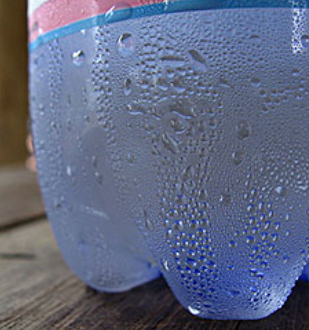
Water droplets forming on a cold glass.
Dew formation on grass during the morning.
Steam condensing inside a surface condenser of a power plant.
Film-wise Condensation
Film-wise condensation occurs when the condensate wets the cooling surface completely and forms a continuous liquid film over it.
Mechanism
Vapor condenses on the cold surface.
The liquid spreads uniformly over the surface.
A continuous condensate film is formed.
The film flows downward under the influence of gravity.
Characteristics
Surface is completely covered by a liquid film.
The condensate layer acts as a thermal resistance.
Heat must pass through the liquid film before reaching the cooling surface.
Heat transfer coefficient is comparatively low.
Heat Transfer Behavior
As the condensate film becomes thicker:
Thermal resistance increases.
Heat transfer rate decreases.
Condensation becomes less efficient.
Advantages
Stable and predictable operation.
Easy to analyze and design.
Commonly encountered in industrial condensers.
Disadvantages
Lower heat transfer coefficient.
Reduced thermal performance due to film resistance.
Applications
Surface condensers in thermal power plants.
Shell-and-tube condensers.
Industrial heat exchangers.
Refrigeration condensers.
Dropwise Condensation
Dropwise condensation occurs when the condensate does not wet the cooling surface and forms discrete droplets instead of a continuous film.
Mechanism
Vapor condenses into small droplets.
Droplets grow in size as more vapor condenses.
Larger droplets merge and eventually fall off the surface.
Fresh surface is continuously exposed to vapor.
Characteristics
Surface remains largely uncovered by liquid.
Direct contact exists between vapor and cooling surface.
Thermal resistance is very small.
Heat transfer coefficient is extremely high.
Heat Transfer Behavior
Because there is no continuous liquid film:
Heat transfer occurs more efficiently.
Condensation rate increases significantly.
Surface remains exposed for further condensation.
Advantages
Very high heat transfer coefficient.
Improved condenser efficiency.
Reduced surface area requirement.
Disadvantages
Difficult to maintain in practice.
Requires special surface coatings.
Performance may deteriorate over time.
Applications
High-performance condensers.
Specialized heat exchangers.
Advanced cooling systems.
Research and experimental thermal equipment.
Comparison Between Film-wise and Dropwise Condensation
Parameter | Film-wise Condensation | Dropwise Condensation |
|---|---|---|
Condensate Formation | Continuous liquid film | Separate liquid droplets |
Surface Wetting | Complete wetting | Partial or no wetting |
Thermal Resistance | High | Very low |
Heat Transfer Coefficient | Lower | Much higher |
Heat Transfer Rate | Moderate | Very high |
Surface Exposure | Covered by film | Mostly exposed |
Practical Occurrence | Common | Difficult to maintain |
Industrial Use | Widely used | Limited applications |
Why Dropwise Condensation Gives Better Heat Transfer
In film-wise condensation, the liquid film acts as an insulating layer between the vapor and the cooling surface. Heat must conduct through this film, reducing the overall heat transfer rate.
In dropwise condensation:
No continuous insulating layer exists.
Vapor directly contacts most of the cooling surface.
Droplets quickly detach and expose fresh surface.
Heat transfer coefficients can be 5 to 10 times higher than those of film-wise condensation.
Therefore, dropwise condensation is considered the most efficient mode of condensation.
Factors Affecting Condensation
Several factors influence condensation heat transfer:
Surface Temperature
Lower surface temperatures increase the rate of condensation.
Surface Characteristics
Surface roughness and wettability determine whether condensation will be film-wise or dropwise.
Vapor Pressure
Higher vapor pressure generally increases condensation rates.
Orientation of Surface
Vertical, horizontal, and inclined surfaces exhibit different condensation behavior.
Presence of Non-Condensable Gases
Air and other gases reduce condensation efficiency by creating additional thermal resistance.
Engineering Applications of Condensation
Thermal Power Plants
Condensers convert exhaust steam from turbines into water for reuse.
Refrigeration and Air Conditioning
Condensers reject heat from refrigerants to the surroundings.
Chemical Processing
Condensation is used in distillation and separation processes.
Desalination Plants
Condensation helps recover purified water from vapor.
HVAC Systems
Moisture removal and heat rejection involve condensation processes.
Conclusion
Condensation is a vital heat transfer process in many industrial and domestic applications. Based on the behavior of the condensate, it is classified into film-wise and dropwise condensation. Film-wise condensation forms a continuous liquid film that offers thermal resistance and lowers heat transfer rates. In contrast, dropwise condensation produces discrete droplets, allowing direct vapor contact with the surface and resulting in significantly higher heat transfer coefficients. Although dropwise condensation provides superior performance, film-wise condensation is more commonly encountered in practical engineering systems due to its stability and ease of maintenance.
Understanding the differences between these two modes of condensation is essential for the design and optimization of condensers, heat exchangers, refrigeration equipment, and power plant systems.


 Oct 2, 2026