


Article details
In modern mechanical engineering, new technologies are used to improve design and manufacturing processes. One such important technology is 3D scanning. It helps engineers convert real physical objects into digital models. These digital models are used for design, inspection, and manufacturing. 3D scanning saves time, improves accuracy, and reduces errors in mechanical design.
What is 3D Scanning?
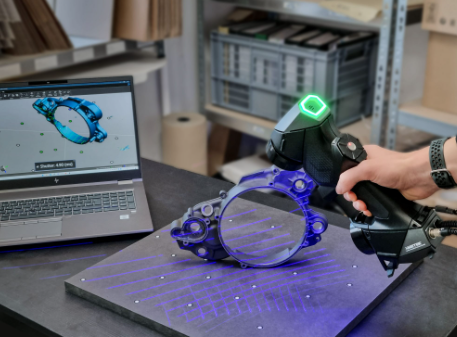
3D scanning is a process used to measure the shape and size of an object. A 3D scanner collects data from the surface of the object and creates a 3D digital model on a computer. This model can be used in CAD software for further design and analysis.
Common types of 3D scanning methods are:
Laser scanning
Structured light scanning
Photogrammetry
Contact scanning
Importance of 3D Scanning in Mechanical Design
1. High Accuracy
3D scanning provides accurate measurements of mechanical parts. It can measure complex shapes that are difficult to measure using traditional tools like rulers or vernier calipers.
2. Reverse Engineering
When design drawings of a component are not available, 3D scanning helps recreate the part. This process is called reverse engineering and is useful for old or damaged components.
3. Saves Time
3D scanning reduces manual measurement work. Engineers can quickly capture the shape of a component, which shortens the design and development time.
4. Quality Inspection
Scanned data can be compared with the original CAD model to find defects or errors in manufactured parts. This helps maintain good product quality.
5. Reduces Cost
By reducing errors, rework, and material waste, 3D scanning helps lower production costs.
Applications of 3D Scanning in Mechanical Design
1. Reverse Engineering of Parts
3D scanning is used to copy mechanical parts like gears, shafts, brackets, and engine components for redesign or repair.
2. Product Design
Engineers use scanned models to design new products that must fit with existing parts or assemblies.
3. Inspection and Quality Control
3D scanning is widely used to check whether manufactured parts meet design specifications.
4. Tool and Fixture Design
Scanned data helps in designing accurate jigs, fixtures, and molds used in manufacturing processes.
5. Wear and Damage Analysis
3D scanning helps study wear, cracks, or deformation in machine parts over time, helping in maintenance planning.
6. Use in 3D Printing
Scanned models can be modified and then produced using 3D printing, especially for spare parts and prototypes.
Advantages of 3D Scanning
Fast and accurate measurement
Easy handling of complex shapes
Useful for old or damaged parts
Improves product quality
Limitations of 3D Scanning
High initial cost of equipment
Difficulty scanning shiny or transparent surfaces
Requires trained operators
Conclusion
3D scanning is a valuable technology in mechanical design. It improves accuracy, saves time, and supports better product quality. For diploma-level mechanical engineers, understanding 3D scanning is important because it is widely used in industries such as automotive, aerospace, and manufacturing.

 Oct 2, 2026