


Article details
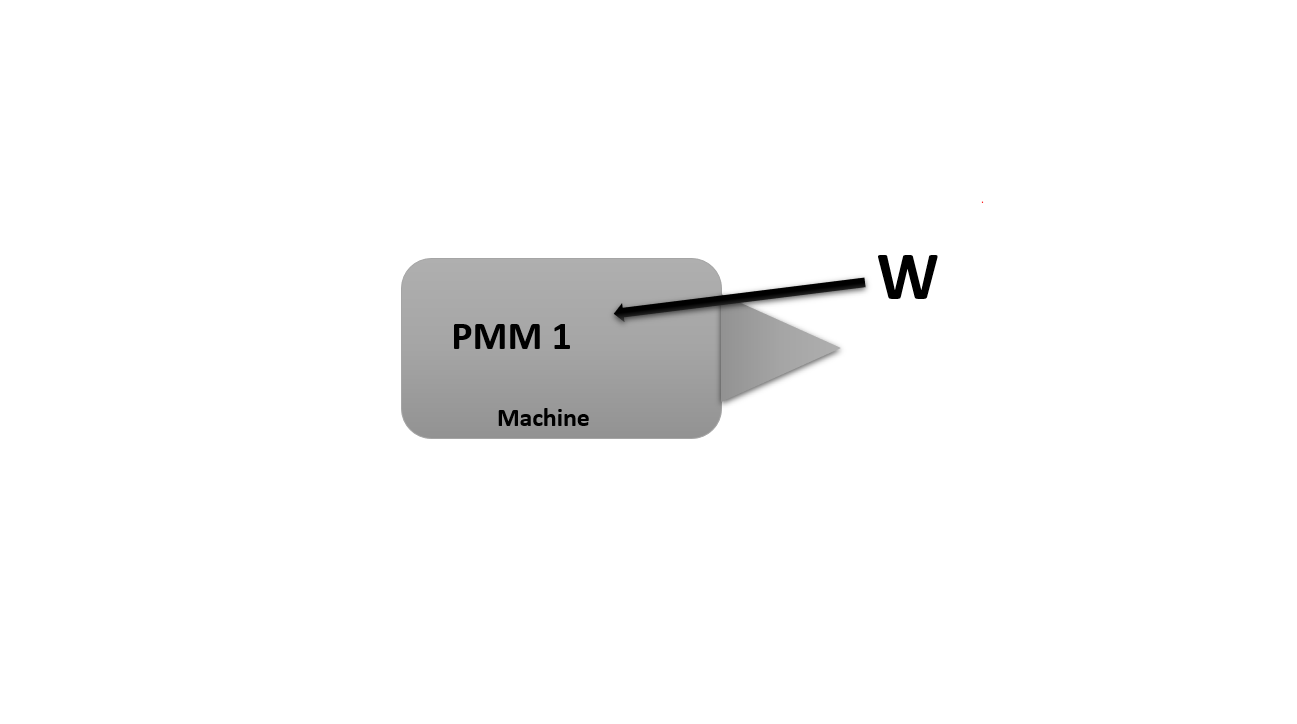
A Perpetual Motion Machine of the First Kind (PMM1) is a hypothetical device that produces work continuously without any energy input. Such a machine would violate the First Law of Thermodynamics, which states that energy can neither be created nor destroyed.
In simple terms, PMM1 claims to create energy from nothing, which is physically impossible.
Definition
A PMM1 is a machine that delivers continuous work output without receiving any heat, work, or energy from an external source.
Why PMM1 Is Impossible
According to the First Law of Thermodynamics:
Q - W = \Delta U
For a cyclic device, ( \Delta U = 0 ), so:
Q = W
This means work output must be supplied by heat input.
If ( Q = 0 ) and ( W > 0 ), it violates energy conservation.
Typical Claims of PMM1
PMM1 designs often include:
Wheels that rotate forever without friction
Magnetic arrangements that claim continuous rotation
Levers and weights arranged to self-rotate
Hydraulic systems that pump water without power
All such ideas ignore energy losses and the conservation principle.
Common Imaginary Examples
Overbalanced wheel with shifting weights
Magnetic motor with permanent magnets
Self-flowing water turbine system
Frictionless gear arrangements
Despite many historical attempts, no PMM1 has ever worked.
Scientific Reason for Failure
In every real system:
Friction dissipates energy
Air resistance slows motion
Material deformation absorbs energy
Heat losses occur
Without energy input, motion eventually stops.
Key Violation
PMM1 directly violates the law of conservation of energy:
Output energy > Input energy (which is zero)
This is impossible in nature.