

Article details
Petroleum refinery engineering plays an important role in converting crude oil into useful products such as petrol, diesel, aviation fuel, lubricants, and petrochemical feedstocks. It combines chemical engineering, mechanical engineering, process design, thermodynamics, and fluid mechanics to ensure that refining operations are safe, efficient, and economically viable.
Modern refineries use a series of physical separation and chemical conversion processes to produce fuels that meet quality standards and market requirements. Understanding these processes helps engineers improve production efficiency, reduce energy consumption, maintain equipment reliability, and minimize environmental impact.
What Is Petroleum Refinery Engineering?
Petroleum refinery engineering is the branch of engineering concerned with the design, operation, maintenance, and optimization of petroleum refining facilities. It focuses on transforming crude oil into valuable products through different processing stages.
Crude oil is a complex mixture of hydrocarbons with varying molecular sizes, boiling points, and chemical properties. Since these components cannot be used directly in their original form for every application, refineries separate and process them according to their intended uses.
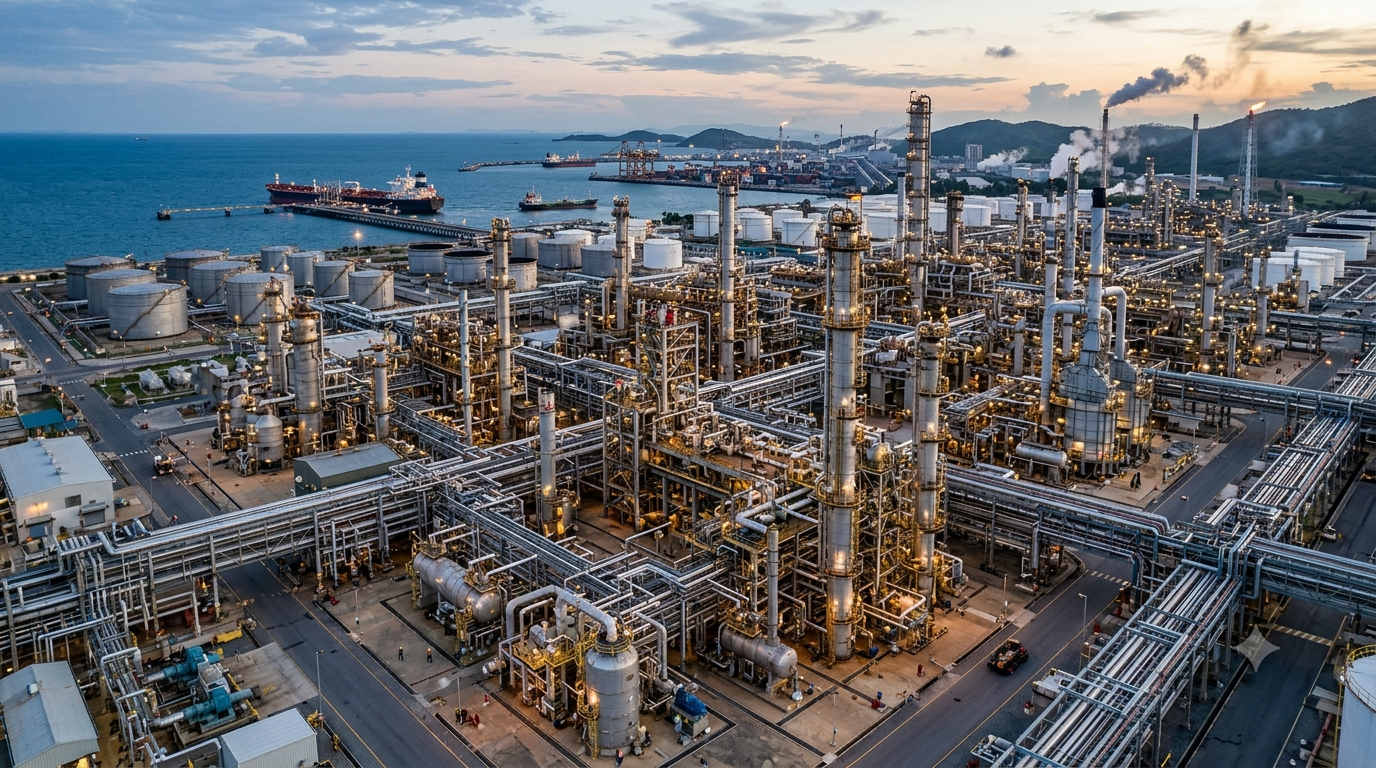
Refinery engineers work with process equipment, pipelines, storage tanks, heat exchangers, pumps, compressors, reactors, and control systems. Their objective is to maintain consistent product quality while ensuring operational safety and cost-effective production.
Main Stages of Petroleum Refining
1. Crude Oil Preparation
The refining process begins with crude oil preparation. Crude oil may contain water, dissolved salts, suspended solids, and other impurities that can damage equipment or reduce processing efficiency.
Desalting is commonly used to remove salts and water before the crude oil enters the main processing units. This helps reduce corrosion, fouling, and operational problems in downstream equipment.
Proper crude oil preparation improves the reliability of distillation columns, heat exchangers, and associated piping systems.
2. Atmospheric Distillation
Atmospheric distillation is one of the most important operations in a refinery. It separates crude oil into different fractions according to their boiling-point ranges.
Crude oil is heated in a furnace and introduced into a distillation column. As the vapours rise through the column, components condense at different heights depending on their boiling points.
The main products include refinery gases, naphtha, kerosene, diesel-range fractions, and atmospheric residue. These streams may be sent to further processing units to improve their quality and usefulness.
3. Vacuum Distillation
The heavy residue remaining after atmospheric distillation contains valuable hydrocarbons that could decompose if heated excessively at normal pressure.
Vacuum distillation reduces the operating pressure, allowing heavy hydrocarbons to vaporize at lower temperatures. This helps separate the residue into lighter vacuum gas oils and heavier fractions.
Vacuum gas oil is often used as feedstock for conversion processes, while heavier residues may be processed in units designed for residue upgrading.
4. Conversion Processes
Distillation separates hydrocarbons but does not significantly change their molecular structure. Conversion processes chemically transform hydrocarbons to increase the yield of valuable products.
Important conversion processes include catalytic cracking, hydrocracking, catalytic reforming, and delayed coking. Each process serves a different purpose depending on the refinery configuration and the properties of the feedstock.
These processes help refineries respond to changing fuel demand and improve the value obtained from each barrel of crude oil.
5. Catalytic Reforming
Catalytic reforming improves the quality of naphtha by rearranging hydrocarbon molecules into compounds with higher octane ratings. It is an important process for producing high-quality petrol blending components.
The process uses catalysts and controlled operating conditions to promote chemical reactions. Hydrogen is also produced as a by-product in many reforming systems and can be used in other refinery processes.
6. Hydrotreating and Desulfurization
Hydrotreating removes unwanted substances such as sulfur, nitrogen compounds, and certain metals from petroleum streams. The process uses hydrogen, catalysts, and controlled temperature and pressure.
Sulfur removal is particularly important because sulfur compounds can contribute to air pollution and damage downstream catalysts. Hydrotreating also improves the quality and stability of fuels.
7. Product Blending and Finishing
After processing, refinery streams are blended in carefully controlled proportions to meet the required specifications for finished products.
Petrol, diesel, aviation fuel, and lubricants must meet specific requirements related to performance, composition, and quality. Laboratory testing and process monitoring help confirm that the final products meet the applicable standards.
Major Equipment Used in Petroleum Refineries
Petroleum refineries depend on interconnected equipment to maintain continuous production. Each component performs a specific function within the process.
Distillation columns: Separate hydrocarbon mixtures into fractions according to boiling-point differences.
Heat exchangers: Transfer heat between process streams to improve energy efficiency.
Furnaces and heaters: Supply the thermal energy required for heating crude oil and other process streams.
Pumps and compressors: Move liquids and gases through refinery equipment and pipelines.
Reactors: Provide controlled conditions for chemical conversion and catalytic reactions.
Pressure vessels and storage tanks: Hold process fluids, feedstocks, intermediate products, and finished products.
Piping and valves: Transport process materials and regulate flow, isolation, and pressure.
Instrumentation and control systems: Monitor temperature, pressure, flow, and liquid levels to maintain stable operations.
Proper equipment selection, inspection, and maintenance are essential for refinery reliability and safe operation.
Role of Process Engineering in Refinery Operations
Process engineering helps ensure that refinery units operate according to their design requirements. Process engineers study material balances, energy balances, flow rates, pressure drops, heat transfer, and reaction conditions.
They also review process flow diagrams (PFDs) and piping and instrumentation diagrams (P&IDs) to understand equipment connections and operating requirements.
Process simulation tools can help engineers evaluate operating scenarios, identify bottlenecks, and improve process performance. By monitoring operating data, engineers can identify inefficiencies and recommend practical improvements.
Safety and Environmental Considerations
Petroleum refining involves high temperatures, high pressures, flammable hydrocarbons, toxic substances, and potentially hazardous chemical reactions. Safety must therefore be considered at every stage of refinery design and operation.
Process Safety
Engineers use hazard identification, risk assessment, pressure-relief systems, gas detection, emergency shutdown systems, and operating procedures to reduce the risk of incidents.
Equipment inspection and preventive maintenance help identify corrosion, leaks, vibration, and other problems before they develop into serious failures.
Environmental Protection
Refineries must manage emissions, wastewater, solid waste, and other environmental impacts. Common measures include vapor recovery, wastewater treatment, sulfur recovery, energy optimization, and emissions monitoring.
Reducing energy losses and improving heat integration can also lower operating costs and reduce greenhouse gas emissions.
Challenges in Petroleum Refinery Engineering
Refinery engineers face several technical and operational challenges that affect production efficiency and profitability.
Changing crude oil quality: Different crude oils have different sulfur contents, densities, and hydrocarbon compositions. Refinery units must be adjusted to handle these variations.
Equipment corrosion and fouling: Deposits and corrosive compounds can reduce heat transfer, restrict flow, and damage equipment. Regular inspection and suitable material selection help control these problems.
Energy consumption: Heating, cooling, compression, and separation require significant energy. Improving heat recovery and optimizing operating conditions can reduce energy costs.
Product quality requirements: Finished fuels must meet strict specifications. Engineers must control processing conditions and blending operations to maintain consistent quality.
Unplanned shutdowns: Equipment failures can interrupt production and increase maintenance expenses. Condition monitoring, predictive maintenance, and reliability engineering help minimize downtime.
Career Opportunities in Petroleum Refinery Engineering
Petroleum refinery engineering offers career opportunities across oil and gas processing, petrochemicals, energy production, and industrial operations.
Professionals can work in roles such as:
Process Engineer
Refinery Operations Engineer
Petroleum Engineer
Mechanical Maintenance Engineer
Piping Engineer
Process Safety Engineer
Instrumentation and Control Engineer
Inspection and Reliability Engineer
A strong foundation in thermodynamics, fluid mechanics, heat transfer, process calculations, and equipment design is valuable for these roles. Familiarity with process simulation, technical drawings, industrial safety practices, and refinery operating procedures can further support career development.
Practical training and exposure to real refinery case studies help engineers connect theoretical knowledge with industrial applications.
Conclusion
Petroleum refinery engineering is essential for transforming crude oil into valuable fuels, lubricants, and petrochemical feedstocks. The process combines separation, chemical conversion, treatment, blending, and supporting operations to achieve the required product quality and production efficiency.
From crude oil distillation to catalytic processing and final product treatment, every refinery unit contributes to overall plant performance. Engineers must balance production requirements with equipment reliability, energy efficiency, process safety, and environmental responsibility.
As refining technologies continue to develop, professionals with strong technical knowledge and practical problem-solving skills will remain important to the petroleum and energy industries.
