

Article details
The electrical power system is one of the most important parts of modern infrastructure. It plays a major role in supplying electricity to homes, industries, commercial buildings, hospitals, transportation systems and other essential facilities.
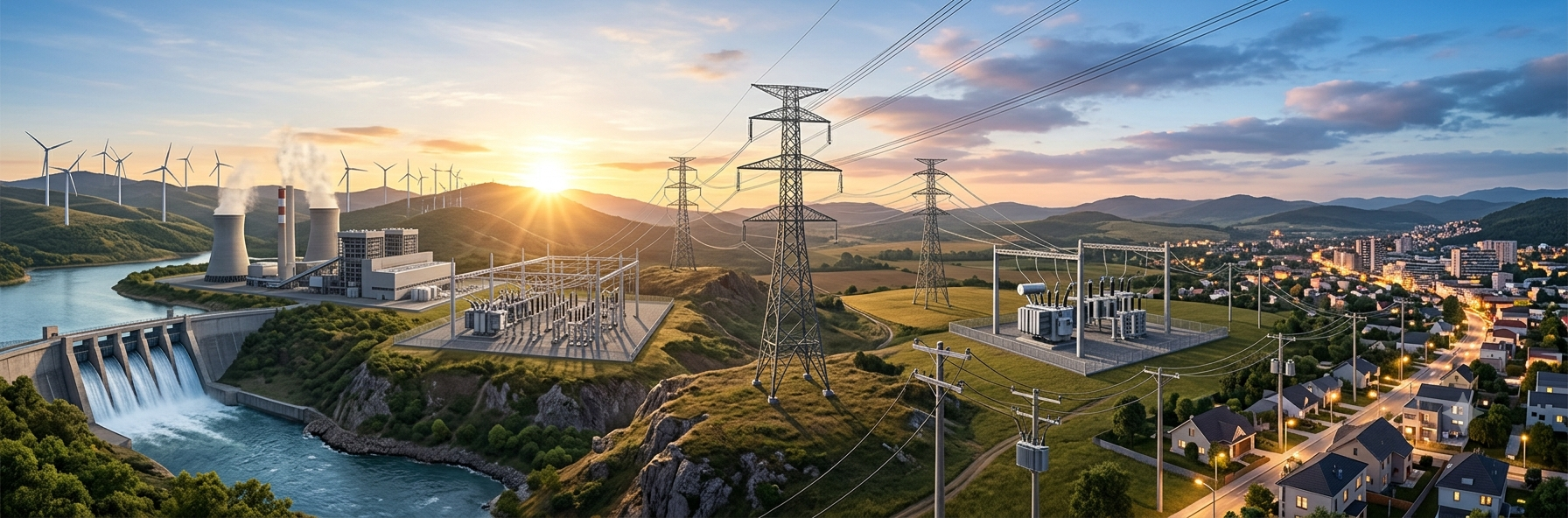
Electricity travels through a complex network that connects power generation stations to end users. This process involves three major stages: power generation, power transmission and power distribution. Each stage has specific equipment, operating principles and safety requirements to ensure a reliable electricity supply.
Understanding these stages is essential for electrical engineers, power system professionals and students interested in electrical power engineering.
1. What Is an Electrical Power System?
An electrical power system is a network designed to generate, transmit and distribute electrical energy from power plants to consumers.
It consists of generators, transformers, transmission lines, substations, switchgear, protection systems and distribution networks.
The main objective is to deliver electricity safely, efficiently and continuously while maintaining the required voltage and frequency.
The electrical power system is generally divided into three main sections:
Generation: Producing electrical energy from different energy sources.
Transmission: Transferring bulk electrical power over long distances.
Distribution: Delivering electricity to residential, commercial and industrial consumers.
All three stages work together to maintain a stable and dependable electricity supply.
2. Power Generation: Producing Electrical Energy
Power generation is the first stage of the electrical power supply process. It involves converting different forms of energy into electrical energy using generators and associated equipment.
Power plants use various energy sources depending on their availability, cost, environmental impact and regional requirements.
Types of Power Generation
1. Thermal Power Plants
Thermal power plants generate electricity by burning fuels such as coal, oil or natural gas. The heat produced converts water into high-pressure steam, which drives a steam turbine connected to an electrical generator.
The main equipment includes boilers, furnaces, steam turbines, generators, condensers, cooling systems and transformers.
2. Hydroelectric Power Plants
Hydroelectric plants use the energy of flowing or falling water to generate electricity. Water stored in a reservoir passes through penstocks and rotates hydraulic turbines connected to generators.
They are renewable energy sources and generally produce low operational emissions. However, their performance depends on water availability, rainfall and suitable geographical conditions.
3. Nuclear Power Plants
Nuclear power plants generate electricity through heat released during nuclear fission. The heat is used to produce steam, which drives turbines connected to generators.
These plants can produce large amounts of electricity continuously. However, they require advanced safety systems, radiation protection, specialised maintenance and proper radioactive waste management.
4. Solar Power Plants
Solar power plants convert sunlight into electricity using photovoltaic (PV) panels or concentrated solar power technology.
Solar PV systems generate direct current (DC), which is converted into alternating current (AC) using inverters. They are widely used in residential, commercial and utility-scale applications.
5. Wind Power Plants
Wind turbines convert the kinetic energy of moving air into mechanical energy. The rotating turbine drives a generator to produce electricity.
Wind energy is renewable and produces no direct emissions during operation. However, electricity production depends on wind speed and availability.
6. Other Renewable Energy Sources
Geothermal, tidal and biomass energy are also used for electricity generation. These technologies provide alternative energy options and help diversify the power generation mix.
3. Power Transmission: Moving Electricity Over Long Distances
Power transmission is the second stage of the electrical power system. It involves transferring large quantities of electricity from generating stations to substations located near consumer areas.
Electricity generated at power plants is not transmitted directly at the same voltage level. Instead, transformers increase the voltage before transmission.
Why Is High-Voltage Transmission Important?
Electrical power transmission over long distances can result in energy losses due to conductor resistance.
These losses are mainly related to current and can be expressed as:
[ P_{text{loss}}=I^2R ]
Increasing the transmission voltage reduces the current required to transfer the same amount of power. This helps minimise power losses, voltage drop and conductor requirements.
Depending on the network design, transmission systems operate at different voltage levels, such as 132 kV, 220 kV, 400 kV and higher.
Main Components of a Transmission System
Transmission Lines: Carry electrical power between generating stations and substations.
Transmission Towers: Support overhead conductors and maintain safe electrical clearances.
Insulators: Prevent electrical current from flowing through supporting structures.
Conductors: Carry electrical current across the transmission network.
Transformers: Increase or decrease voltage according to system requirements.
Circuit Breakers: Interrupt electrical circuits during faults or abnormal operating conditions.
Protection Relays: Detect faults and initiate protective actions.
Types of Transmission Systems
Overhead Transmission: Electricity is carried through conductors supported by towers or poles. This system is widely used because it is comparatively economical and easier to inspect and maintain.
Underground Transmission: Power cables are installed below ground. This arrangement is useful in cities and areas where overhead lines are difficult to install, although installation and repair can be more expensive.
4. Electrical Substations and Their Role
Substations are essential connection points between generation, transmission and distribution networks.
They control voltage levels, manage power flow and provide protection during abnormal operating conditions.
A transmission substation may receive electricity at 400 kV and reduce it to 132 kV or another suitable voltage for further transmission.
Important Substation Equipment
Power Transformers: Change voltage levels.
Busbars: Distribute incoming electrical power to different outgoing circuits.
Circuit Breakers: Disconnect faulty sections of the network.
Isolators: Provide visible electrical isolation for maintenance.
Current Transformers (CTs): Reduce high current to measurable levels for protection and monitoring.
Potential Transformers (PTs): Reduce high voltage for measurement and protection.
Lightning Arresters: Protect equipment against lightning-related overvoltages.
Earthing Systems: Provide a safe path for fault current and help protect personnel and equipment.
Proper substation operation is important for maintaining grid stability and ensuring uninterrupted electricity supply.
5. Power Distribution: Delivering Electricity to Consumers
Power distribution is the final stage of the electrical power supply system. It delivers electricity from substations to residential, commercial and industrial consumers.
At distribution substations, transmission voltage is reduced to medium-voltage levels. Distribution transformers then reduce it further to the voltage required by end users.
For example, in many 50 Hz distribution networks, common supply levels include 11 kV for primary distribution and 400/230 V for low-voltage consumers. Actual values vary by country and utility standards.
Types of Distribution Systems
1. Radial Distribution System
In a radial system, electricity flows from a single source through one main feeder to consumers. It is simple to design and economical but may experience supply interruptions if the feeder develops a fault.
2. Ring Main Distribution System
In this arrangement, distribution feeders form a closed loop. Electricity can reach consumers from different directions, improving supply reliability and operational flexibility.
3. Interconnected Distribution System
Multiple substations or feeders are connected to provide alternative supply paths. This arrangement improves reliability and supports better load management.
Single-Phase and Three-Phase Supply
Single-phase supply is commonly used for residential applications and smaller electrical loads.
Three-phase supply is preferred for industrial equipment, large motors, commercial buildings and applications requiring higher power capacity.
6. Electrical Protection and Safety in Power Systems
Electrical safety is a critical requirement throughout generation, transmission and distribution. Faults such as short circuits, overloads, earth faults and insulation failures can damage equipment and create serious hazards.
Protection systems identify abnormal electrical conditions and isolate the affected sections to prevent further damage.
Important Safety Measures
Earthing: Provides a safe path for fault current to flow into the ground.
Protective Relays: Detect abnormal electrical conditions and activate circuit breakers.
Overcurrent Protection: Protects electrical equipment against excessive current.
Insulation Coordination: Ensures equipment can withstand expected operating and transient voltages.
Equipotential Bonding: Reduces dangerous voltage differences between exposed conductive parts.
Regular Inspection: Helps identify damaged cables, loose connections, overheating and equipment deterioration.
Proper maintenance, safety procedures and trained personnel are essential for reliable power system operation.
7. Challenges in Modern Electrical Power Systems
Modern electrical networks face several technical and operational challenges.
Increasing Electricity Demand: Population growth, industrial expansion and digital infrastructure increase the demand for electricity.
Transmission Losses: Long-distance power transfer creates losses that require efficient network planning and suitable voltage levels.
Renewable Energy Integration: Solar and wind generation introduce variations in electricity production, requiring better forecasting, storage and grid management.
Ageing Infrastructure: Older transformers, transmission lines and switchgear require inspection, replacement and modernisation.
Grid Reliability: Equipment failures, extreme weather and electrical faults can interrupt power supply.
Smart grids, automation, advanced protection systems and energy storage technologies are helping utilities address these challenges.
8. Importance of Efficient Power Generation, Transmission and Distribution
An efficient electrical power system supports economic growth, industrial productivity and everyday activities.
Power generation ensures sufficient electricity is available, transmission carries it efficiently across long distances, and distribution makes it accessible to consumers.
Improving all three stages helps reduce energy losses, improve voltage stability, increase equipment life and maintain a reliable electricity supply.
Modern power networks are also moving towards digital monitoring, smart substations, renewable integration and automated distribution systems.
Conclusion
Power generation, transmission and distribution form the foundation of the electrical power supply network. Generation converts different energy sources into electricity, transmission transports bulk electrical power at high voltages, and distribution delivers electricity at suitable voltage levels to consumers.
Each stage depends on specialised equipment, transformers, substations, protection systems and effective engineering practices.
With increasing electricity demand and the growing use of renewable energy, modern power systems require continuous improvement in efficiency, safety, reliability and grid management. Knowledge of these processes is essential for electrical engineers working in power plants, substations, transmission networks and distribution systems.
