

Article details
A power plant is one of the few facilities that is expected to run almost without stopping for 25 to 40 years. When it trips, a city can go dark, factories stop, and the owner loses money every hour. That is why power plants are designed with reliability in mind from the first sketch, and why maintenance is treated as a core part of operations rather than an afterthought. This article explains how plants are designed, what the main systems do, and how maintenance keeps them safe, efficient, and available.
Part 1: Types of Power Plants
Type | How it makes power | Typical use |
|---|---|---|
Coal-fired thermal | Coal burns in a boiler, steam drives a turbine | Base load |
Gas-based (open cycle) | Gas turbine drives a generator directly | Peaking, fast start |
Combined cycle (CCGT) | Gas turbine exhaust heats a boiler (HRSG) that drives a steam turbine | Efficient base and mid load |
Hydroelectric | Falling water turns a turbine | Base, peaking, storage |
Nuclear | Fission heat makes steam | Large base load |
Solar PV | Panels convert sunlight to electricity | Daytime, distributed or utility scale |
Concentrated solar | Mirrors heat a fluid to make steam | Utility scale with storage |
Wind | Turbine blades drive a generator | Variable renewable |
Biomass and waste-to-energy | Burning organic material to make steam | Local fuel use |
Diesel and gas engines | Reciprocating engines drive generators | Backup, remote sites |
The design and maintenance details differ by type, but the thinking is similar: choose the right plant for the fuel, load, and site, then design for safe and reliable operation.
Part 2: How a Power Plant Is Designed
Stage 1: Need and feasibility
The owner defines why the plant is needed: growing demand, replacing old units, supplying an industry, or adding renewables. The feasibility study checks:
Demand forecast and who will buy the power
Fuel availability, price, and transport
Water availability
Grid connection and evacuation capacity
Environmental and social impact
Cost, tariff, and financial returns
Stage 2: Site selection
A good site balances many things:
Fuel access: near a mine, port, pipeline, or rail line
Water: for cooling and process needs, from a river, sea, canal, or reservoir
Land: enough area for the plant, fuel storage, ash handling, and future expansion
Ground conditions: geotechnical suitability for heavy foundations
Grid proximity: transmission lines and substations nearby
Environment: distance from towns, protected areas, and flood zones
Seismic and climate risk: earthquake zone, flooding, extreme heat, wind
Stage 3: Technology and capacity selection
The engineers decide unit size, number of units, cycle type, steam parameters, efficiency targets, and redundancy. Many plants are built in phases so that capacity can grow with demand.
Stage 4: Conceptual and basic design
Heat and mass balance (how energy and fluid flow through the cycle)
Plant layout and general arrangement
Process flow diagrams and piping and instrumentation diagrams (P&IDs)
Single line diagram for the electrical system
Equipment sizing and specification
Preliminary cost and schedule
Stage 5: Detailed engineering
Civil, structural, mechanical, electrical, and control designs
3D plant models to find clashes between pipes, cable trays, and structures
Equipment data sheets, drawings, and procurement specifications
Safety studies such as HAZOP, fire protection design, and noise assessments
Construction packages and erection sequences
Part 3: Main Systems in a Thermal Power Plant
1. Fuel handling and storage
Coal plants have unloading, crushing, conveyors, stockyards, and bunkers. Gas plants have pipelines, pressure reduction, and metering stations. Oil and biomass need tanks or covered stores. Fuel systems must handle dust, fire, and spontaneous combustion risks.
2. Boiler or steam generator
Burns fuel to turn water into high-pressure, high-temperature steam. Key parts include furnace, water walls, superheaters, reheaters, economizer, air heaters, burners, and draught fans (FD, ID, and PA fans). In combined cycle plants, the heat recovery steam generator (HRSG) replaces the fired boiler.
3. Turbine
Steam turbine: high, intermediate, and low-pressure stages that convert steam energy into rotation
Gas turbine: compressor, combustor, and turbine section
4. Generator
Converts the rotation into electricity. It needs cooling (air, hydrogen, or water), an excitation system, and protection. Output typically runs at 11 to 25 kV before being stepped up.
5. Condenser and cooling system
Steam leaving the turbine is condensed back to water to maintain vacuum and efficiency. Cooling can be:
Once-through using river or sea water
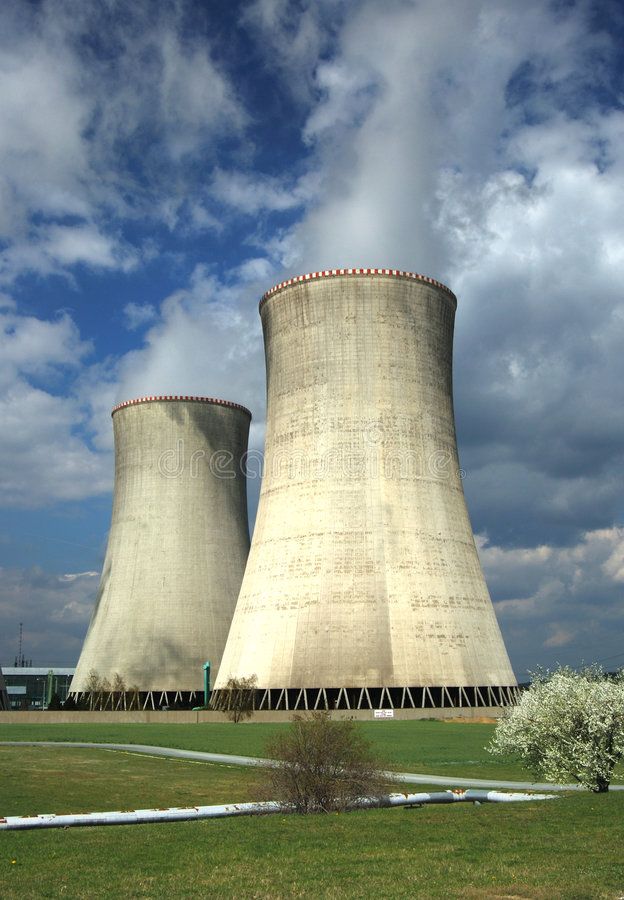
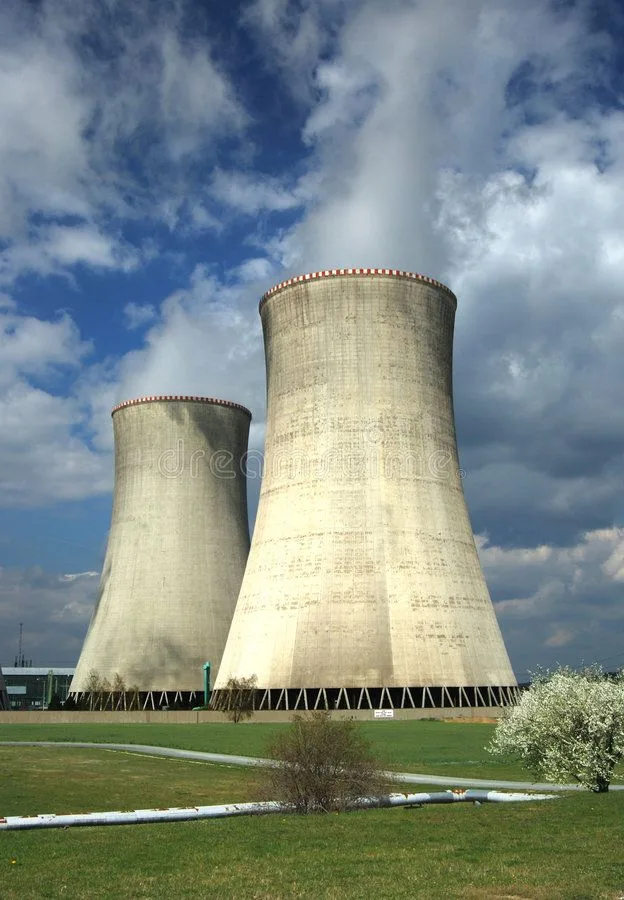
Closed loop with cooling towers (natural draught or mechanical draught)
Air-cooled condensers where water is scarce
6. Feedwater and condensate system
Pumps, heaters, and a deaerator return clean, hot water to the boiler. Water quality is critical, so a demineralization plant and chemical dosing system protect the boiler from scale and corrosion.
7. Ash handling and emission control
Electrostatic precipitators or bag filters for dust
Flue gas desulfurization for sulfur dioxide
Low-NOx burners, selective catalytic reduction for nitrogen oxides
Wet or dry ash handling and disposal or reuse in cement and bricks
Continuous emission monitoring
8. Electrical system
Generator transformer and unit auxiliary transformers
Switchyard with circuit breakers, isolators, and busbars
Medium and low voltage switchgear for plant motors
Emergency diesel generators and batteries (DC supply)
Earthing and lightning protection
Protection relays and metering
9. Control and instrumentation (C&I)
A distributed control system (DCS) monitors and controls thousands of signals. It includes safety interlocks, trip systems, turbine governing, alarms, historians, and cybersecurity. Control rooms are designed for clarity so operators can respond quickly.
10. Auxiliary and balancing systems
Compressed air, fire fighting, HVAC, fuel oil, lube oil, cranes, workshops, laboratories, and stores.
Part 4: Civil and Structural Design
Foundations: the turbine-generator sits on a heavy, vibration-isolated table foundation, and boilers, stacks, and cooling towers need deep piles or rafts depending on soil
Main plant building: turbine hall with overhead cranes, boiler house, and control building
Chimney or stack: designed for wind, seismic, and thermal loads, and for plume dispersion
Cooling tower and water intake: hydraulic and structural design for flow and corrosion resistance
Coal handling structures: conveyors, transfer towers, and bunker supports
Roads, drainage, and rail sidings
Fire walls, blast protection, and drainage for oil spills
Part 5: Design Principles That Make a Plant Reliable
Redundancy: critical equipment such as pumps and fans has standby units
Fail-safe design: valves and controls move to a safe position on loss of power or signal
Accessibility: space for inspection, lifting, and removing equipment
Material selection: alloys suited for high temperature, pressure, erosion, and corrosion
Standard codes: ASME, IEC, IEEE, IS, EN, and the local electricity regulations
Efficiency: high steam parameters, heat recovery, and low auxiliary consumption
Flexibility: ability to ramp up and down as renewables enter the grid
Environmental compliance: emission, effluent, noise, and ash limits
Maintainability: designing for easy maintenance from day one
Future expansion: reserved land and connection points
Part 6: Design for Renewable Plants (Brief)
Solar PV
Site layout to minimize shading and cable losses
Module tilt, row spacing, and mounting structure design
Inverters, transformers, and DC and AC cabling
Foundation type (piles or ballast) and drainage
Monitoring system and grid compliance
Wind
Wind resource assessment and turbine micro-siting
Turbine foundations, access roads, and crane pads
Collection cables and substation
Noise, shadow flicker, and bird impact studies
Hydro
Hydrology, dam or weir design, intake, penstock, powerhouse, and tailrace
Turbine selection (Pelton, Francis, or Kaplan) based on head and flow
Spillway, gates, and flood management
Sediment handling and environmental flow
Part 7: Construction, Testing, and Commissioning
Site mobilization and civil works
Equipment erection: boiler, turbine, generator, and balance of plant
Pre-commissioning checks: flushing, hydro tests, alignment, insulation tests
Cold commissioning: testing systems without fuel
Boiler light-up and steam blowing: cleans pipes before steam goes to the turbine
Turbine rolling and synchronization: connecting the generator to the grid
Load increase and trial operation: step by step up to full load
Performance guarantee tests: verifying output, heat rate, and emissions against contract
Commercial operation date (COD) and handover to the operations team
Good commissioning documentation becomes the baseline for all later maintenance.
Part 8: Why Maintenance Matters
Availability: every hour of forced outage means lost revenue and possible grid penalties
Safety: high pressure, high temperature, high voltage, and rotating machines are dangerous when neglected
Efficiency: fouled heat exchangers and worn seals quietly burn extra fuel
Asset life: well-maintained equipment lasts decades longer
Cost: a planned repair is far cheaper than an emergency failure
Part 9: Types of Maintenance
Type | Description | Example |
|---|---|---|
Breakdown (corrective) | Fix after failure | Replacing a failed pump motor |
Preventive | Scheduled work at fixed intervals | Oil change, filter replacement, lubrication |
Predictive (condition-based) | Work triggered by monitored condition | Replacing a bearing when vibration rises |
Proactive / root cause | Remove causes of repeat failures | Redesigning a leaking joint |
Reliability-centered maintenance (RCM) | Choose the best strategy for each asset based on risk | Critical turbine gets monitoring, non-critical gets run-to-fail |
Shutdown / outage maintenance | Major work during planned stoppage | Boiler overhaul, turbine inspection |
Most modern plants use a mix, focusing predictive and preventive effort on critical equipment.
Part 10: Maintenance by Major Equipment
Boiler
Inspect tubes for erosion, corrosion, overheating, and leaks, which are the biggest cause of forced outages in coal plants
Clean soot, slag, and deposits
Test safety valves, check refractory and insulation
Inspect burners, mills, and air heaters
Hydro test after repairs
Chemical cleaning when scaling is found
Steam turbine
Monitor vibration, bearing temperatures, shaft position, and steam parameters
Inspect blades for erosion, cracks, and deposits during overhauls
Check seals, governing system, and valves
Maintain lube oil quality and filtration
Perform overspeed trip tests
Carry out minor inspections around every 2 to 4 years and major overhauls roughly every 6 to 10 years, or as the manufacturer advises
Gas turbine
Inspect combustors, transition pieces, and hot gas path parts
Replace parts based on operating hours and starts
Clean compressor blades (online and offline washing)
Check inlet filters and air quality
Follow manufacturer inspection tiers: combustion, hot gas path, and major inspection
Generator
Insulation resistance and polarization index tests on windings
Partial discharge monitoring
Cooling system checks (hydrogen purity, water quality)
Brush gear, slip rings, and excitation system maintenance
Rotor and stator inspections during major outages
Transformers and switchyard
Dissolved gas analysis of oil
Oil temperature, moisture, and breakdown voltage tests
Thermography to find hot connections
Breaker timing and contact resistance tests
Protection relay testing and calibration
Cleaning insulators and checking earthing
Pumps, fans, and motors
Vibration analysis, alignment, and balancing
Bearing lubrication and replacement
Seal and packing maintenance
Motor insulation and current signature tests
Impeller wear checks (especially ID fans handling ash)
Cooling system
Clean condenser tubes (mechanical or on-line cleaning systems)
Inspect tube leaks and fouling
Maintain cooling tower fill, fans, gearboxes, and water treatment
Check intake screens and pumps
Water treatment and chemistry
Daily monitoring of pH, conductivity, silica, oxygen, and other parameters
Resin regeneration and membrane cleaning
Chemical dosing system checks
Water chemistry control prevents most scale and corrosion problems
Control and instrumentation
Calibration of transmitters, gauges, and analyzers
Testing of trip and interlock logic
Software backups and cybersecurity updates
Replacement of aging cards and sensors
Coal and ash handling
Conveyor belt and idler inspection
Crusher hammer and mill part replacement
Dust suppression and fire protection checks
Ash line wear monitoring
Solar plant maintenance
Module cleaning, vegetation control, and thermal imaging for hot spots
Inverter servicing, string testing, and cable inspection
Tracker lubrication and alignment
Monitoring performance ratio and downtime
Wind turbine maintenance
Blade inspection and repair (often by rope access or drones)
Gearbox oil and condition monitoring
Bolt torque checks and tower inspection
Generator and yaw system service
Hydro plant maintenance
Inspect gates, penstock, runners, and draft tubes
Check for cavitation damage and wear
Clean intake trash racks
Service governors, bearings, and generator
Monitor dam safety and sediment buildup
Part 11: Planned Outages
A major outage is like a construction project, and it needs the same planning discipline.
Typical outage steps
Scope definition: based on running history, inspections, and OEM advice, usually 6 to 12 months ahead
Planning and scheduling: detailed work breakdown, critical path, resource plan
Procurement: spares, tools, special equipment, and contractors
Pre-outage preparation: pre-shutdown inspections, safety permits, and workshops
Shutdown and isolation: safe cooling, draining, lockout and tagout
Execution: daily progress meetings, quality inspections, and change control
Restart and testing: tightness tests, boiler light-up, turbine rolling, and synchronization
Close-out: reports, lessons learned, and updating the equipment history
Short, well-planned outages are far cheaper than long, chaotic ones, and delays directly cost the plant revenue.
Part 12: Condition Monitoring and Digital Tools
Vibration analysis for rotating machines
Thermography for electrical connections and insulation
Oil analysis for wear particles and contamination
Ultrasonic testing and thickness gauging for pipes and tubes
Acoustic emission for leaks and partial discharge
Online monitoring of generator, transformer, and turbine parameters
CMMS (Computerized Maintenance Management System) for work orders, spares, and history
Digital twins and AI analytics to predict failures from sensor trends
Drones and robots to inspect boilers, chimneys, blades, and tanks
Part 13: Spare Parts and Inventory
Classify spares by criticality, lead time, and cost
Keep insurance spares for long-lead items such as transformers, rotor parts, and large motors
Use consignment stock and pooling agreements where possible
Track usage and update minimum stock levels
Keep storage conditions suitable for sensitive items (humidity, temperature)
Part 14: Safety in Plant Maintenance
Permit to work and lockout/tagout for every job on energized or pressurized equipment
Confined space entry controls for boilers, tanks, and condensers
Work at height protections around boilers, stacks, and cooling towers
Hot work control to prevent fires
Hazardous substance handling for chemicals, hydrogen, and asbestos in older plants
Electrical safety procedures and arc flash protection
Pressure safety: never open pressurized lines without verified isolation
Regular toolbox talks, drills, and audits
Part 15: Common Problems and Their Causes
Problem | Typical causes |
|---|---|
Boiler tube leaks | Erosion, corrosion, overheating, poor water chemistry |
Turbine vibration | Misalignment, imbalance, bearing wear, rubbing |
Condenser fouling and tube leaks | Debris, scaling, cooling water quality |
Transformer faults | Insulation aging, moisture, overloading |
Generator winding failures | Overheating, partial discharge, contamination |
Trips from control faults | Sensor failure, loose connections, software errors |
Fan erosion | Fly ash abrasion |
Cooling tower underperformance | Fill damage, fan problems, poor water treatment |
Pump seal leakage | Wear, misalignment, poor lubrication |
Efficiency loss | Fouling, air ingress, leaking valves, worn seals |
Part 16: Performance Indicators
Indicator | Meaning |
|---|---|
Plant availability factor | Percentage of time the plant is ready to generate |
Plant load factor (PLF) | Actual generation as a percentage of maximum possible |
Forced outage rate | Unplanned downtime as a share of operating time |
Heat rate | Fuel energy used per unit of electricity, where lower is better |
Auxiliary power consumption | Power used by the plant itself |
Specific fuel and water consumption | Resource efficiency |
MTBF and MTTR | Mean time between failures and mean time to repair |
Planned vs unplanned maintenance ratio | Higher planned share means better control |
Emissions and effluent compliance | Environmental performance |
Lost time injury rate | Safety performance |
Part 17: Life Extension and Retrofit
When plants age, owners decide whether to retire, refurbish, or upgrade:
Residual life assessment of boilers, turbines, and pipes by metallurgical tests and creep analysis
Renovation and modernization (R&M) to replace worn parts and upgrade controls
Efficiency upgrades such as blade redesign and improved seals
Emission upgrades to meet tighter rules
Fuel switching or co-firing (such as biomass in coal plants)
Repurposing sites for renewable and storage projects, reusing grid connections
Part 18: Best Practices
Involve the operations and maintenance team in the design review
Keep accurate as-built drawings, manuals, and equipment histories
Plan outages early and stick to scope discipline
Invest in condition monitoring on critical equipment
Train operators and technicians continuously
Maintain good water chemistry and fuel quality
Learn from every failure with a root cause analysis
Keep spares and tools ready for known high-risk items
Track KPIs and review them every month
Treat safety as part of every job, not a separate topic
Conclusion
A power plant succeeds when design and maintenance are treated as one connected story. Good design makes equipment easy to operate, inspect, and repair. Good maintenance protects the design intent and extends the life of the investment. The plants that run well for decades are usually the ones where someone thought about the maintenance crew while drawing the layout, where operators and engineers share the same data, and where small warning signs, such as a bit more vibration or a slightly higher temperature, are taken seriously before they become failures.