


Article details
Quality Management System (QMS)
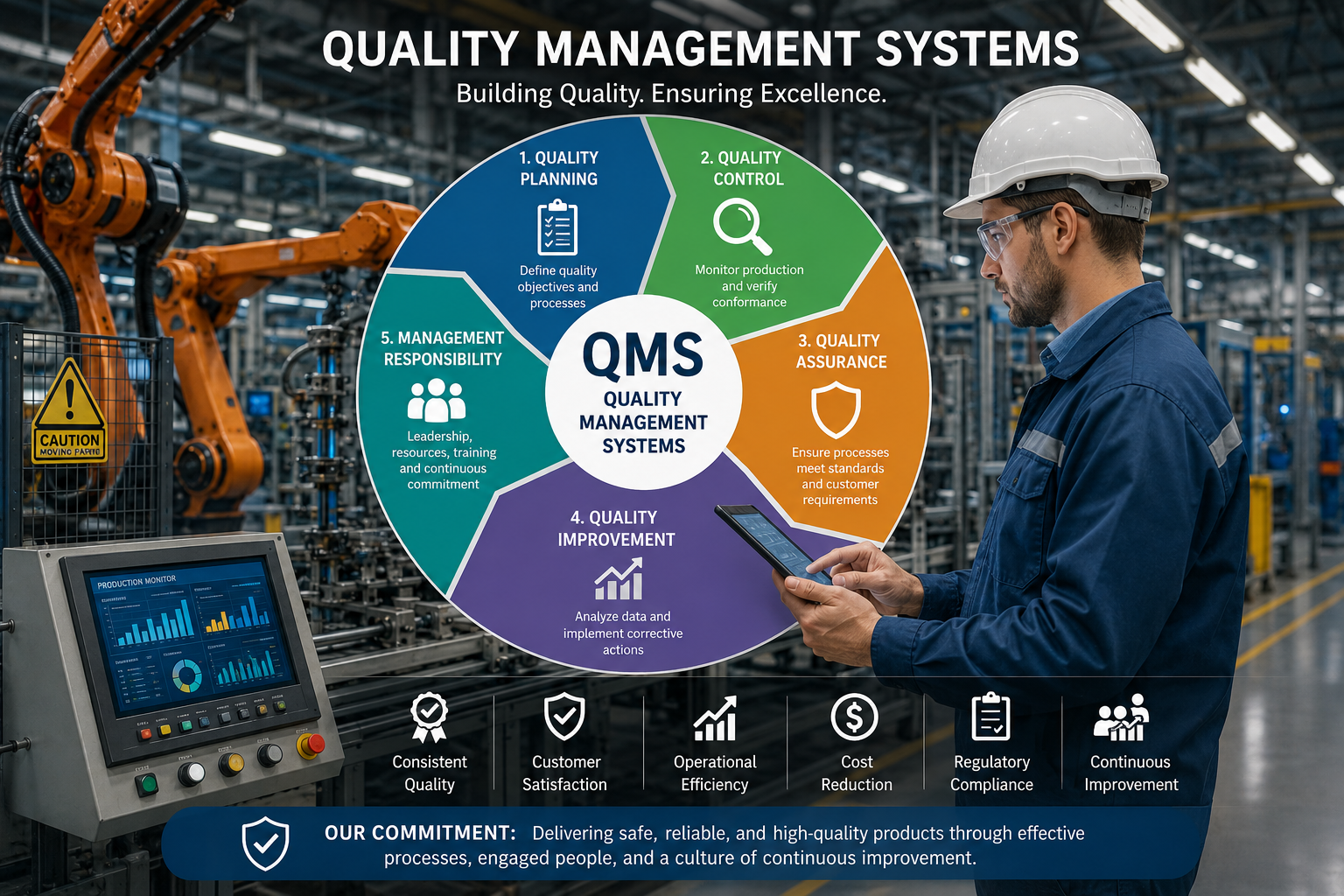
A Quality Management System (QMS) is a formalized system that documents processes, procedures, and responsibilities for achieving quality policies and objectives. It helps organizations coordinate and direct activities to meet customer and regulatory requirements while improving effectiveness and efficiency on a continuous basis.
What Is a Quality Management System (QMS)?
A QMS provides a structured framework for managing quality across all aspects of an organization. It defines how quality is planned, controlled, assured, and improved. By standardizing processes, a QMS reduces variability, minimizes errors, and ensures consistent outcomes.
Organizations across manufacturing, healthcare, engineering, construction, and service industries use QMS frameworks to align operations with quality objectives and customer expectations.
Core Components of a QMS
While QMS structures may vary by industry and standard, most effective systems include the following core components:
Quality Policy and Objectives: Clear statements that define the organization’s commitment to quality and measurable goals.
Process Management: Documented processes that define how work is performed and controlled.
Document Control: Systems to manage procedures, records, and revisions.
Training and Competence: Ensuring employees have the skills and knowledge required to perform their roles.
Performance Measurement: Use of metrics, audits, and reviews to evaluate effectiveness.
Corrective and Preventive Actions (CAPA): Structured methods to address nonconformities and prevent recurrence.
Benefits of Implementing a QMS
Implementing a QMS offers both operational and strategic benefits:
Improved product and service consistency
Enhanced customer satisfaction and trust
Reduced waste, rework, and operational costs
Better compliance with regulatory and contractual requirements
Improved risk management and decision-making
Support for continuous improvement initiatives
Common Quality Management Standards
Many organizations align their QMS with internationally recognized standards. These standards provide best-practice frameworks and are often required by customers or regulators.
ISO 9001: The most widely used QMS standard, applicable to organizations of all sizes and industries.
ISO 14001: Focused on environmental management systems.
IATF 16949: Automotive industry quality standard.
AS9100: Quality standard for aerospace and defense.
ISO 13485: Medical device quality management standard.
Steps to Implement an Effective QMS
Successful QMS implementation requires a structured and disciplined approach:
Define Scope and Objectives: Identify processes, products, and services covered by the QMS.
Obtain Leadership Commitment: Management support is essential for cultural adoption.
Map and Document Processes: Clearly define workflows, inputs, outputs, and responsibilities.
Train Employees: Ensure personnel understand QMS requirements and their roles.
Implement Controls: Establish monitoring, inspections, and performance metrics.
Conduct Internal Audits: Verify compliance and identify improvement opportunities.
Review and Improve: Use management reviews and data analysis to drive continuous improvement.
Challenges in QMS Implementation
Organizations may encounter several challenges when implementing a QMS:
Resistance to change from employees
Insufficient leadership involvement
Poorly defined or overly complex documentation
Lack of meaningful performance metrics
Addressing these challenges requires clear communication, ongoing training, and a focus on practical, value-added processes rather than excessive bureaucracy.
QMS and Continuous Improvement
A QMS is not a one-time project but an ongoing system. Continuous improvement methodologies such as PDCA (Plan-Do-Check-Act), Lean, and Six Sigma are often integrated into QMS frameworks to enhance performance and reduce variation.
A well-designed QMS transforms quality from a compliance requirement into a strategic advantage.
Conclusion
A Quality Management System provides the structure organizations need to consistently deliver quality products and services. When effectively implemented and maintained, a QMS supports compliance, operational excellence, and continuous improvement, ultimately driving long-term business success.