


Article details
When it comes to moving fluids from point A to point B, industrial systems and household plumbing rely on two distinct workhorses: the Centrifugal Pump and the Reciprocating Pump.
While both serve the same basic purpose—increasing the pressure of a fluid to make it move—they operate on completely different mechanical principles. Choosing the wrong one can lead to stalled systems, ruptured pipes, or ruined machinery.
The Core Difference: Dynamic vs. Positive Displacement
The easiest way to understand the divide is to look at how they handle fluid:
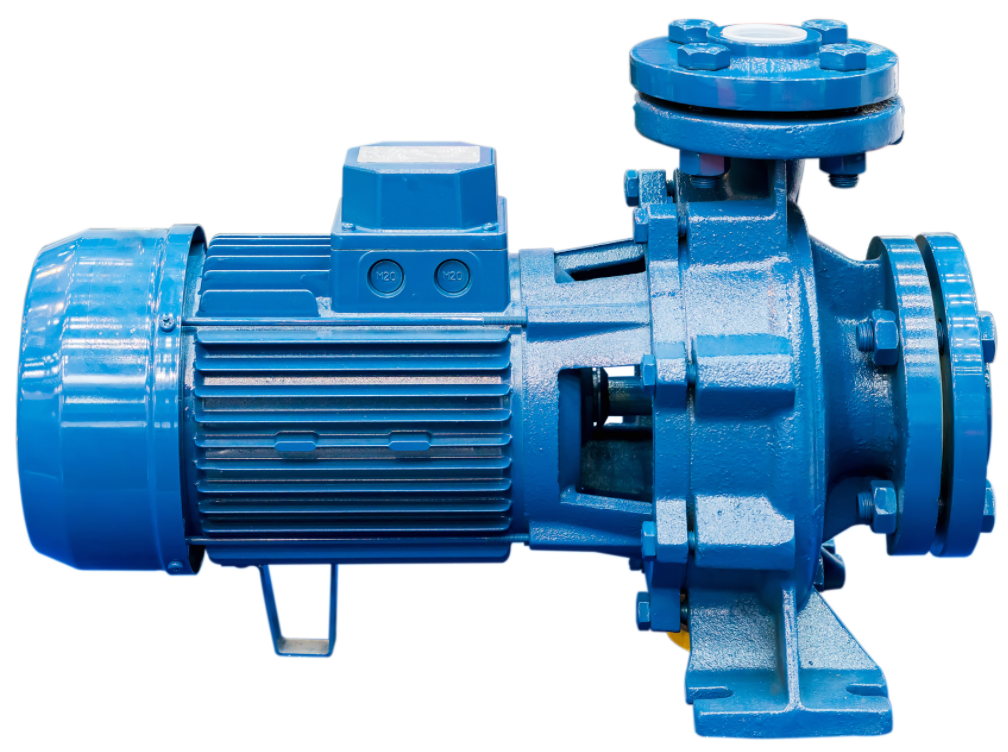
Centrifugal Pumps are Dynamic Pumps. They use kinetic energy to accelerate the fluid, throwing it outward to build velocity, which is then converted into pressure.
Reciprocating Pumps are Positive Displacement Pumps. They physically trap a fixed volume of liquid and force it out of a chamber using a piston or plunger.
1. Centrifugal Pumps: The Speed Demons
Centrifugal pumps are the most common pumps used in the world today. If you have a water pump in your basement or a cooling system in your car, it is almost certainly centrifugal.
How They Work:
Liquid enters the center of a spinning wheel called an impeller.
The rotating blades of the impeller fling the fluid outward at high speed using centrifugal force.
The fluid exits the impeller and enters a specially curved outer chamber called the volute casing.
As the casing widens, the high-speed fluid slows down. According to Bernoulli's principle, this drop in velocity creates a massive spike in pressure, forcing the liquid out through the discharge pipe.
Pros & Cons:
Advantages: High flow rates, smooth and continuous discharge, low maintenance (few moving parts), handles liquids with small solids well, compact size.
Disadvantages: Cannot handle high-viscosity fluids (like heavy oils), struggles with high-pressure demands, and cannot self-prime (the pump casing must be completely filled with liquid to start working; it cannot pump air).
2. Reciprocating Pumps: The Heavy Lifters
Reciprocating pumps operate exactly like a bicycle pump or a medical syringe. They don't rely on speed; they rely on brute physical force.
How They Work:
The Suction Stroke: A piston or plunger moves backward inside a sealed cylinder. This creates a vacuum inside the chamber. The atmospheric pressure forces the suction valve open, drawing fluid into the cylinder.
The Delivery Stroke: The piston reverses direction and moves forward. This increases the internal pressure, slamming the suction valve shut and forcing the delivery valve open. The trapped fluid is physically pushed out into the discharge pipe.
Pros & Cons:
Advantages: Capable of producing incredibly high pressures, highly accurate fluid metering, self-priming (can purge air from the lines automatically), handles highly viscous liquids easily.
Disadvantages: Low flow rates, pulsating discharge (the flow comes in heavy spurts, which can cause "water hammer" and damage pipes), complex mechanism with many moving parts (valves, pistons, rings) leading to high maintenance costs.
Head-to-Head Comparison
Characteristic | Centrifugal Pump | Reciprocating Pump |
Operation Mechanism | Dynamic (Centrifugal force) | Positive Displacement (Piston/Plunger) |
Flow Rate | Very High | Low to Medium |
Discharge Pressure | Low to Medium | Very High |
Flow Consistency | Continuous, smooth flow | Pulsating, intermittent flow |
Viscosity Handling | Only works with thin liquids (Water/Light oils) | Excellent for thick liquids (Mud, heavy crude oil) |
Self-Priming? | No (Requires external priming) | Yes (Can prime itself) |
Cost & Maintenance | Low cost, low maintenance | High cost, frequent maintenance |
When to Use Which?
Choose a Centrifugal Pump if: You need to move a large volume of water or thin liquid quickly at moderate pressures. Think municipal water supply, agricultural irrigation, fire fighting, or domestic water systems.
Choose a Reciprocating Pump if: You need to push a liquid against intense resistance or require pinpoint accuracy. Think oil drilling mud systems, high-pressure car washes, hydraulic jacks, chemical dosing systems, and deep-well oil extraction.