

Article details
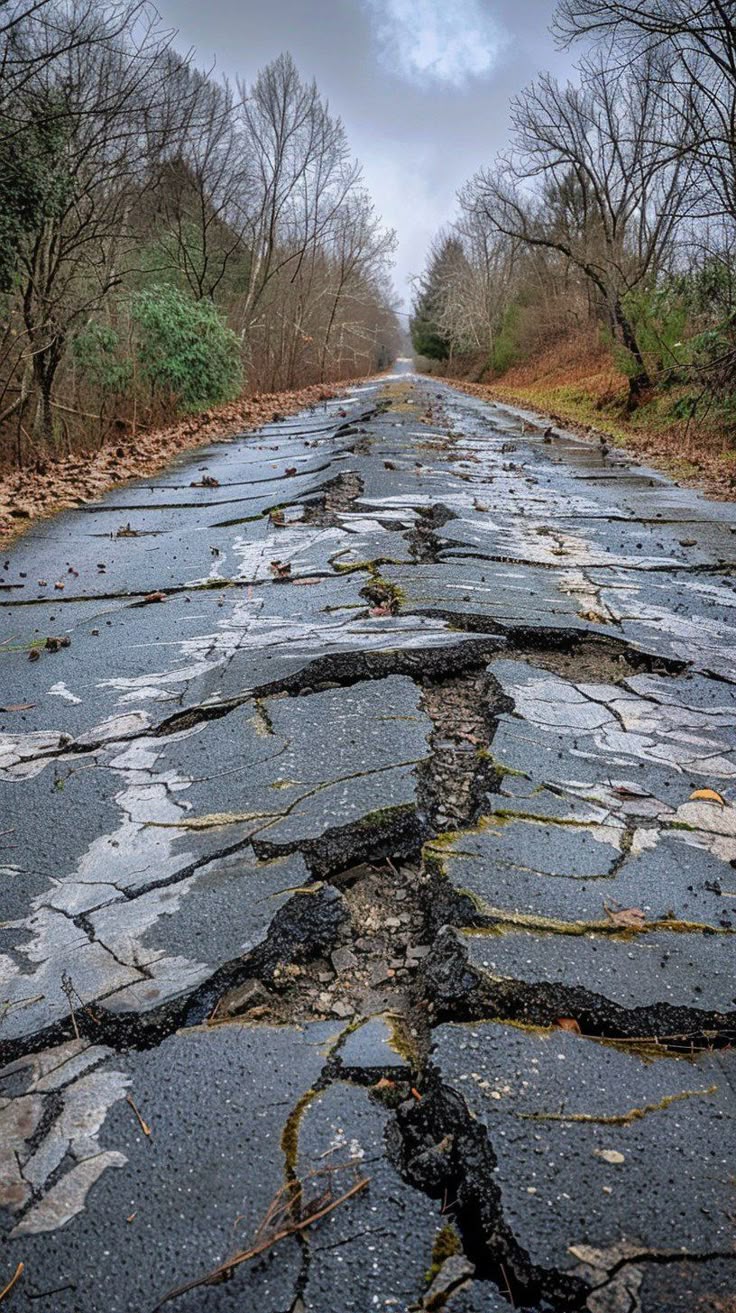
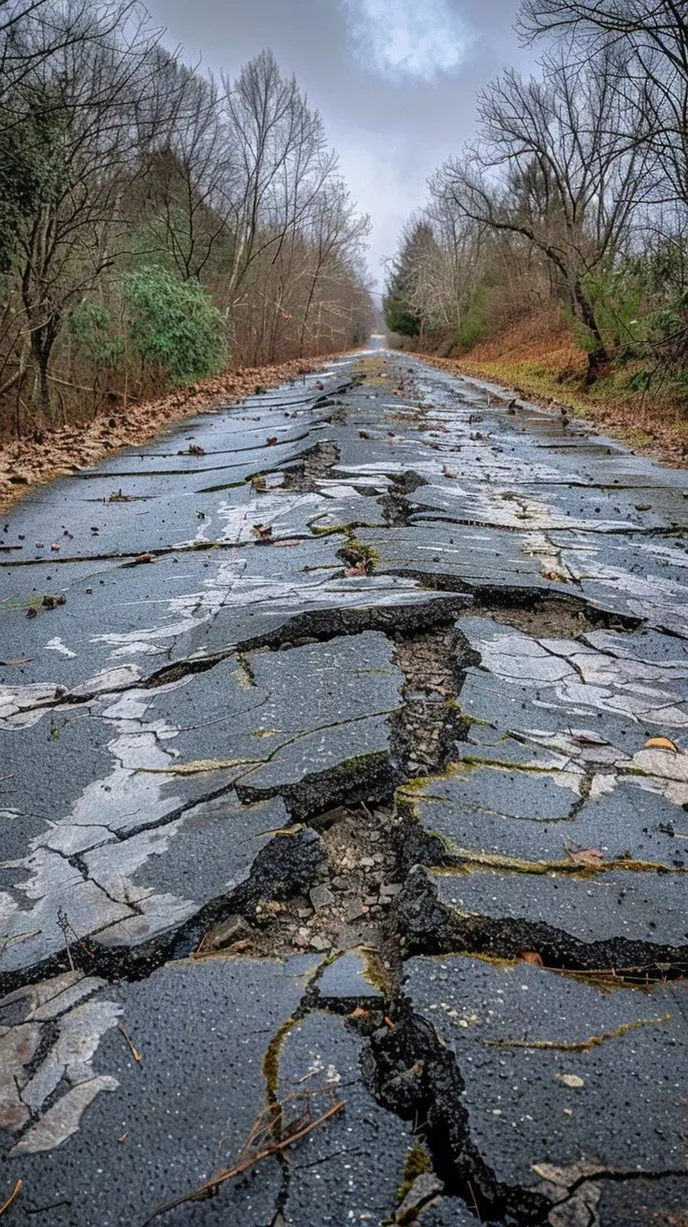
Every road starts to age the day it opens. Traffic, water, sun, and cold all work on the surface, and small problems grow into expensive ones if they are ignored. A hairline crack lets water in, water weakens the base, and a few months later there is a pothole. Knowing what each defect looks like, why it forms, and how to fix it is the core skill of road maintenance. This article covers the defects found on flexible (bituminous), rigid (concrete), and unpaved roads, along with the maintenance strategies used to keep them serviceable.
Why Roads Fail
Most road defects trace back to a handful of causes:
Water: the biggest enemy, entering through cracks, poor drainage, or high water tables
Traffic loading: repeated heavy axle loads, especially overloaded trucks
Poor design: pavement too thin for the traffic or weak subgrade
Poor construction: inadequate compaction, wrong mix, bad joints, thin layers
Material problems: unsuitable bitumen, weak aggregates, poor concrete
Weather and aging: oxidation, temperature cycles, freeze-thaw
Lack of maintenance: small defects left to grow
Part 1: Defects in Flexible (Bituminous) Pavements
1. Cracking
Type | What it looks like | Common causes |
|---|---|---|
Fatigue (alligator) cracking | Interconnected cracks forming a chicken-wire pattern, usually in wheel paths | Repeated loading, weak base or subgrade, thin pavement, poor drainage |
Longitudinal cracks | Cracks running along the road direction | Poor construction joints, shrinkage, reflection from lower layers, edge failure |
Transverse cracks | Cracks across the road width | Thermal contraction, shrinkage, reflection of cracks from old layers |
Block cracking | Rectangular blocks, often large areas | Binder aging and hardening, temperature cycles |
Edge cracking | Cracks near the pavement edge | Lack of shoulder support, poor drainage, heavy edge loading |
Slippage cracking | Crescent or half-moon shaped cracks | Poor bond between surface and underlying layer, braking or turning forces |
Reflection cracking | Cracks that mirror joints or cracks in the layer below | Movement in underlying concrete or cracked layers |
2. Potholes
Bowl-shaped holes where surface and base material have broken out. They form when cracks or weak spots let water in and traffic pulls material out. Potholes are dangerous to vehicles and two-wheelers and grow quickly in the monsoon or wet season.
Causes: untreated cracking, poor drainage, thin surfacing, stripping of asphalt, poor compaction.
3. Rutting
Longitudinal depressions in the wheel paths, sometimes with ridges at the sides. Water collects in ruts, causing hydroplaning.
Mix rutting: the asphalt layer itself deforms under heat and traffic (soft mix, excess binder, rounded aggregate)
Structural rutting: the base or subgrade deforms because of weak support or moisture
4. Shoving and Corrugation
Shoving: localized bulging of the surface, often at junctions, bus stops, and steep grades where vehicles brake or accelerate
Corrugation (washboarding): regular ripples across the road, caused by unstable mix or poor bond
5. Bleeding (Flushing)
A shiny, black, sticky film of excess binder on the surface, especially in hot weather. It reduces skid resistance.
Causes: too much bitumen, too little air voids, over-applied tack or prime coat.
6. Raveling (Weathering)
Gradual loss of aggregate and binder from the surface, leaving it rough and pitted.
Causes: aged binder, poor adhesion, low compaction, water damage.
7. Stripping
Loss of bond between bitumen and aggregate in the presence of water, leading to raveling and potholes. Often hidden until the surface fails.
8. Polished Aggregate and Loss of Skid Resistance
Aggregates wear smooth under traffic, reducing friction, which is a serious safety problem on curves and approaches to junctions.
9. Depressions and Settlement
Localized low areas that collect water. Caused by settlement of the subgrade, poor compaction of fill, or failed utility trenches.
10. Swelling and Heaving
Upward bulging, usually from expansive soil, frost action, or tree roots.
11. Edge Defects
Edge drop-off: a level difference between pavement and shoulder, dangerous for vehicles leaving the lane
Edge break: broken or crumbling edges due to lack of lateral support
Shoulder erosion: loss of shoulder material from water flow
12. Patch Deterioration and Utility Cut Failure
Patches and trench repairs often fail because of poor compaction, poor sealing at the edges, or settlement of the backfill.
13. Surface Delamination and Peeling
The wearing course separates from the layer beneath, often due to a poor tack coat or dirty surface at the time of laying.
Part 2: Defects in Rigid (Concrete) Pavements
Defect | Description | Typical causes |
|---|---|---|
Transverse, longitudinal, and corner cracks | Cracks across, along, or at the corners of slabs | Overloading, loss of support, late or shallow joint sawing, thermal stress |
Faulting | Height difference across a joint or crack | Pumping, poor load transfer, loss of subbase support |
Pumping | Water and fine material ejected through joints and cracks | Poor drainage, erodible subbase |
Spalling | Breaking or chipping of slab edges at joints | Incompressible material in joints, weak concrete, poor finishing |
Scaling | Flaking of the top surface | Freeze-thaw, deicing salts, poor curing, over-finishing |
Blow-ups (buckling) | Slab edges lifting or shattering, usually in hot weather | Insufficient expansion joints, infiltration of debris into joints |
Joint seal damage | Cracked, missing, or hardened sealant | Aging, poor installation |
Punchouts | Localized breakup in continuously reinforced concrete | Steel corrosion, poor support, heavy loads |
Map cracking and alkali-silica reaction | Fine network of cracks | Reactive aggregates, poor curing |
Settlement and slab rocking | Slabs sinking or moving under traffic | Void under slab, subgrade failure |
Polishing and wear | Smooth surface, lower friction | Traffic abrasion, soft aggregate |
Part 3: Defects on Unpaved (Gravel and Earth) Roads
Potholes and rutting: caused by poor drainage and soft material
Washboarding: ripples from vehicle vibration and dry, loose material
Loose aggregate: loss of gravel to traffic and wind
Dust: fine material lost in dry conditions
Erosion and gullies: water running along or across the road
Crown loss: flattened road shape that holds water
Side drain blockage: water spills onto the road
Part 4: Drainage-Related Defects
Many pavement failures begin with drainage problems:
Blocked or silted side drains and culverts
Missing or damaged cross-drainage
Ponding on the road surface or shoulders
Inadequate camber or cross slope
High water table or seepage into the subgrade
Damaged kerbs and channels
Rule of thumb: a road with poor drainage will fail in a fraction of its design life, no matter how good the pavement.
Part 5: Defects in Road Furniture and Markings
Faded or missing lane markings and studs
Damaged signs, delineators, and guardrails
Broken kerbs and footpaths
Failed expansion joints on bridges and flyovers
Non-functional street lighting
Damaged crash barriers and median plantation issues
Part 6: Road Condition Assessment
You cannot manage what you do not measure. Typical assessment methods include:
Visual condition surveys
Trained inspectors walk or drive the road, recording type, extent, and severity of defects. Results are scored using indexes such as the Pavement Condition Index (PCI).
Roughness measurement
Measured as the International Roughness Index (IRI), using road roughness meters or laser profilers. It shows ride quality.
Structural evaluation
Falling Weight Deflectometer (FWD) or Benkelman Beam measures pavement deflection to evaluate structural strength
Core cutting and test pits reveal layer thickness and material condition
Ground-penetrating radar detects layer thickness and voids
Surface friction and texture
Skid resistance testers and sand patch tests check safety.
Rut depth measurement
Straight edge and wedge, or laser-based systems.
Modern tools
Vehicle-mounted cameras, drones, LiDAR, and AI-based image analysis detect and map defects quickly across long networks.
Part 7: Types of Road Maintenance
Type | Purpose | Examples |
|---|---|---|
Routine maintenance | Day-to-day upkeep to keep the road functional | Pothole patching, crack sealing, drain cleaning, vegetation control, sign cleaning, shoulder grading |
Periodic maintenance | Planned work every few years to restore surface condition | Resealing, surface dressing, overlay, slurry seal, remarking |
Preventive maintenance | Treatments applied to good roads to slow deterioration | Crack sealing, fog seal, micro-surfacing, chip seal |
Rehabilitation | Restoring structural capacity of a worn pavement | Thick overlay, partial or full-depth reclamation, recycling |
Reconstruction | Complete removal and rebuilding | When the pavement or subgrade has failed |
Emergency maintenance | Immediate repair after floods, landslides, or accidents | Clearing debris, temporary patches, bridge repairs |
The cost curve: a rupee spent on preventive maintenance early saves several rupees on rehabilitation later. Roads left to deteriorate to "poor" condition cost many times more to repair than those maintained while still "fair."
Part 8: Repair Methods for Flexible Pavements
Pothole Repair
Recommended permanent method (cut and patch)
Mark a neat rectangular or square area around the pothole, extending to sound pavement
Cut vertical edges using a saw or cutter
Remove all loose and wet material to firm base
Clean and dry the cavity
Repair the base if weak, and compact it
Apply tack coat on the sides and bottom
Fill with hot mix or cold mix in layers, compacting each layer
Leave the patch slightly above the surface to allow for traffic compaction
Seal the edges to prevent water entry
Temporary methods: throw-and-roll with cold mix, or spray injection patching, used for emergencies, especially in the rainy season, and followed by permanent repair later.
Hot mix vs cold mix: hot mix gives a more durable repair but needs dry weather and a plant. Cold mix is convenient and stockpileable, but is generally a short-term fix.
Crack Sealing and Filling
Crack sealing: for working (moving) cracks, using flexible sealants in a routed channel
Crack filling: for non-working cracks, using simpler fillers
Always clean the crack with compressed air and ensure it is dry
Fog Seal
A light spray of diluted bitumen emulsion that seals the surface, slows raveling, and refreshes appearance.
Surface Dressing (Chip Seal)
Bitumen is sprayed and aggregate chips are rolled in. Restores skid resistance, waterproofs the surface, and extends life.
Slurry Seal and Micro-Surfacing
A mix of fine aggregate, emulsion, filler, and water applied as a thin layer. Micro-surfacing contains polymer and can fill ruts and correct minor surface defects.
Thin and Structural Overlays
Thin overlay: 25 to 40 mm for surface restoration
Structural overlay: thicker layers (bituminous concrete, or dense bituminous macadam) designed from deflection tests to add strength
Milling and Inlay
The damaged surface layer is milled off and replaced with new asphalt, preserving kerb heights and drainage levels.
Hot and Cold In-Place Recycling
The existing pavement is heated or processed on site, mixed with new binder or additives, and relaid. Cuts material cost, haulage, and waste.
Full-Depth Reclamation (FDR)
The pavement and part of the base are pulverized, stabilized with cement, lime, foam bitumen, or emulsion, and compacted as a new base, then resurfaced.
Rut Repair
Minor rutting: micro-surfacing or leveling course
Severe rutting: mill and replace, and address the cause (mix design or base failure)
Bleeding Repair
Apply hot sand or fine chips to absorb excess binder, or mill the layer if severe.
Edge and Shoulder Repair
Rebuild shoulders with compacted granular material, match levels, and correct the cross slope so water drains away.
Part 9: Repair Methods for Concrete Pavements
Defect | Repair method |
|---|---|
Joint and crack sealing | Rout, clean, install backer rod, apply sealant |
Spalling | Partial-depth repair with patching concrete |
Broken slabs | Full-depth slab replacement with dowels and tie bars |
Faulting and rocking | Dowel bar retrofit, slab stabilization by grouting, diamond grinding |
Pumping and voids | Undersealing with cement grout, improve drainage |
Rough surface | Diamond grinding or grooving |
Blow-ups | Replace damaged slabs, clean and widen expansion joints |
Surface wear | Overlay (bonded or unbonded) or retexturing |
Part 10: Maintenance of Unpaved Roads
Grading (blading) to restore crown and remove ruts
Regravelling at regular intervals, as gravel is lost to traffic
Compaction with rollers after grading
Drain cleaning and reshaping of side drains and mitre drains
Dust control with water, calcium chloride, or other stabilizers
Culvert and causeway repair before the rainy season
Erosion control with vegetation, check dams, or lined drains
Part 11: Drainage Maintenance
Clean side drains, culverts, and catch pits before every rainy season, and again after heavy storms
Remove silt and vegetation from outlets
Repair damaged pipes, headwalls, and channel linings
Re-grade shoulders so water leaves the pavement
Install sub-surface drains where the water table is high
Check that kerb openings and inlets are not blocked by debris or asphalt overlay
Part 12: Planning and Managing Maintenance
Pavement Management System (PMS)
A structured approach to collect road data, predict deterioration, and select the best treatment and timing within a budget. It typically includes:
Road inventory
Condition surveys
Performance prediction
Treatment selection
Prioritization and budgeting
Implementation and monitoring
Prioritization factors
Traffic volume and road importance
Current condition and rate of deterioration
Safety and accident history
Cost-effectiveness
Public complaints and community access needs
Link to hospitals, schools, and markets
Maintenance calendar (typical)
Season | Key activity |
|---|---|
Pre-monsoon or pre-winter | Drain cleaning, crack sealing, shoulder repair |
Monsoon or wet season | Emergency pothole patching, flood response |
Post-monsoon | Permanent repairs, resurfacing |
Dry season | Overlays, surface dressing, major works |
Part 13: Quality Control in Maintenance Work
Use tested materials with the correct bitumen grade and aggregate quality
Maintain mix temperature (typically 130 to 160 degrees Celsius at laying for hot mix, depending on binder)
Ensure clean, dry surfaces and proper tack coat before laying
Control layer thickness and compaction (core density tests, field density)
Check joints and edges for proper sealing
Check levels and cross slopes with a straight edge
Avoid laying in rain or on wet surfaces
Keep records of locations, quantities, and dates, so repairs can be traced
Part 14: Safety During Road Maintenance
Prepare a traffic management plan
Use signs, cones, barriers, and flaggers with adequate advance warning
Provide high-visibility clothing and lighting for night work
Control vehicle speeds near the work zone
Keep workers separated from traffic with barriers where possible
Plan work to minimize disruption during peak hours
Keep emergency access open
Part 15: Common Mistakes in Road Maintenance
Patching over wet or dirty potholes without cutting and cleaning
Ignoring drainage and fixing only the surface
Using overlays to hide structural failures, which return as reflection cracks
Delaying crack sealing until after the rains
Poor compaction of patches and trenches
Using wrong materials or too much bitumen
Not marking and signing the work zone properly
No records, no follow-up inspection, and no monitoring of repairs
Conclusion:
Road maintenance is a race against water and time. The best-performing road networks are not the ones with the thickest pavements, but the ones where inspectors catch small defects early, drains are kept clear, and repairs are done properly the first time. Understanding what each defect is telling you is half the job: a crack pattern, a rut, or a patch of bleeding is a message about loading, materials, or drainage. Read the message, fix the cause and not just the symptom, and the road will last far longer for far less money.
I can also prepare a road inspection checklist, a pothole repair method statement, or a Word or PDF version of this article.