


Article details
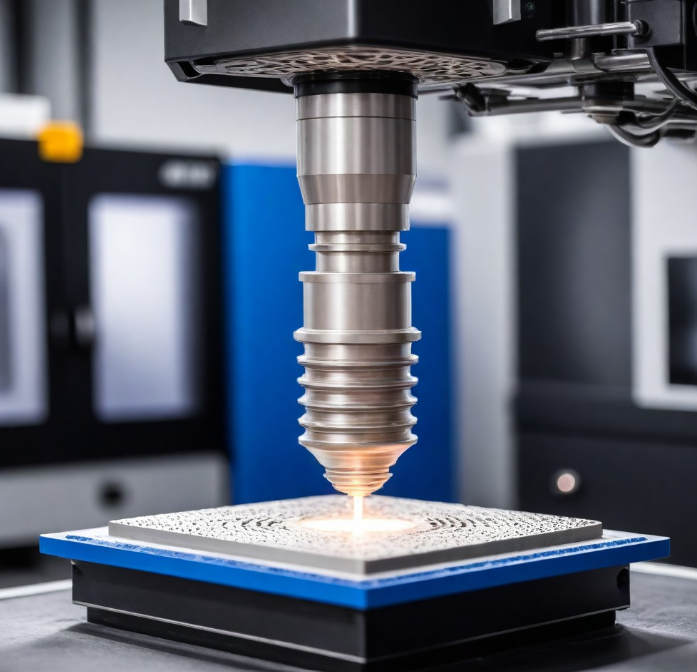
Additive manufacturing, commonly known as 3D printing, has transformed the landscape of manufacturing, offering unprecedented opportunities for innovation, customization, and efficiency. From aerospace to healthcare, additive manufacturing has revolutionized traditional manufacturing processes by enabling the creation of complex geometries, reducing material waste, and accelerating product development cycles. In this article, we explore the latest advancements in additive manufacturing, along with the opportunities they present and the challenges that must be overcome to fully realize its potential.
1. Materials Innovation:
One of the key advancements in additive manufacturing is the expansion of available materials beyond plastics to include metals, ceramics, composites, and even biomaterials. Innovations in material science have led to the development of specialized powders, filaments, and resins tailored for specific applications, such as high-temperature aerospace components, biomedical implants, and lightweight automotive parts. By expanding the material palette, additive manufacturing opens new avenues for product design, performance optimization, and functional integration.
2. Multi-Material Printing:
Multi-material printing capabilities have emerged as a game-changer in additive manufacturing, allowing the simultaneous deposition of multiple materials to create complex structures with varying mechanical, thermal, or electrical properties. This capability enables the fabrication of hybrid components, functional prototypes, and customizable products with unprecedented versatility. Multi-material printing paves the way for innovation in fields like electronics, consumer goods, and medical devices, where integration of diverse materials is essential for performance and functionality.
3. Large-Scale Additive Manufacturing:

Advancements in large-scale additive manufacturing technologies have made it possible to fabricate objects of significant size with improved speed and accuracy. From architectural structures to industrial machinery components, large-scale additive manufacturing offers cost-effective solutions for rapid prototyping, tooling, and production of custom-designed parts. By eliminating the need for assembly of large structures from smaller components, this technology streamlines the manufacturing process and reduces material waste, leading to significant cost savings and environmental benefits.
4. In-Situ Monitoring and Quality Control:

Ensuring the quality and integrity of additively manufactured parts remains a critical challenge. However, recent advancements in in-situ monitoring techniques, such as real-time process monitoring, thermal imaging, and non-destructive testing, enable comprehensive quality control throughout the printing process. By detecting defects, monitoring layer-by-layer deposition, and validating part conformity in real-time, in-situ monitoring technologies enhance process reliability, reduce scrap rates, and improve overall product quality.
5. Digital Design and Simulation Tools:

Digital design and simulation tools have become indispensable in additive manufacturing workflows, facilitating the optimization of part geometries, material distribution, and manufacturing parameters. Computer-aided design (CAD) software integrated with generative design algorithms enables the creation of lightweight, structurally optimized components that maximize strength-to-weight ratios and minimize material usage. Additionally, advanced simulation software simulates the printing process, predicts material behavior, and identifies potential defects, allowing engineers to refine designs and optimize manufacturing processes before physical fabrication.
Challenges:
Despite its transformative potential, additive manufacturing still faces several challenges that must be addressed to unlock its full capabilities:
1. Material Qualification and Certification: Validating the mechanical properties, reliability, and consistency of additively manufactured parts remains a significant challenge, particularly in safety-critical industries like aerospace and healthcare. Establishing standardized testing protocols, material qualification procedures, and certification frameworks is essential to ensure the reliability and regulatory compliance of additively manufactured components.
2. Scalability and Production Efficiency: While additive manufacturing excels in prototyping and low-volume production, scaling up to high-volume manufacturing remains a challenge due to limitations in speed, throughput, and production cost. Improvements in printing speed, automation, and post-processing technologies are needed to enhance the scalability and cost-effectiveness of additive manufacturing for mass production applications.
3. Surface Finish and Post-Processing: Achieving desired surface finishes and tolerances without compromising part integrity is a persistent challenge in additive manufacturing. Post-processing techniques such as machining, polishing, and surface coating are often required to meet quality requirements and functional specifications. Developing automated post-processing solutions and optimizing finishing techniques are essential to streamline production workflows and improve overall part quality.
Conclusion:
Additive manufacturing continues to evolve rapidly, driven by advancements in materials, printing technologies, process monitoring, and digital design tools. The opportunities presented by additive manufacturing are vast, ranging from customizable products and complex geometries to sustainable manufacturing practices and rapid prototyping. However, addressing challenges related to material qualification, scalability, production efficiency, and surface finish is crucial to realizing the full potential of additive manufacturing across various industries. By overcoming these challenges and embracing innovation, additive manufacturing will continue to shape the future of manufacturing, enabling unprecedented levels of customization, efficiency, and sustainability.


 2 Hrs
2 Hrs 


