

Article details
1. Introduction: The Failure of Conventional Urban Drainage
For over a century, traditional urban water management relied on a rigid philosophy of rapid disposal: "grey infrastructure." When rain falls on a conventional city, impervious surfaces like asphalt roads, concrete sidewalks, and commercial rooftops prevent water from soaking into the ground. Instead, vast volumes of stormwater rush across these surfaces into gutters, storm sewers, and concrete drainage channels, routing water out of the city as fast as possible.
While this approach keeps streets dry during minor showers, it triggers severe consequences during extreme weather events:
Peak Runoff Overload: Rapid runoff concentrates high volumes of water into storm networks simultaneously, overwhelming pipe capacities and causing severe urban flash flooding.
Urban Heat Island (UHI) Effect: Expansive concrete and asphalt absorb and retain solar heat, driving up city temperatures.
Water Quality Degradation: Untreated stormwater flushes heavy metals, oils, and particulate pollutants directly into natural rivers and coastal bays.
To combat these escalating challenges, modern civil and environmental engineering has embraced the Sponge City paradigm and Low-Impact Development (LID) practices—shifting from fighting nature to working in harmony with it.
2. Core Technical Principles of Low-Impact Development
The fundamental goal of LID is to mimic pre-development hydrological conditions, prioritizing local water retention, infiltration, evapotranspiration, and natural filtration rather than immediate off-site transport.
A. Permeable Pavements and Porous Asphalt
Traditional pavements are completely impermeable. Permeable pavements utilize pervious concrete, porous asphalt, or interlocking concrete pavers with wide, aggregate-filled joints. Beneath the wearing course lies an open-graded stone reservoir layer. When rain falls, water infiltrates directly through the surface pavement, temporarily storing in the stone bed before slowly infiltrating into the native subgrade or discharging through controlled underdrains.
B. Bioswales, Rain Gardens, and Bioretention Cells
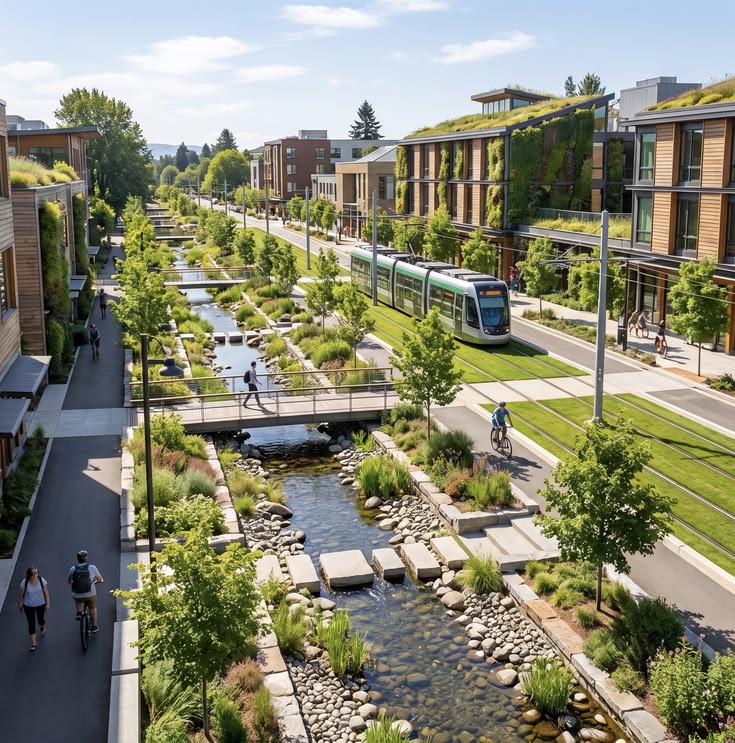
Bioswales are shallow, gently sloped vegetated channels engineered to capture, convey, and filter stormwater runoff. Unlike concrete drainage ditches, bioswales feature layered filter media (topsoil, sand, and gravel) planted with native, deep-rooting vegetation. As runoff flows through the swale:
The vegetation slows down water velocity, extending the time of concentration.
Root systems enhance soil permeability and biological activity.
Suspended sediments and heavy metal pollutants are filtered out naturally through the soil matrix before reaching local aquifers.
C. Green Roofs
Intensive and extensive green roofs replace traditional dark waterproof roofing membranes with lightweight growing media and drought-tolerant vegetation (such as Sedum). Green roofs retain up to 60–80% of annual rainfall through plant absorption and evaporation, drastically reducing peak roof runoff while insulating buildings against extreme summer heat.
3. Practical Applications and Urban Benefits
Implementing Sponge City strategies transforms urban environments into resilient, multifunctional ecosystems:
A. Urban Flood Mitigation and Peak Flow Reduction
By distributing retention throughout neighborhoods via decentralized green infrastructure, cities flatten the flood hydrograph. Peak discharge volumes during 50-year storm events are significantly reduced, sparing municipal drainage networks from surcharging and preventing street-level inundation.
B. Microclimate Regulation and Heat Island Reduction
Vegetated bioswales, rain gardens, and green roofs cool the surrounding urban atmosphere through natural evapotranspiration, reducing local surface temperatures and improving overall urban air quality.
Conclusion
Sponge Cities and Low-Impact Development represent a vital evolution in civil and environmental engineering. By replacing rigid concrete drainage with decentralized, nature-based absorption networks—such as permeable pavements, bioswales, and green roofs—cities can successfully manage extreme storm events, filter urban runoff, and mitigate urban heat. Embracing the sponge city philosophy turns urban spaces into living, breathable landscapes capable of thriving in a changing climate.