


Article details
The Cupola furnace remains one of the most vital tools in the foundry industry, particularly for the melting of cast iron. Characterized by its vertical, cylindrical structure and continuous operation, the cupola is a refractory-lined steel vessel engineered to convert pig iron, scrap metal, and alloys into high-quality molten metal.
Structural Anatomy of a Cupola

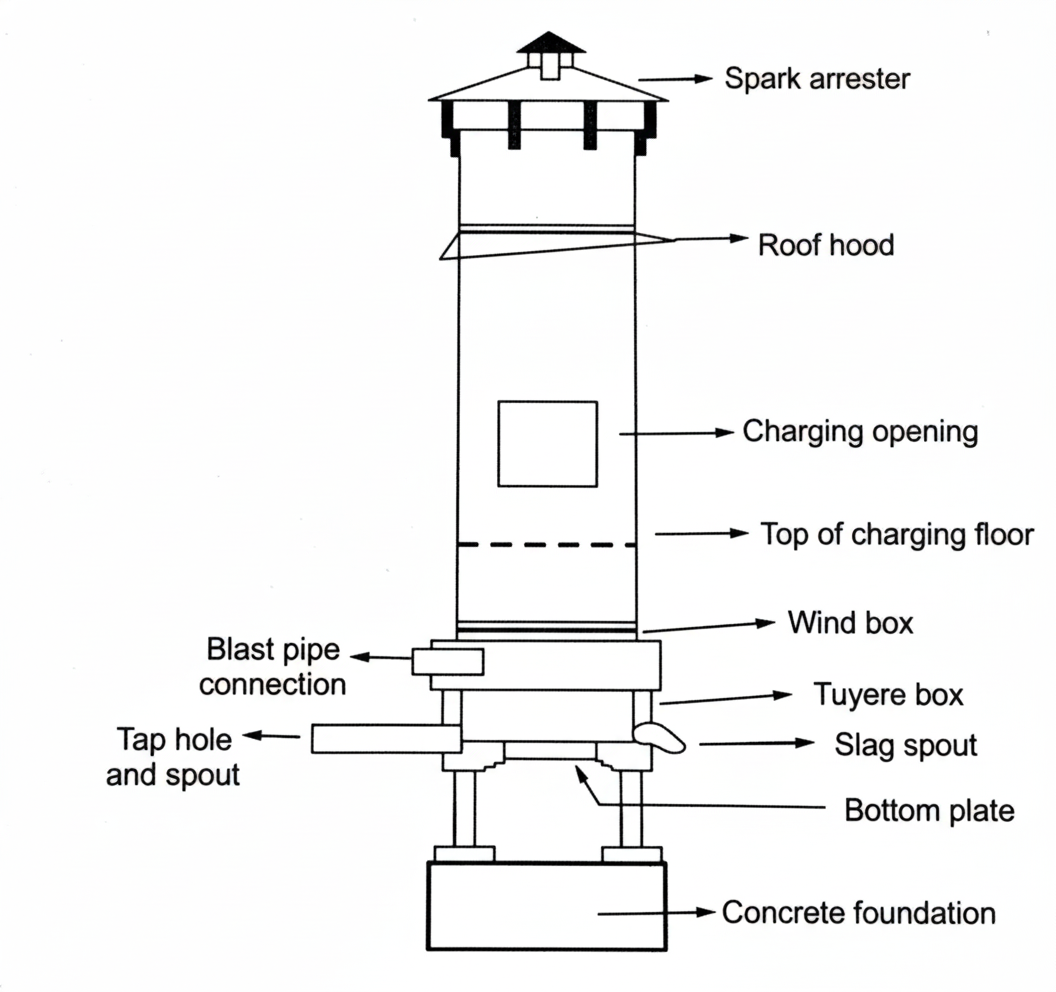
The efficiency of a cupola is rooted in its vertical design, which allows for a gravity-fed melting process. Key components include:
The Stack: The main vertical body where the charging of materials occurs.
Charging Opening: Located at the upper section, this is where layers of metal, flux, and fuel (coke) are introduced.
Air Blast System: Comprising the Wind Box and Tuyeres, this system forces air into the furnace to sustain combustion. The tuyeres are often inclined (typically at 15 degrees) to optimize air distribution.
Molten Zone: The bottom area where the molten metal and slag accumulate.
Tapping Holes: Separate spouts are used to extract the molten iron and the lighter slag (waste by-products).
Emission Control: Topped with a spark arrester and roof hood to manage particulate matter and heat.
The Melting Process

The cupola operates on a counter-current principle. As the "charge"—consisting of alternating layers of metal, flux, and coke—descends through the stack, it meets rising hot gases from the combustion zone.
Preheating: The descending charge is preheated by the ascending exhaust gases.
Combustion: Near the tuyeres, the coke burns intensely, providing the thermal energy required for melting.
Fluxing: The flux (often limestone) reacts with impurities to form a liquid slag, which floats on top of the molten iron, protecting it from oxidation.
Tapping: Molten iron is drawn from the tap hole at regular intervals, while slag is removed through the slag spout.
Advantages in Foundry Operations
Despite the rise of induction furnaces, the cupola furnace maintains a dominant position in gray-iron melting due to several unique industrial advantages:
I. Continuous Melting Capability
Unlike batch-processing furnaces, the cupola allows for a steady, uninterrupted flow of molten metal. This "continuous tap" ensures that foundry production lines—especially those serving the automotive and agricultural sectors—can synchronize their pouring schedules with high precision.
II. Economic Efficiency
The cupola is recognized for having lower raw material and operating costs compared to almost any other melting method capable of producing an equivalent volume of metal. Its ability to utilize various grades of scrap metal further enhances its cost-effectiveness.
III. Metallurgical Control
Composition Management: Through precise furnace operation, foundries can maintain tight control over the chemical composition of the final cast steel or iron.
Temperature Regulation: Operators can achieve adequate temperature control, which is critical for maintaining the fluidity required for complex casting molds.
Cast Steel vs. Wrought Steel
In the context of cupola melting, it is essential to distinguish the materials produced. Cast steel is primarily an alloy of iron and carbon. While carbon dictates the fundamental properties, cast steels also contain many of the same trace elements found in wrought steel, though the manufacturing process allows for greater flexibility in shaping complex parts.
Conclusion
The cupola furnace is a cornerstone of heavy industry, balancing high melting rates with economic viability. While newer technologies offer different benefits, the cupola’s ability to provide a continuous, high-volume supply of molten iron ensures its continued relevance in modern manufacturing.


 2 Hrs
2 Hrs 


