

Article details
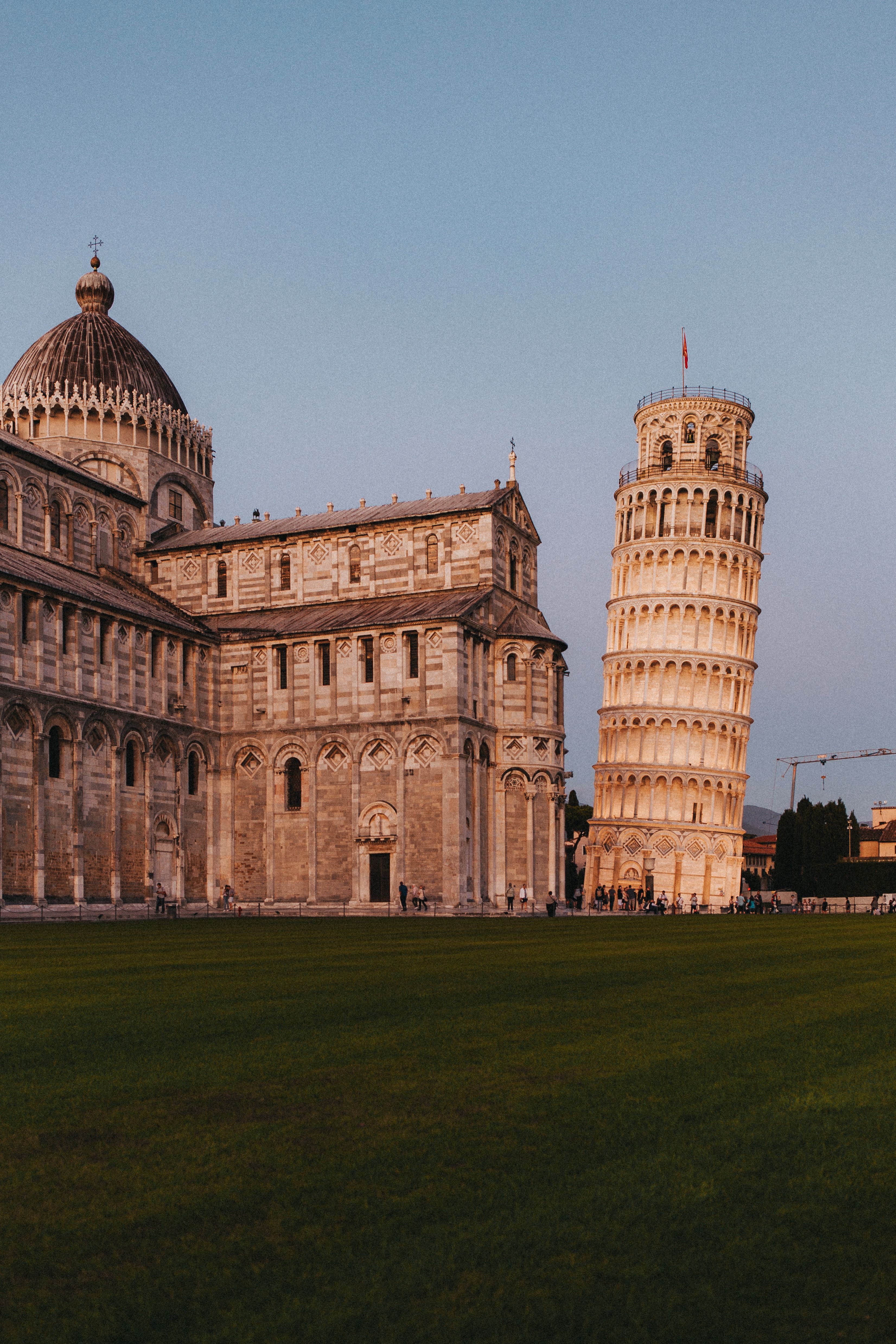
The Leaning Tower of Pisa has been standing for hundreds of years despite being constructed on unstable soil; having an extremely shallow base; and tilting increasingly throughout history. Engineers are predicting that the tower will be able to remain standing for at least another two centuries. The reason for its long-term survival is a result of a combination of historical good fortune, fundamental physical principles and one of the most challenging restoration efforts in all of modern engineering. Constructions started in 1173 as the bell tower of Pisa’s cathedral. Its eight-story marble construction, intended to be approximately 56 meters high, was raised in stages over almost two centuries.
Underground excavations proved to be a challenging task since Pisa’s territory lies within the floodplain of the Arno River. The foundation stone is laid in a layered soil consisting of sand, silt, and soft marine clay deposits several tens of meters thick. The foundation of the tower was only about three meters deep, and it had to hold a load of 14,500 tonnes of masonry. The soil under the southern side of the derrick was compressed more than on the northern side, and the tower started leaning during the construction process of the third floor.
The Wars That Saved the Tower
The tower's survival was aided by medieval politics, which were not always quick to act. Pisa was often at war, especially with Genoa, and work on the tower was halted for nearly a century. During this lull, consolidation took place in the clay, increasing its density.
If the builders had continued working up the tower, it's likely that the tower would have fallen during construction. The long hiatus allowed the ground to settle.
When work resumed in the 1270s, the builders made the tower lean back by building the upper stories somewhat higher on the low side, giving the tower its present subtly curved shape (rather than a straight, but leaning, line). The bell chamber was completed around 1372, and the tower continues to lean.
The Physics of Standing at an Angle
The Leaning Tower of Pisa leans but does not fall because its center of gravity is still over its base. It is possible to tilt an object until its center of gravity is beyond its base, and then it falls. The Pisa tower is wide, heavy, and has a thick hollow core, therefore, its center of gravity is at a good margin even when leaning.
This fact does not explain the situation in Pisa completely since it could lean even more before actually falling. The problem was in the cohesion of the soil that was holding the tower. The more it leaned, the more pressure was applied to the opposite side by its own weight, compacting the soil until the point when the leaning became uncontrollable. Thus, it is possible that the soil simply eroded under the weight of the tower, and the leaning contributed to it.
Tilt Grows
For hundreds of years the tower has leaned further from the vertical. Several incidents contributed to the problem:
1838: A gallery was excavated around the base to study the foundation. The excavation caused the tower to lean more.
1934: Efforts to straighten the tower by pumping cement into the foundation had the opposite effect.
20th century: Groundwater was pumped away to allow construction in the area; the lowering of the water table contributed to the lean.
By the 1990s the tower was out of plumb by about 5.5 degrees, with the top of the tower nearly 5 meters from the perpendicular, and it was still leaning. It was closed to the public in 1990, and an international committee of engineers, headed by Michele Jamiolkowski, was formed to attempt to save it.
The Rescue
For centuries the tower has gradually leaned further away from being vertical. Several events have contributed to this phenomenon:
1838: Excavation of a gallery around the tower's base to expose its foundation caused water to run off and temporarily increase the tilt
1934: An attempt to stabilize the tower by injecting cement into the foundation actually caused the lean to worsen
20th century: The lowering of the water table by groundwater pumping around the tower also helped the lean
By the 1990s, the lean was around 5.5 degrees with the top of the tower nearly five meters from being vertical and measurement indicated it was still leaning. In 1990 the tower was closed to the public and an international committee of engineers, organized around engineer Michele Jamiolkowski, was formed to save it.
Why It's Stable Now
It turns out that the Leaning Tower of Pisa hasn't fallen over because of the engineering work. Rather, since then, the tower has been carefully monitored with sensors. The tower has actually straightened a bit on its own, by a few additional centimeters- the settled soil has stabilized, says engineers. They say the tower will stand for another 200 years, at least.
Part of the answer lies in the very soil that was a problem originally- it has been compacted and reinforced over eight centuries, says one theory. But another explanation is even more interesting. According to a 2018 research, the tower's height, combined with the underlying soil's stiffness, and the soft landing of the tower interacts in a way that filters out the shake of the earth. This dynamic soil-structure interaction explains why it has been able to withstand several powerful earthquakes in a seismically active area.
A Flaw Worth Preserving
The fact that the tower was saved is a tribute to the flexibility of its engineers and the good luck of its owners, for it should never have been made completely straight. Straightening it to the very last degree would have been possible, but it would have destroyed what the monument is all about, leaving behind little more than an over-restored, overly symmetric medieval skyscraper. The solution involved only the minimum intervention necessary to stabilize it.
The Leaning Tower of Pisa still stands, thanks to a century of good fortune, a happy accident of geometry, and the courage and technical skill of modern restorers who worked with the flaw rather than against it.