

Article details
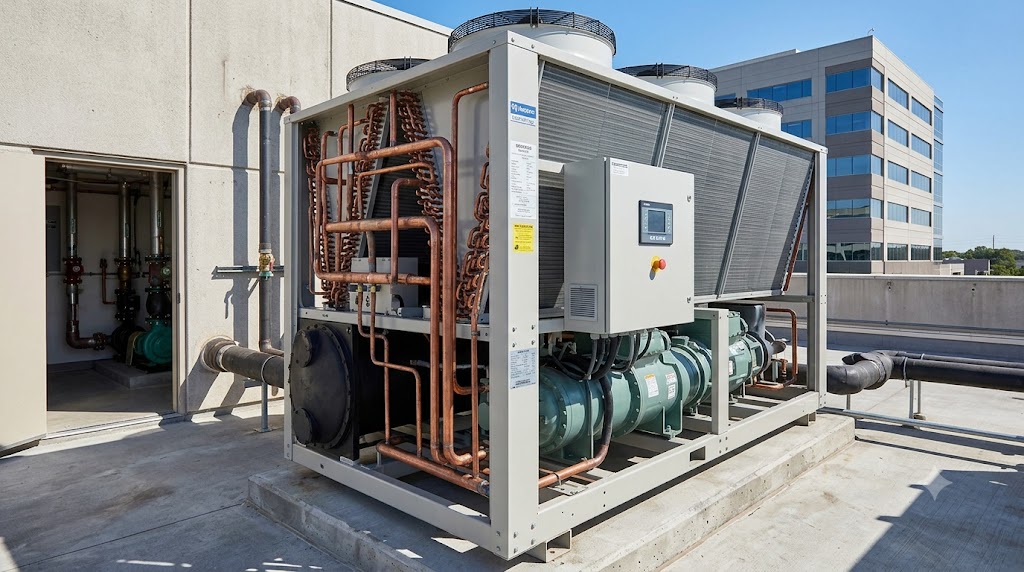
A chiller that's been running perfectly fine can trip offline the instant a second chiller starts staging on, not because anything is actually wrong with the first chiller, but because of the precise order in which valves opened and pumps ramped up during that transition. This is one of the more genuinely counterintuitive failure modes in chiller plant operation, adding capacity is exactly what should be preventing problems, and yet the act of staging itself, done in the wrong sequence, can cause the exact low flow trip the staging was supposed to help avoid.
How This Failure Actually Happens
The mechanics of this failure mode are worth walking through concretely, because the sequence itself is exactly where the problem lives. Imagine a plant staging in a second chiller alongside one already running. The control logic needs to do two things essentially at once, open the incoming chiller's isolation valve, and increase primary pump flow to accommodate the fact that two chillers now need flow instead of one.
The genuine problem arises when these two actions happen at meaningfully different speeds. An isolation valve can open relatively quickly, but a primary pump ramping up to a higher flow rate, particularly a variable speed pump increasing speed gradually, takes real time to actually reach its new target. In the gap between the valve opening quickly and the pump catching up slowly, the total available primary flow suddenly has two paths to split across instead of one, the already running chiller and the newly opening one, without enough total flow yet available to adequately satisfy either path's individual minimum flow requirement.
The result is that the chiller that had been running completely normally moments earlier can trip on its own low flow safety protection, detected by its integral flow switch, not because that chiller itself failed or malfunctioned in any way, but because the staging transition briefly starved it of flow it had been receiving just fine a moment before.
Why This Is Genuinely Counterintuitive
This failure mode catches people off guard specifically because the instinct during a staging event is to watch the incoming chiller, confirm it starts correctly, confirm its valve opens, confirm it comes online successfully. The chiller that actually trips is often the one that was already running perfectly well, the one nobody was watching closely because it wasn't the one undergoing a state change. Diagnosing this correctly requires recognizing that the trip isn't a sign of a problem with the tripped chiller itself, it's a sign of a timing mismatch in how the staging transition was sequenced.
Why Sequence Order Is the Actual Fix
The core lesson from this failure mode is genuinely simple to state even though it requires careful control programming to implement correctly, the primary flow capacity needs to actually be available before the isolation valve that will draw on that capacity opens, not simultaneously with it, and certainly not after it.
A more robust staging sequence separates these two actions deliberately, first increasing primary pump speed or bringing an additional primary pump online to establish the higher total flow capacity the two chiller configuration will require, confirming that increased flow is genuinely available, and only then opening the incoming chiller's isolation valve to bring it into service. This ordering ensures that by the time the second flow path exists, there's already enough total flow available to adequately serve both paths, rather than forcing both chillers to compete for a still ramping, temporarily insufficient supply.
The Broader Principle: Flow Proving, Not Just Commanding
This connects to a more general design principle worth stating explicitly, staging sequences should genuinely verify that adequate flow is actually present before proceeding to the next step, rather than simply commanding an action and assuming the system will catch up in time. Requiring confirmed minimum flow through both the evaporator and condenser sides, verified through actual flow meters or flow switches, before allowing a chiller to fully start, and failing an isolation valve specifically if adequate flow isn't detected within a defined time window after the associated pump status is proven, are both examples of this same underlying philosophy, verify the actual physical condition before trusting that a commanded action has produced the intended result.
This same principle explains why staging down needs equally careful sequencing. Chillers being taken offline typically need their isolation valve to remain open, and their pump to continue running, for a defined delay after the chiller itself stops, specifically to prevent freezing risk in a chiller that's no longer actively cooling but still has stagnant water sitting in its evaporator, a related but distinct low flow adjacent risk that also depends entirely on getting sequence and timing right rather than commanding a shutdown instantaneously.
Why This Matters Beyond a Single Nuisance Trip
A single nuisance trip during a staging transition is disruptive, but the deeper cost is what it does to plant reliability and operator confidence over time. A plant that trips chillers unpredictably during routine staging transitions tends to accumulate exactly the kind of unnecessary equipment cycling and repeated startup stress covered in why short cycling happens and what it costs, real compressor wear accumulating from events that were entirely avoidable through better sequencing, not genuine load driven cycling at all. It also tends to erode operator trust in the automation system generally, leading to manual overrides or disabled automatic staging that undermine the entire point of having a sophisticated control sequence in the first place.
The Practical Takeaway
A chiller tripping during a staging transition is rarely a sign that the chiller itself is faulty. It's far more often a sign that the staging sequence commanded two dependent actions, opening an isolation valve and increasing pump flow, without properly accounting for the fact that these two actions happen at genuinely different speeds. Getting staging sequence order right, establishing adequate flow capacity before opening the valve that will draw on it, and verifying actual flow conditions rather than simply assuming a commanded action has already taken effect, is what separates a plant that stages smoothly and reliably from one that mysteriously trips chillers during routine, otherwise unremarkable transitions.
EveryEng. For everyone in Engineering.