

Article details
A fan rated to move a certain volume of air doesn't actually guarantee that airflow arrives anywhere. What happens between the fan and the room being served, the ductwork, fittings, filters, and diffusers, determines how much of that rated airflow is actually achieved, and static pressure is the measurement that describes exactly how much resistance the fan is working against along the way.
What Static Pressure Actually Is
Static pressure is the resistance to airflow within a duct system, the pressure the fan has to overcome to push air through ductwork, fittings, filters, coils, and diffusers before it reaches the space being conditioned. It's distinct from velocity pressure, which relates to the speed of moving air, and the two together make up total pressure within a duct system, but static pressure is generally the more practically important measurement for diagnosing and designing duct systems.
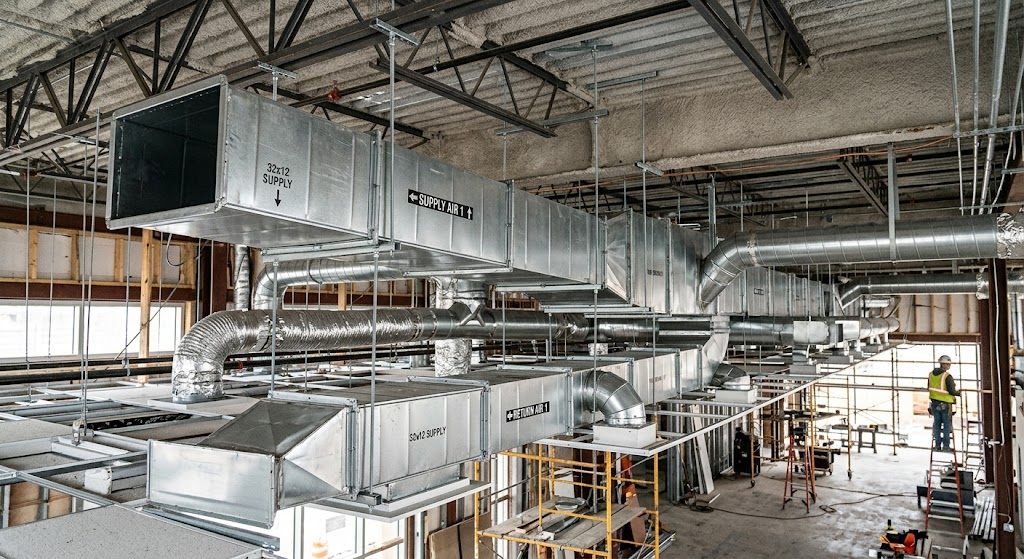
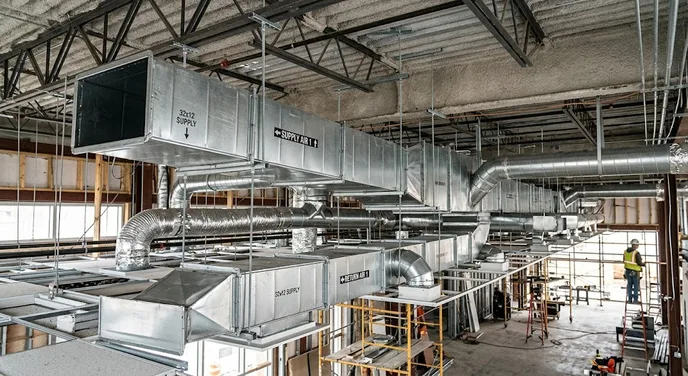
Every component air passes through, a length of straight duct, an elbow, a transition from round to rectangular, a filter, a coil, a diffuser, adds resistance, and that resistance accumulates across the entire path from the fan to the farthest served space. The total accumulated resistance across a complete duct system is what a fan actually has to overcome to deliver its rated airflow.
Why a Correctly Rated Fan Can Still Underperform
A fan's rated airflow is only accurate at the specific static pressure condition it was rated against. Fans are typically selected and rated against a design static pressure, an assumed or calculated total resistance the system is expected to present, and a fan's actual delivered airflow drops as the static pressure it's working against increases beyond that design point.
This is why a fan that's technically correctly rated for a system's calculated airflow requirement can still underperform badly in the field if the actual installed ductwork presents more resistance than the design assumed, undersized duct runs, excessive fittings, a poorly located or restrictive filter, or ductwork that simply wasn't installed the way it was designed. The fan itself isn't at fault in these situations. The system it's working against is presenting more resistance than it was selected to handle.
The Connection to Noise
Excessive static pressure has a direct, audible consequence. As a fan works harder against higher resistance, both the fan itself and the air moving through undersized or restrictive ductwork tend to generate more noise, air moving at higher velocity through a constricted path is inherently noisier than the same volume of air moving through an appropriately sized path at lower velocity.
This is part of why a system that seems to be delivering adequate airflow can still generate legitimate occupant complaints about noise. The airflow numbers might technically be acceptable, but if the fan and ductwork are working significantly harder than they should be to deliver that airflow, the acoustic consequence is a genuinely common and entirely predictable outcome, not a mysterious or unrelated problem.
The Connection to Fan Energy
Fan energy consumption doesn't scale linearly with airflow. As static pressure increases, the power required to move a given volume of air increases at a disproportionately higher rate, meaning a system fighting excessive static pressure isn't just moving less air than intended, it's also consuming meaningfully more energy per unit of air actually delivered than a properly designed, lower resistance system would.
This has real, compounding consequences over a system's operating life. A duct system designed with unnecessarily tight bends, undersized ductwork to save on material or installation space, or an accumulation of restrictive fittings that could have been avoided with better routing, doesn't just risk underperforming on airflow. It also imposes a real, ongoing energy penalty for the entire operating life of the system, a cost that compounds year over year in a way that's often invisible on a simple airflow inspection but very visible on an energy bill.
Where This Commonly Goes Wrong
A few patterns show up repeatedly as sources of excessive static pressure that weren't accounted for in original design.
Undersized ductwork, whether from an original design error or field modifications made to fit ductwork around other building systems during installation, is one of the most common causes, since resistance increases sharply as duct cross sectional area decreases for a given airflow requirement.
An accumulation of fittings and transitions, each individually reasonable but collectively adding up to significantly more total resistance than a cleaner, more direct routing would have presented, is a subtler but genuinely common issue, particularly in retrofit or renovation projects where ductwork has to route around existing structure.
Filter selection, as covered in indoor air quality fundamentals, is a direct static pressure factor. A higher resistance filter installed into a system that wasn't designed to handle that additional resistance directly increases total system static pressure, sometimes enough to meaningfully reduce delivered airflow below what the filter change was actually intended to improve upon.
The Practical Takeaway
Static pressure is the real world resistance a duct system presents, and it's the variable that actually determines whether a fan's rated airflow translates into real airflow delivered to a space, at an acceptable noise level, without an unnecessary energy penalty. A duct system designed and installed with static pressure genuinely in mind, adequate duct sizing, minimized unnecessary fittings, filter selection matched to what the system can actually handle, performs better across all three of these outcomes simultaneously, because they all trace back to the same underlying resistance the fan has to work against.
EveryEng. For everyone in Engineering.