

Article details
Introduction to Well Control
Well control is one of the most important aspects of oil and gas drilling operations. It involves monitoring and managing pressure inside a well to prevent the uncontrolled movement of formation fluids, such as oil, gas, and water, into the wellbore.
During drilling, engineers must maintain a safe balance between the pressure exerted by drilling fluids and the pressure present in underground formations. If this balance is disturbed, formation fluids may enter the well, creating a situation known as a kick. If the kick is not controlled promptly, it can develop into a blowout.
Effective well control helps protect workers, drilling equipment, the environment, and valuable resources. It also supports safe, efficient, and reliable drilling operations.
What Is Well Control in Drilling?
Well control is the process of preventing and managing unexpected pressure changes during drilling, completion, workover, and other well operations.
The main objective is to maintain control over the fluids and pressures inside the wellbore. Drilling teams use pressure calculations, drilling fluid properties, monitoring systems, and specialised equipment to maintain safe operating conditions.
Well control involves three essential elements: understanding formation pressure, maintaining suitable drilling fluid pressure, and using well control equipment when normal pressure control is insufficient.
Understanding the Basic Principles of Well Control
1. Formation Pressure
Formation pressure is the pressure exerted by fluids present within underground rock formations. It varies depending on factors such as depth, fluid density, geological conditions, and formation characteristics.
When formation pressure becomes greater than the pressure inside the wellbore, formation fluids may enter the well. Therefore, drilling engineers must estimate formation pressure before and during drilling.
2. Hydrostatic Pressure
Hydrostatic pressure is the pressure exerted by a column of fluid due to its weight. In drilling operations, drilling mud provides hydrostatic pressure that helps prevent formation fluids from entering the well.
The hydrostatic pressure depends on the density of the drilling fluid and the vertical height of the fluid column.
A simplified formula is:
Hydrostatic Pressure = Fluid Density × Gravitational Acceleration × Vertical Depth
If the hydrostatic pressure is too low, a kick may occur. If it is excessively high, the formation may fracture, allowing drilling fluid to escape into the surrounding rock.
3. Formation Fracture Pressure
Formation fracture pressure is the pressure at which a rock formation begins to crack or allows fluid to enter through newly created fractures.
Drilling engineers must keep wellbore pressure within a safe operating window. The pressure should be sufficient to control formation fluids but remain below the pressure that could damage the formation.
Maintaining this balance is essential for safe drilling.
Types of Well Control
Primary Well Control
Primary well control is the first line of defence against the entry of formation fluids into the wellbore.
It is generally maintained by selecting the correct drilling fluid density and controlling the pressure exerted by the fluid column. Proper management of fluid circulation and drilling operations also helps maintain well stability.
For example, if drilling mud has sufficient density to balance the formation pressure, oil and gas are less likely to enter the well.
Regular monitoring of drilling fluid properties, pit volume, flow rate, and other operating parameters helps ensure that primary well control remains effective.
Secondary Well Control
Secondary well control is used when primary well control fails and formation fluids enter the well.
The drilling team must detect the influx, shut in the well using the appropriate procedure, and use specialised equipment to contain pressure. The influx can then be removed through an approved well control method.
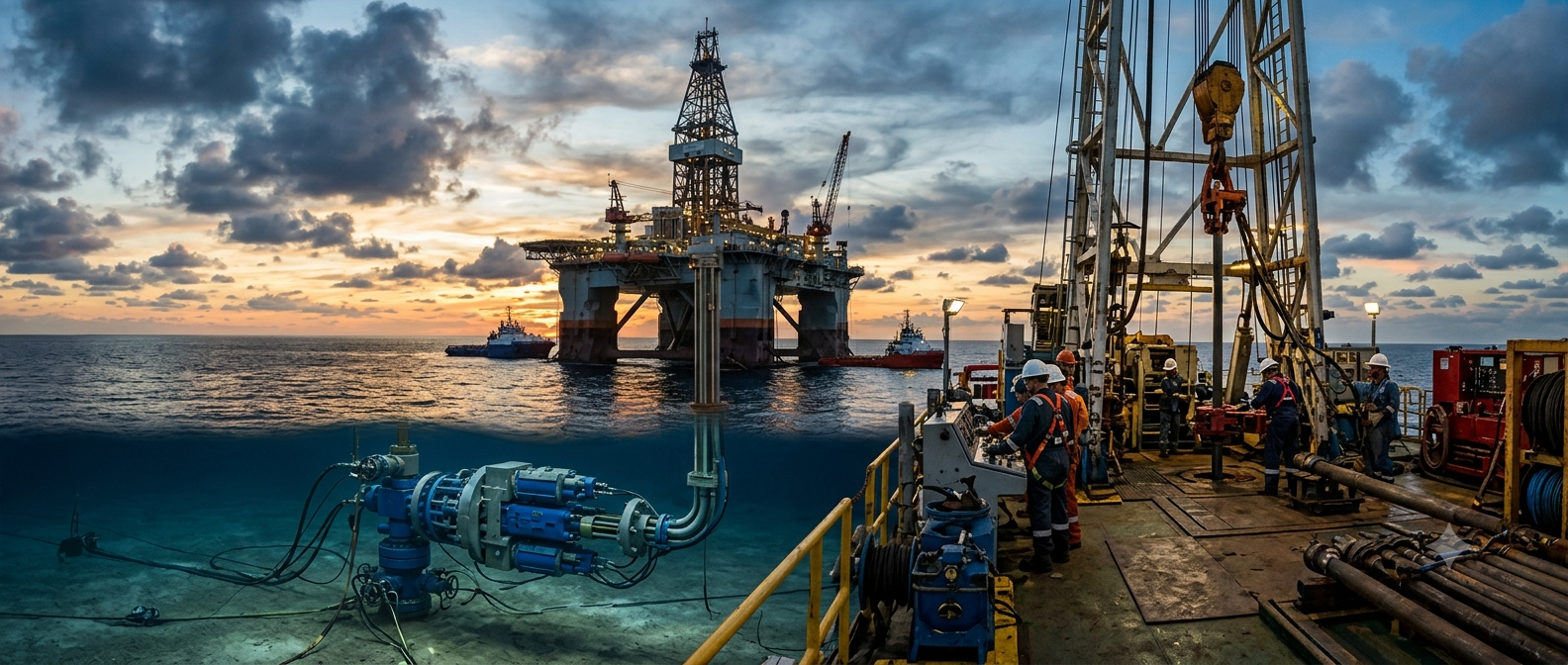
A Blowout Preventer (BOP) is a critical component of secondary well control. It is designed to seal the wellbore and help prevent uncontrolled fluid release when properly operated.
Secondary well control requires trained personnel, reliable equipment, accurate pressure information, and clear communication.
What Is a Kick in Drilling Operations?
A kick occurs when formation fluids enter the wellbore because the pressure inside the well is insufficient to balance the formation pressure.It can occur because of low drilling fluid density, lost circulation, swabbing while pulling drill pipe, inadequate hole filling, or unexpected formation pressure.
Common Signs of a Kick
Early detection is essential to prevent a kick from becoming a serious incident. Common warning signs include:
An unexpected increase in drilling fluid returns.
A rise in drilling fluid pit volume.
Flow from the well when the pumps are switched off.
An unexpected change in drilling parameters.
An increase in gas levels in the returning drilling fluid.
An unexplained difference between the volume of fluid pumped into the well and the volume returned.
These signs must be evaluated according to established site procedures. Drilling personnel should not ignore unusual readings or assume that every change is harmless.
What Is a Blowout?
A blowout is an uncontrolled release of formation fluids from a well. It can occur when pressure control measures fail and the influx cannot be contained.Blowouts may release oil, gas, drilling fluids, or other formation fluids. Depending on the conditions, they can cause fires, explosions, injuries, environmental damage, and significant financial losses.
Preventing blowouts requires effective well design, suitable barriers, reliable equipment, continuous monitoring, and properly trained personnel.
Essential Well Control Equipment
1. Blowout Preventer (BOP)
The BOP is a pressure-control device installed as part of the well control system. Depending on its design, it can seal around the drill pipe, close the wellbore, or shear certain tubulars under specified conditions.Its performance depends on correct selection, installation, testing, maintenance, and operation.
2. Choke Manifold
A choke manifold contains valves and adjustable chokes used to regulate pressure and control the flow of fluids during well control operations.
It helps drilling teams manage bottom-hole pressure while circulating an influx out of the well.
3. Mud-Gas Separator
A mud-gas separator separates gas from drilling fluid returning from the well during appropriate well control operations. The separated gas is directed through a designated discharge system.Correct operation and maintenance are important because uncontrolled gas handling can create serious hazards.
4. Pressure Monitoring Systems
Pressure gauges, flow sensors, pit-volume indicators, and other monitoring devices provide information about well conditions.Accurate readings help the drilling team identify abnormal behaviour, assess risks, and make informed decisions.
Common Well Control Methods
When a kick occurs, the drilling team selects a suitable method based on the well conditions, equipment, influx characteristics, and approved operating procedures.
Driller's Method
The Driller's Method generally involves circulating the influx out of the well using the existing drilling fluid, followed by a second circulation to replace the original fluid with appropriately weighted kill mud.The method requires careful control of pressure throughout the operation.
Wait and Weight Method
In the Wait and Weight Method, the drilling team prepares kill mud with the required density before circulating the influx out of the well.The heavier fluid is circulated according to a planned pressure schedule to control formation pressure while removing the influx.
Volumetric Method
The Volumetric Method is used in selected situations where circulation is unavailable or unsuitable. It involves managing pressure and allowing controlled changes in fluid volume as gas migrates within a shut-in well.This method requires accurate calculations, continuous monitoring, and competent personnel.The choice of method must always follow the well-specific well control programme and established safety procedures.
Advanced Well Control and Modern Drilling Safety
Modern drilling operations may involve highly deviated wells, horizontal wells, subsea installations, and complex pressure conditions. These environments can create additional challenges for detecting and controlling influxes.Advanced well control training helps experienced personnel develop stronger technical judgement and practical decision-making skills. Simulation exercises and real incident case studies allow teams to practise responding to unusual operating conditions.Important advanced topics include wellbore breathing, gas migration, stripping operations, specialised pressure-management methods, and unexpected equipment problems.Teamwork is equally important. Clear communication, situational awareness, leadership, and defined responsibilities help drilling crews respond effectively when conditions change.
Best Practices for Effective Well Control
Drilling companies can strengthen well control performance by following several essential practices:
Conduct regular equipment inspections and pressure tests according to approved procedures.
Maintain drilling fluid properties within the specified operating limits.
Monitor pit volume, flow rate, and pressure continuously.
Conduct well control drills and practical simulator training.
Establish clear emergency response procedures.
Maintain accurate drilling records and communicate operational changes.
Confirm that personnel understand their responsibilities and escalation procedures.
Review incidents and near misses to improve future performance.
Well control planning should begin before drilling starts and continue throughout the well lifecycle.
Conclusion
Well control is essential for maintaining safety, protecting the environment, and preventing uncontrolled releases during oil and gas drilling operations. Understanding formation pressure, hydrostatic pressure, primary and secondary well control, kick detection, and pressure-control equipment provides the foundation for effective drilling safety.However, equipment and technical knowledge alone are not enough. Successful well control also depends on continuous monitoring, appropriate training, sound decision-making, teamwork, and strict adherence to approved procedures.By combining these practices, drilling teams can identify potential problems early, respond effectively to unexpected pressure changes, and improve the overall safety and reliability of well operations.
