


Article details
What is Industry 4.0?
Industry 4.0 describes the fourth industrial revolution, characterized by the integration of digital technologies into manufacturing and industrial processes. It represents the shift from traditional manufacturing to smart manufacturing, where machines, systems and products are interconnected and capable of making decisions with minimal human intervention.
Often referred to as smart manufacturing, Industry 4.0 enables organizations to collect and analyze data across machines, processes and systems in real time, improving efficiency, productivity and flexibility.
How Industry 4.0 works
Industry 4.0 combines operational technology (OT) with information technology (IT) to create intelligent, autonomous systems. Sensors, machines and software platforms communicate with one another, generating data that can be analyzed to optimize operations.
These systems rely on connectivity, automation and advanced analytics to enable predictive maintenance, quality optimization and adaptive production processes.
Key technologies of Industry 4.0
Industrial Internet of Things (IIoT): Sensors and connected devices that collect and exchange data.
Artificial intelligence and machine learning: Algorithms that analyze data and support automated decision-making.
Cloud computing: Scalable infrastructure for storing, processing and sharing data.
Edge computing: Local data processing close to machines for low-latency insights.
Digital twins: Virtual replicas of physical assets used for simulation and optimization.
Automation and robotics: Intelligent machines that perform tasks with minimal human input.
Benefits of Industry 4.0
By adopting Industry 4.0 practices, manufacturers can gain greater visibility into operations and respond more quickly to changes in demand or conditions.
Improved operational efficiency and productivity
Real-time monitoring and decision-making
Reduced downtime through predictive maintenance
Enhanced product quality and consistency
Greater flexibility and customization
Challenges and considerations
Despite its advantages, Industry 4.0 adoption can present challenges. Organizations must address data integration, cybersecurity, workforce skills and legacy system constraints.
A clear strategy, strong governance and investment in skills and infrastructure are essential to realizing the full value of Industry 4.0.
Industry 4.0 use cases
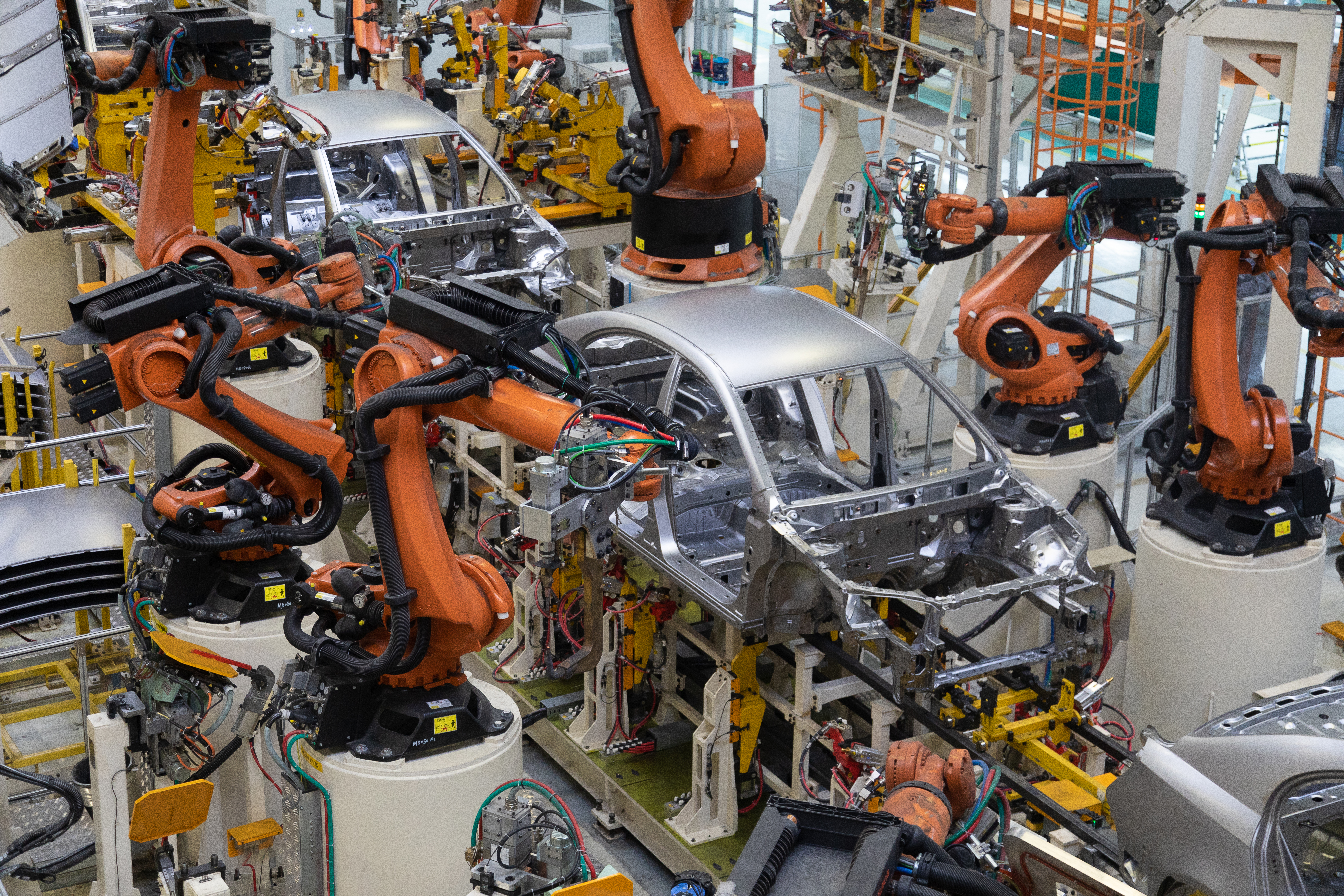
Industry 4.0 technologies are applied across many sectors, including automotive, electronics, energy and consumer goods manufacturing.
Predictive maintenance to reduce equipment failures
Smart factories with autonomous production lines
Supply chain visibility and optimization
Energy management and sustainability initiatives
The future of Industry 4.0
As technologies mature, Industry 4.0 continues to evolve toward more autonomous, resilient and sustainable operations. The convergence of AI, automation and connected systems is expected to further transform how products are designed, manufactured and delivered.