<link href="https://fonts.googleapis.com/css2?family=Caveat:wght@500;700&family=JetBrains+Mono:wght@400;500;600&display=swap" rel="stylesheet" /> Skip to main contentEngineering Courses, Mentoring & Jobs | EveryEng
5S Methodology: From Theory to Shop-Floor Practice banner
Preview this course

5S Methodology: From Theory to Shop-Floor Practice

5S Methodology: From Theory to Shop-Floor Practice banner
Preview this course
Self-paced Beginner

5S Methodology: From Theory to Shop-Floor Practice

4(19)
215 views
FREE
57 min
Anytime
English
215 views
Arun Bhatnagar
Arun Bhatnagar
  • Lifetime access
  • Certificate of completion
  • Foundational Learning
  • Access to Study Materials
Volume pricing for groups of 5+

Why enroll

5'S must be learned because it builds a strong foundation for safety, quality, productivity, and cost reduction. It creates a disciplined, organized, and efficient workplace, reduces waste and errors, improves employee mindset, and enables smooth implementation of Lean, TPM, and Value Engineering.

Is this course for you?

You should take this if

  • You work in Aerospace or Automotive
  • You're a Mechanical Engineering professional
  • You prefer self-paced learning you can revisit

You should skip if

  • You need a different specialisation outside Mechanical Engineering
  • You need live interaction with an instructor

Course details

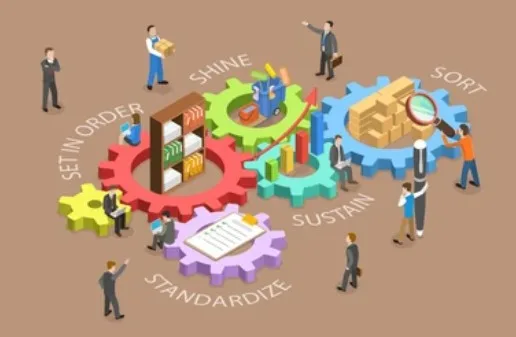
5S Methodology: From Theory to Shop-Floor Practice is a comprehensive course designed to provide participants with a clear understanding of the 5S philosophy and its practical application in real workplace environments. The course begins by explaining the core principles of 5S—Sort, Set in Order, Shine, Standardize, and Sustain—and the role they play in creating a safe, organized, and efficient workplace. Moving beyond theory, the program focuses on hands-on implementation techniques specifically tailored to shop-floor and operational settings, helping learners identify waste, improve workflow, enhance safety, and boost productivity. Participants will learn how to conduct 5S audits, develop visual management systems, standardize best practices, and foster employee involvement to sustain improvements over time. Through practical examples, case studies, and workplace scenarios, this course equips individuals and teams with the skills needed to transform their work areas, support continuous improvement initiatives, and build a culture of discipline and operational excellence across the organization.

Course suitable for

Key topics covered

  1. Introduction to 5'S and its objectives

  2. Benefits of 5'S for safety, quality, cost, delivery, and morale

  3. Detailed understanding of the 5'S pillars:

    • Seiri (Sort) – elimination of unnecessary items

    • Seiton (Set in Order) – systematic arrangement

    • Seiso (Shine) – cleaning and inspection

    • Seiketsu (Standardize) – visual standards and controls

    • Shitsuke (Sustain) – discipline and culture

Course content

The course is readily available, allowing learners to start and complete it at their own pace.

2 lectures57 min

Opportunities that await you!

Career opportunities

FREE

Access anytime

Questions and Answers

A: A: Generic silhouettes kill visual control; you can't see wrong-from-right at a glance. B: Seiketsu locks standard condition, so the board and GA have to agree and be specific. C: That's a misread; Seiketsu is standardization, not housekeeping. D: You're changing process capability without MOC; that's a DFMEA hit.

A: A: 0.6×0.4 is 0.24 m² per bin; 7 bins gone gives ~1.7 m². That's clean math. B: Aisles weren't removed by Sort; that's stretching credit. C: Double-stacking wasn't stated; that's importing another cell's practice. D: Reach envelope isn't floor area; mixing concepts.

A: A: Salt plus wet/dry cycling eats carbon steel fast; Shine just exposes it. B: Painted steel isn't an active galvanic partner here. C: MIC needs nutrients and stagnation; not this setup. D: Spray pressure cleans; it doesn't thin hooks measurably.

A: A: Visual control must match the authoritative doc; redline now, formal later. B: That's how latent hazards stay latent. C: Dual IDs create wrong-line-up risk. D: Deferring a known mismatch violates basic safety practice.