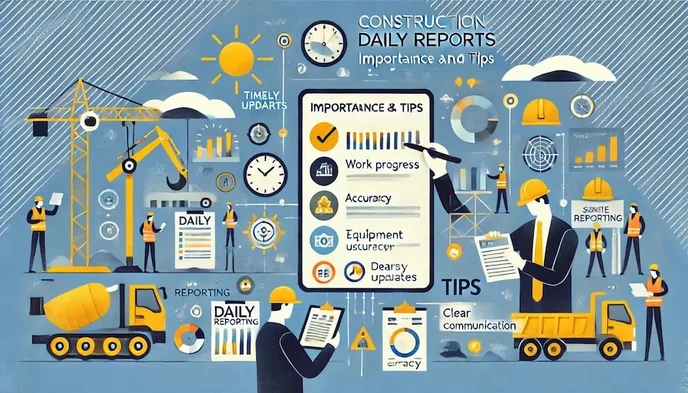
A small part of the daily review report maintenance document template.
- Lifetime access
- Certificate of completion
- Foundational Learning
- Access to Study Materials
Why enroll
Your instructor
Swatantra prakash Singh
Maintenance manager
Maintenance head
Is this course for you?
You should take this if
- You work in Oil & Gas Upstream or Energy & Utilities
- You're a Electronics & Telecommunication / Electrical Engineering professional
- You prefer self-paced learning you can revisit
You should skip if
- You need a different specialisation outside Electronics & Telecommunication
- You need live interaction with an instructor
Course details
Course suitable for
Key topics covered
Course content
The course is readily available, allowing learners to start and complete it at their own pace.
- A small part of the daily review report maintenance document template.33 min
Opportunities that await you!
Career opportunities
Why people choose EveryEng
Industry-aligned courses, expert training, hands-on learning, recognized certifications, and job opportunities-all in a flexible and supportive environment.
What learners say about this course
The course is broken into small modules, so it's easy to slot between meetings without forcing a full context switch. For a beginner track, the scope stays tight and maps to reports you actually see in prod rather than toy charts. The section on “Latency by RPS buckets,” where they compare p50/p95 before and after a bad deploy, stuck with me. They walk a sample repo PR end to end, tying a CI report to basic obs and a quick k8s check, which mirrors how teams debug when you don't have perfect data. one gripe: I wasn’t sold on the arch discussion around infra constraints, and I wished there was more on noisy dashboards and alert thresholds. Still, it didn’t overreach, and it felt like time well spent for the team.
Needed material that wouldn’t fall apart in a PR, especially when prod numbers get questioned. The section on “Weekly Report Breakdown” where they compare avg vs p95 RPS and trace it back to a CI change stuck; seeing the before/after table mirrored what I’ve argued in repo comments. It bridges legacy reporting habits with modern obs and k8s realities—mostly works, though I wasn’t sold on the thin infra examples. It’s answered a bunch of questions I’ve been half-ignoring for over a year.
A lot of the scenarios matched stuff hitting our current sprint, especially around reports driving perf calls. The moment that stuck was the section on “Baseline vs Variance,” where they walked through an RPS chart and showed how a weekly average hid a prod spike after a CI change; that’s basically a PR we shipped last month. It maps cleanly to day-to-day work—reading reports before touching arch or infra, and knowing when k8s tuning is noise versus signal. I liked that it stayed beginner-friendly without dumbing it down, though I wasn’t sold on the long detour into formatting dashboards. Some more on tying report findings back to obs in prod would’ve helped. Now I’m better at explaining to PMs why we picked one fix over another instead of hand-waving.
Felt close to the stuff we’re dealing with in the current sprint. One gripe: module 4 lingered on report formatting, and the labs assume you’ve already got CI reports wired up, which wasn’t true for me. After that, it clicked. The Section 2.3 example where a weekly perf report traced a RPS dip to a k8s autoscaler change at 14:32 was useful, not theoretical. Helped me sanity-check how we read prod metrics vs obs noise. I liked the walkthrough of turning a messy CSV into a short PR note with just the delta that matters. It’s beginner, but practical. already flagged a couple blind spots in how I scan reports and what I ignore.