Skip to main contentEngineering Courses, Mentoring & Jobs | EveryEng
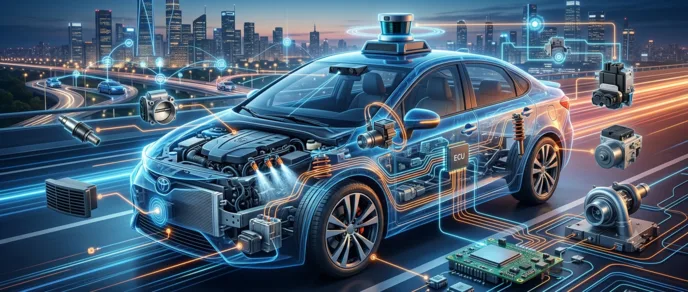
Automotive Sensors and Actuators banner
Live Online Class Advanced

Automotive Sensors and Actuators

4(14)
91 views
$ 200
10 hrs
Next month
English
91 views

Enggenious (SAN Techno Mentors)
  • 7-day money-back guarantee
  • Session recordings included
  • Anytime Learning
  • Learn from Industry Expert

Why enroll

Participants join this course to develop practical knowledge of automotive sensors, actuators, and ECU-controlled systems. It helps engineers and technicians improve their skills in vehicle diagnostics, troubleshooting, testing, and electronic system integration. The course is also valuable for professionals working in automotive OEMs, component manufacturing, EV development, R&D, service, and vehicle testing.

Is this course for you?

You should take this if

  • You work in Automotive
  • You're a Mechanical Engineering / Electronics & Telecommunication professional
  • You have 3+ years of hands-on experience in this field
  • You prefer live, instructor-led training with Q&A

You should skip if

  • You're new to this field with no prior experience
  • You need a different specialisation outside Mechanical Engineering
  • You need fully self-paced, on-demand content

Course details

This course provides a comprehensive understanding of sensors and actuators used in modern automotive systems. Participants learn the working principles, construction, characteristics, and applications of automotive sensors. The course covers sensors used for engine management, transmission, braking, steering, safety, thermal management, and vehicle body systems. Participants understand the operation of temperature, pressure, position, speed, oxygen, knock, airflow, and acceleration sensors. The course also explains actuators such as fuel injectors, solenoids, motors, valves, relays, and electronic throttle systems. It introduces sensor signal conditioning, data acquisition, communication, and ECU interaction. Participants learn how sensors provide real-time information to Electronic Control Units for vehicle control and monitoring. The course also covers sensor and actuator diagnostics, failure modes, troubleshooting, and testing techniques. Special attention is given to sensors and actuators used in electric and hybrid vehicles. Practical automotive examples help participants understand system integration, performance, reliability, and fault diagnosis.

Course suitable for

Key topics covered

  • Fundamentals of Automotive Sensors and Actuators

  • Sensor Types, Characteristics & Working Principles

  • Temperature, Pressure & Position Sensors

  • Speed, RPM & Acceleration Sensors

  • MAF, MAP, Oxygen & Knock Sensors

  • Crankshaft & Camshaft Position Sensors

  • Wheel Speed & ABS Sensors

  • Steering & Brake System Sensors

  • Fuel Injectors and Electronic Throttle Actuators

  • Solenoids, Motors, Valves & Relays

  • ECU–Sensor–Actuator Communication

  • Signal Conditioning & Sensor Calibration

  • CAN Communication and Diagnostic Systems

  • Sensor/Actuator Failure Modes & Troubleshooting

  • Testing, Measurement & Automotive Diagnostics

  • Sensors and Actuators in EV & Hybrid Vehicles

Opportunities that await you!

Career opportunities

Training details

This is a live course that has a scheduled start date.

Why people choose EveryEng

Industry-aligned courses, expert training, hands-on learning, recognized certifications, and job opportunities-all in a flexible and supportive environment.

$200

$0 Early bird

Coming in Next Month

Questions and Answers

Empty state icon

No questions yet - Be the first one to ask!