<link href="https://fonts.googleapis.com/css2?family=Caveat:wght@500;700&family=JetBrains+Mono:wght@400;500;600&family=Plus+Jakarta+Sans:wght@600;700;800&display=swap" rel="stylesheet" /> Skip to main contentEngineering Courses, Mentoring & Jobs | EveryEng
Carbon Capture & Hydrogen for the Clean Energy Transition banner

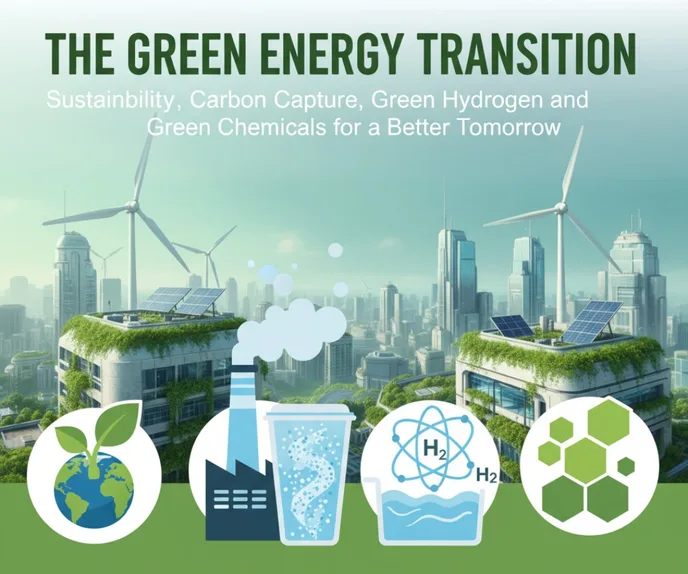
The Green Energy Transition: Sustainability, Carbon Capture, Green Hydrogen & Green Chemicals for a Better Tomorrow

Carbon Capture & Hydrogen for the Clean Energy Transition banner
Live online Advanced

Carbon Capture & Hydrogen for the Clean Energy Transition

4(33)
1012 views
COMPLETED

Tell us and we’ll notify you when the next batch is scheduled.

35 hrs
-
English
1012 views
Trinergy Engineering
  • 7-day money-back guarantee
  • Session recordings included
  • Certificate of completion
Volume pricing for groups of 5+

Why enroll

Participants join this course to gain practical, industry-relevant knowledge in green energy, carbon capture, green hydrogen, and sustainable technologies.It empowers them to apply sustainability practices in real-world projects, stay aligned with industry trends, and actively contribute to climate action and career growth.

Is this course for you?

You should take this if

  • You work in Energy & Utilities
  • You're a Chemical & Process / Health, Safety & Environmental professional
  • You have 3+ years of hands-on experience in this field
  • You want to build skills in Engineering & Design, Value Engineering

You should skip if

  • You're new to this field with no prior experience
  • You need a different specialisation outside Chemical & Process
  • You need fully self-paced, on-demand content

Course details

The Green Energy Transition: Sustainability, Carbon Capture, Green Hydrogen & Green Chemicals for a Better Tomorrow is a practical and easy-to-understand course focused on the global shift toward clean and sustainable energy.It introduces the basics of green energy and renewable sources, explaining their role in reducing environmental impact.Participants learn key sustainability principles, including sustainable development goals and life cycle assessment.The course covers carbon capture technologies and how industries use them to reduce emissions.It explains green hydrogen production methods and its role in energy storage, transport, and decarbonization.Learners also explore green chemicals and eco-friendly manufacturing processes.Real-world case studies show how green technologies are applied in industry.The course highlights policies and regulations supporting sustainability efforts.
Future trends, innovations, and market opportunities in green energy are discussed.
By the end, participants gain practical knowledge to support sustainability initiatives and a greener future.

Course suitable for

Key topics covered

• Introduction to Green Energy

• Definition and significance of green energy

• Overview of renewable energy sources

• Sustainability Principles:

• Concepts of sustainability and its importance

• Sustainable development goals (SDGs)

• Life cycle assessment (LCA)

• Carbon Capture Technologies:

• Mechanisms and methods of carbon capture

• Applications in various industries

• Current technologies and future advancements

• Green Hydrogen Production:

• Methods of producing green hydrogen (electrolysis, biomass, etc.)

• Applications in energy storage and transportation

• The role of hydrogen in decarbonizing sectors

• Green Chemicals:

• Definition and significance of green chemicals

• Processes for producing eco-friendly chemicals

• Applications in various industries, including pharmaceuticals and agriculture

• Integration of Green Technologies:

• Case studies of successful green energy projects

• Strategies for integrating green technologies into existing systems

• Policy and Regulation:

• Overview of policies promoting green energy

• Role of government and international organizations

• Impact of regulations on sustainability efforts

• Future Trends in Green Energy:

• Emerging technologies and innovations

• Market trends and opportunities in the green sector

• Predictions for the future of green energy

• Practical Implementation:

• Strategies for implementing sustainable practices in organizations

• Tools and resources for monitoring and evaluation

• Community engagement and education initiatives

• Capstone Project:

• Participants will develop a project addressing a real-world challenge in green energy, applying the knowledge gained throughout the course.

Opportunities that await you!

Skills & tools you'll gain

Engineering & DesignValue Engineering

Career opportunities

Training details

This is a live course that has a scheduled start date.

COMPLETED

-

Questions and Answers

A: That's the most common mistake — confusing chemical attack with what actually kills PSA beds. The difference matters because once you're below ppm‑level moisture, corrosion rates collapse, but 10–20 bar pressure cycling never stops. Valve sequencing and rapid depressurization grind adsorbent and screens, driving ΔP up long before metal loss shows. Hydrogen embrittlement sounds scary, yet at PSA temperatures and stresses it rarely governs internals life, and chloride SCC needs liquid water you simply don't have.

A: That's the most common mistake — forgetting where the thermodynamic floor sits. The difference matters because hydrogen's LHV is about 33 kWh/kg, so even a perfect stack can't beat that. Real alkaline or PEM systems land around 65–75% efficiency, pushing you into the low‑40s. Compression adds a few kWh, not tens, and quoting 20 kWh/kg would violate the first law before you even open Excel.

A: That's the most common mistake — rushing to see flow before you know what's bolted in correctly. The difference matters because a dry N2 test finds flange and weld issues without risking amine contamination or corrosion. Internals mis‑set during construction show up on a cold walkdown, not once you're hot and committed. Loading solvent too early just hides mechanical problems behind liquid head.

A: That's the most common mistake — assuming 'dry' stays dry forever. The difference matters because hydrogen at temperature drives high‑temperature hydrogen attack, not rust. Cr‑Mo steels buy resistance where carbon steel quietly loses strength over time. Austenitic stainless handles wet corrosion well but doesn't address HTHA, and aluminum has no place in hot, pressurized hydrogen service.