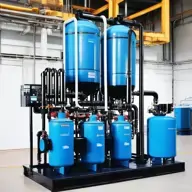
Chilled Water System Components Explained
- 7-day money-back guarantee
- Lifetime access
- Certificate of completion
Why enroll
Is this course for you?
You should take this if
- You work in HVAC
- You're a Mechanical Engineering professional
- You prefer self-paced learning you can revisit
You should skip if
- You need a different specialisation outside Mechanical Engineering
- You need live interaction with an instructor
Course details
Course suitable for
Key topics covered
Course content
The course is readily available, allowing learners to start and complete it at their own pace.
- Introduction of Chilled water systems13 min
- Air Handling Unit15 min
- Air handling unit part 213 min
- Chilled Water and Condenser Water Pump18 min
- Cooling Towers16 min
- Schematic Diagram of Chilled water systems11 min
- Summary9 min
Opportunities that await you!
Career opportunities
Certifications
Why people choose EveryEng
Industry-aligned courses, expert training, hands-on learning, recognized certifications, and job opportunities-all in a flexible and supportive environment.
What learners say about this course
Good orientation for HVAC career paths; the Module 3 psychrometric chart exercise plotting sensible vs latent loads for a small office stuck with me. it's mostly aimed at beginners, which is fine, but I wasn't sold on the salary segment and wished there was more on field commissioning vs design tracks.
The scaling angle is what pulled me in, even at a beginner level, and it maps well to how I think about arch and infra. liked the moment in the duct sizing section where they run CFM against static pressure and show how diffuser choice changes the outcome; that clicked more than diagrams. It wasn't sold on the short obs bit—I wished there was more on diagnosing airflow like we do in prod with RPS and alerts. Still, the frameworks stick, and I’ll reuse them long after tools shift.
The way the abstractions got peeled back worked, though Module 4 dragged a bit and the labs assume you’ve already got the spreadsheet templates set up. As a new grad, I liked how the course maps HVAC concepts to things I recognize from software arch and infra. The psychrometric chart walkthrough in Section 2, especially the example adjusting supply air temp to hit comfort without spiking energy, stuck with me. Seeing COP tradeoffs discussed alongside real duct losses made the theory click. I kept thinking about obs too—logging temps vs actually instrumenting zones felt like prod vs local. It's not flashy, but it connects practice to why the numbers move. walking out with a clearer sense of how small tuning choices compound into optimization.
hvac airflow lab in module 2 using psychrometric chart calc stuck; it's practical, but wished more on controls tuning.