Skip to main contentEngineering Courses, Mentoring & Jobs | EveryEng
Engineering Approach to LPG Storage Sizing and Equipment Selection banner

Engineering Approach to LPG Storage Sizing and Equipment Selection

Engineering Approach to LPG Storage Sizing and Equipment Selection banner
Live online Intermediate

Engineering Approach to LPG Storage Sizing and Equipment Selection

4(57)
625 views
COMPLETED
5 hrs
Next month
English
Ashok Khopkar
Ashok KhopkarConsultant
  • 7-day money-back guarantee
  • Session recordings included
  • Certificate of completion
Volume pricing for groups of 5+

Why enroll

1. Learn to provide best solution to the customer with respect to LPG storage type, and its  capacity

2. Learn sizing of other equipment like vapourisers

3. Better prospects in the current job

4. Ability to do these things helps in strengthening customer base and results in business growth.

5. This activity is one of the most important part of the job specifications in LPG contracting and consulting companies.

6. The consumer company management members will be able to take right decision for their company if they attend this course.

Is this course for you?

You should take this if

  • You work in Energy & Utilities or Oil & Gas Upstream
  • You're a Mechanical Engineering / Petroleum Technology professional
  • You have some foundational knowledge in the subject
  • You prefer live, instructor-led training with Q&A

You should skip if

  • You're looking for an introductory overview course
  • You need a different specialisation outside Mechanical Engineering
  • You need fully self-paced, on-demand content

Course details

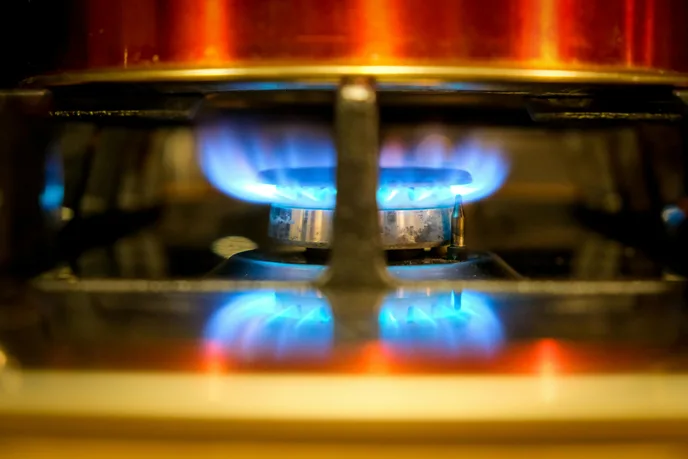
LPG is known as clean and efficient fuel. So,  many years ago,  industries started switching to LPG from other fuels like FO, Diesel, electrical power. The process still continues. New industries like steel re-rolling mills, foundries, forge-shops, fabrication shops,  gas-cutting, heat treatment industry, paint shops and general industry with heavy fuel consumption, plan their production with LPG as fuel.

Hospitals, Hotel industry also use LPG as their main fuel. Bakeries, Large company canteens use LPG as fuel. Seasonal industries like seed drying, find LPG very convenient.


It is very essential to precisely calculate the consumption of LPG to plan storage facility. Under-capacity storage can result in shortage of fuel and loss of production. Over-capacity will result in unnecessary capital investment  and  uneconomical operations.

Optimized storage capacity  decision  can be taken through systematic analysis of consumption pattern, by collecting data of existing / proposed equipment consuming LPG.

For LPG contracting and consulting companies / supply companies,  it is essential to know total consumption over certain time period like daily, monthly and also the peak consumption rate during  a certain time slot.

It is equally important for the consumer company management also to take proper decision on this to avoid over  or under capacity storage.

Upto certain limit,  consumption can be met with cylinder installations, which needs less space and is economical. But beyond that, one needs to have storage vessels, like bullets.

Cylinders or tanks ? Which one to use? What size? Vapouriser required or not? What capacity?

This course answers all these questions.

This course explains the process of collecting and analysing the data using spreadsheets and graphs, leading to optimum storage.  Case studies will explain the process in sufficient depth.

Course suitable for

Key topics covered

  1. What data is essential for assessing LPG fuel consumption

  2. How to systematically record it

  3. Step by step Process of analysing collected data and converting to common unit

  4. How to arrive at capacity of storage vessels, vapoursisers, PRS.

  5. Which factors are taken into consideration for that.

  6. Case studies

Opportunities that await you!

Career opportunities

Training details

This is a live course that has a scheduled start date.

COMPLETED

Coming in Next Month

Questions and Answers