Skip to main contentEngineering Courses, Mentoring & Jobs | EveryEng
Hazardous Area Classification banner
Live Online Class Intermediate

Hazardous Area Classification

4(2)
150 views
Trainers Rating
4(2)
Course type
Instructor led live training
Duration
-
Start
Next month
Language
Hindi , Marathi
Views
150
  • Session recordings included
  • Interactive Video Lessons
  • Learn from Industry Expert
COMPLETED

Tell us and we’ll notify you when the next batch is scheduled.

Subodh Sawant
Subodh SawantDesign Manager-Electrical Engineering (HOD)

Is this course for you?

Perfect for

  • You work in Oil & Gas Upstream
  • You're a Electrical Engineering / Instrumentation Engineering professional
  • You have some foundational knowledge in the subject
  • You prefer live, instructor-led training with Q&A

Before you enrol

  • Intermediate level — assumes the fundamentals of Electrical Engineering
  • Live online sessions — join on the scheduled dates
New to Electrical Engineering? Browse beginner courses →

Key topics covered

Key Topics Covered in the Hazardous Area Classification Course:

  1. Introduction to Hazardous Area Classification (HAC)

    • Definition and importance of Hazardous Area Classification

    • Overview of hazardous materials (gases, vapors, dusts, fibers)

    • The role of HAC in industrial safety

  2. Regulatory Standards and Codes

    • ATEX (Atmosphères Explosibles) directive and IECEx standards

    • NEC (National Electrical Code) and NFPA (National Fire Protection Association)

    • Legal requirements and compliance in different regions

  3. Types of Hazardous Areas

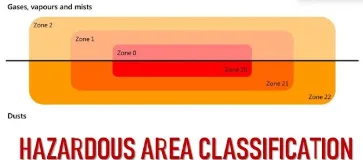
    • Zones for Gases and Vapors:

      • Zone 0, Zone 1, Zone 2 (Gases and Vapors Classification)

    • Divisions for Gases and Vapors:

      • Division 1, Division 2 (Divisions Classification)

    • Zones for Dust:

      • Zone 20, Zone 21, Zone 22 (Dust Hazard Classification)

    • Differences and application of Zones and Divisions

  4. Hazardous Area Risk Assessment

    • Identifying hazards and assessing risks in different environments

    • Determining factors such as ventilation, temperature, and physical properties of substances

    • Risk analysis methodology and the significance of area classification

  5. Explosive Atmospheres and Ignition Sources

    • Explosive gases, vapors, and dust: properties and behavior

    • Identifying potential ignition sources

    • Controlling the risk of ignition in hazardous zones

  6. Equipment Protection Methods

    • Understanding protection techniques:

      • Ex d (Flameproof)

      • Ex e (Increased safety)

      • Ex i (Intrinsic safety)

      • Ex n (Non-sparking or non-arcing)

    • Selecting appropriate protection methods based on area classification

    • Overview of electrical equipment ratings and certifications

  7. Installation and Maintenance in Hazardous Areas

    • Best practices for installing electrical and instrumentation systems in hazardous areas

    • Guidelines for maintaining and inspecting equipment in hazardous environments

    • Ensuring compliance with safety standards during installation and operation

  8. Safety Measures and Emergency Protocols

    • Emergency response and contingency planning

    • Proper procedures for confined space entry in hazardous areas

    • Safety protocols for hazardous area maintenance and repairs

  9. Practical Applications and Case Studies

    • Analyzing real-world case studies of hazardous area classification

    • Hands-on exercises to simulate hazardous area classification

    • Analyzing common mistakes and risks in hazardous area installations

  10. Final Assessment

    • Comprehensive review and testing of knowledge gained

    • Practical application of hazardous area classification in scenarios

Training details

This is a live course that has a scheduled start date.

Opportunities that await you!

Career opportunities

Frequently asked questions

A: A: Ex d is built to contain and cool an internal ignition, so this is exactly what it addresses. B: Ventilation and detection handle cloud formation; the motor rating doesn't change dispersion at all. C: Flame paths and joint tolerances are the core of Ex d certification, so this is covered. D: T-class limits apply to Ex d as well; a failed bearing can still push you over if maintenance is poor.

A: A: Higher EPL than required is allowed; it's conservative and not a compliance break. B: IP65 vs IP66 is a durability and dust issue, not a zoning nonconformance by itself. C: Gas group mismatch means the equipment may ignite the actual vapour; that's a hard stop. D: Missing views slow reviews but don't invalidate the hazardous area classification.

A: A: That's an open-air assumption sneaking in; partial enclosure changes dilution. B: This aligns with IEC guidance where poor-to-fair ventilation plus heavier vapour escalates the zone. C: Heavier-than-air vapours pool; they don't politely leave. D: Fans help, but effectiveness and reliability matter more than their mere presence.

A: A: Zone 0 needs continuous presence of explosive atmosphere, not just leakage. B: Loss of flush raises leak frequency and duration; that's the release grade lever. C: This ignores degradation; IEC assumes condition matters. D: Gas group is a material property, not an operating upset.

COMPLETED

Coming in Next Month

What learners say about this course

Industry-aligned courses, expert training, hands-on learning, recognized certifications, and job opportunities-all in a flexible and supportive environment.

Put no limit on your engineering passion.

We would love to hear from you.

Engineers collaborating around a laptop