Skip to main contentEngineering Courses, Mentoring & Jobs | EveryEng
High Voltage DC Transmission banner
Preview this course

High Voltage DC Transmission

High Voltage DC Transmission banner
Preview this course
Self-paced Advanced

High Voltage DC Transmission

3(115)
1 enrolled
259 views
FREE
1364 min
Anytime
English
259 views
Engineering Academy
Engineering AcademyLearn Without Limits: Free Engineering Courses
  • Lifetime access
  • Certificate of completion
  • Anytime Learning
  • Learn from Industry Expert

Why enroll

This course helps learners understand a critical technology used in modern and future power systems. It is ideal for students and professionals who want clear fundamentals of HVDC for academics, competitive exams, or power industry careers

Is this course for you?

You should take this if

  • You work in Energy & Utilities
  • You're a Electrical Engineering / Power Plant Engineering professional
  • You have 3+ years of hands-on experience in this field
  • You want to build skills in Engineering & Design

You should skip if

  • You're new to this field with no prior experience
  • You need a different specialisation outside Electrical Engineering
  • You need live interaction with an instructor

Course details

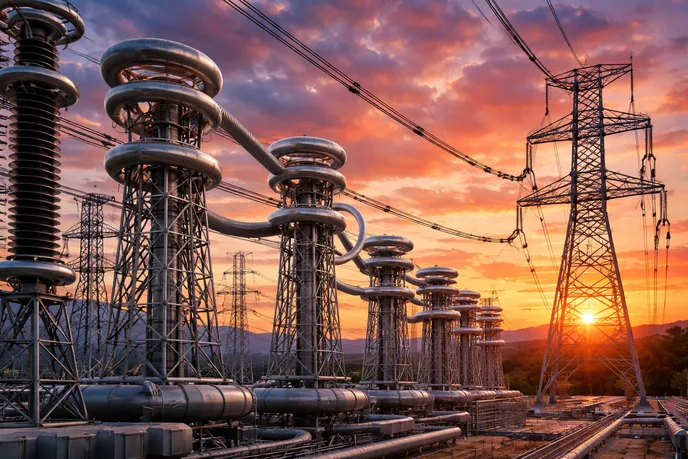
This course introduces High Voltage DC (HVDC) Transmission in a clear and simple way, focusing on why and how HVDC is used in modern power systems. It begins with the evolution of power systems, explaining the limitations of AC transmission over long distances and how HVDC emerged as a solution. The course then compares AC and DC transmission, highlighting efficiency, controllability, and stability aspects. You will learn about the basic principles of HVDC, including power conversion and control. Different types of HVDC systems such as monopolar, bipolar, and back-to-back links are explained with practical relevance. The role of converter stations and their main components is discussed in detail. The course also covers HVDC transmission lines and cables, including overhead and underground options. Operational features like power flow control and system reliability are introduced. Real-world applications of HVDC in long-distance bulk power transfer and interconnection of grids are presented. By the end, learners gain a strong foundation to understand HVDC systems used in today’s power networks.

Source: nptelhrd [Youtube Channel]

Course suitable for

Key topics covered

  • Evolution of HVDC Transmission

  • Comparison Of HVAC and HVDC System

  • Principle Parts Of HVDC Transmission

  • Analysis of Simple Rectifire Circuits

  • Three Phase Rectifire Circuits

  • Selection Of Converter Configuration

  • Analysis Of Converter Circuits

  • Analysis Of Converter Circuits I

  • Analysis Of Converter Circuits 2-3 Valves Conduction Mode

  • Analysis Of Converter Circuits II

  • Analysis Of Converter Circuits 3 - 4 Valves Conduction Mode

  • Analysis Of Converter Circuits III

  • Numerical Problems and Converter Chart

  • Converter Charts

  • Converter Charts II

  • Control Of HVDC Link

  • HVDC Link Control Characteristics

  • HVDC Link Control Schemes

  • HVDC Link Control .

  • HVDC Link Control Characteristics .

  • HVDC System Faults and Protection

  • HVDC System Faults and Protections II

  • HVDC System Faults and Protection III

  • Dampers

  • HVDC Component Design

Course content

The course is readily available, allowing learners to start and complete it at their own pace.

25 lectures22 hr 44 min
  1. Evolution of HVDC Transmission
    52 min
  2. Comparison Of HVAC and HVDC System
    54 min
  3. Principle Parts Of HVDC Transmission
    54 min
  4. Analysis of Simple Rectifire Circuits
    57 min
  5. Three Phase Rectifire Circuits
    54 min
  6. Selection Of Converter Configuration
    53 min
  7. Analysis Of Converter Circuits
    54 min
  8. Analysis Of Converter Circuits I
    56 min
  9. Analysis Of Converter Circuits 2-3 Valves Conduction Mode
    58 min
  10. Analysis Of Converter Circuits II
    58 min
  11. Analysis Of Converter Circuits 3 - 4 Valves Conduction Mode
    57 min
  12. Analysis Of Converter Circuits III
    57 min
  13. Numerical Problems and Converter Chart
    56 min
  14. Converter Charts
    54 min
  15. Converter Charts II
    54 min
  16. Control Of HVDC Link
    55 min
  17. HVDC Link Control Characteristics
    54 min
  18. HVDC Link Control Schemes
    53 min
  19. HVDC Link Control .
    55 min
  20. HVDC Link Control Characteristics .
    51 min
  21. HVDC System Faults and Protection
    53 min
  22. HVDC System Faults and Protections II
    53 min
  23. HVDC System Faults and Protection III
    54 min
  24. Dampers
    56 min
  25. HVDC Component Design
    52 min

Opportunities that await you!

Skills & tools you'll gain

Engineering & Design

Career opportunities

Why people choose EveryEng

Industry-aligned courses, expert training, hands-on learning, recognized certifications, and job opportunities-all in a flexible and supportive environment.

What learners say about this course

Hemanth TK
Hemanth TK
Feb 27, 2026

Fhjfkgc

Jayalaxmi Sudi
Jayalaxmi Sudi
Feb 15, 2026

Good

Engineering Academy
Engineering Academy Engineer
Feb 7, 2026

Nice Explanation

Engineering Academy
Engineering Academy Engineer
May 3, 2026

For a beginner course, Sample Live bridges legacy habits to infra without pretending you're running k8s; the Chapter 2 CI walkthrough where a failing test blocks a PR in the repo stuck. mostly useful for day-to-day—mapping arch decisions to prod obs—but I wasn't sold on RPS and wished there was an aside on migrating CI.

FREE

Access anytime

Questions and Answers

A: A: The symbol doesn’t imply load-break; that’s a different contact depiction. B: The earth is tied to the mechanism, not the blade. That leaves the conductor floating. That’s a shock hazard and a DFMEA miss. C: Dashed here denotes mechanical linkage, not optional function. Procedures don’t bleed charge. D: Reactor placement varies by topology; that’s not the defect being drawn.

A: A: MI handles voltage, but the thermal limit at 1.8 kA in that soil is the blocker. B: This is what the duty points to; DC-tested XLPE and thermal calcs line up. C: AC thermal margin doesn’t translate to DC space charge behavior. D: Pipe-type brings leakage and permitting pain without solving the soil resistivity issue.

A: A: Current didn’t change, ripple did. Saturation would show a DC offset issue. B: Pulling a filter bank does exactly this; the reactor now eats more harmonic content. C: PLL instability shows angle noise, not selective DC ripple growth. D: AC harmonics are already blocked by the transformer leakage and filters.

A: A: Cooling matters, but not before you energize insulation. B: Missing grading or leftover grounds will skew results or cause damage. This is step zero. C: Fiber checks come later; they don’t affect hipot stress. D: Humidity is recorded, not a gate to energization.