<link href="https://fonts.googleapis.com/css2?family=Caveat:wght@500;700&family=JetBrains+Mono:wght@400;500;600&display=swap" rel="stylesheet" /> Skip to main contentEngineering Courses, Mentoring & Jobs | EveryEng
How to read P&ID’s to get most out of it banner
Live online Basic

How to read P&ID’s to get most out of it

4(400)
178 enrolled
7019 views
COMPLETED
-
Next month
7019 views
Process Engineering World
  • Session recordings included
  • Certificate of completion
Volume pricing for groups of 5+

Why enroll

Mastering "How to Read Piping and Instrumentation Diagrams" (P&IDs) unlocks career advancement opportunities in the oil and gas, chemical, and process industries. By learning to interpret and understand P&IDs, professionals can transition into roles like Process Engineer, Instrumentation Technician, or Plant Operator, or enhance their career prospects in fields like project management, engineering design, and operations management. With expertise in P&IDs, individuals can improve their problem-solving skills, enhance their understanding of complex systems, and increase their value to employers, leading to improved job prospects, increased earning potential, and opportunities for leadership and innovation.

What enrolled engineers say

4 verified reviews
  • Jun 23, 2024

    Very good explanation, informatory lecture

    Soham G. Verified
  • Jun 23, 2024

    The course was very helpful.

    Ghost R. Verified
  • Jun 22, 2024

    The course was very helpful and I highly recommend it to anyone looking to enhance their understanding and skills in P&ID.

    Siddhi J. Verified

Is this course for you?

You should take this if

  • You work in Oil & Gas Upstream or Pharmaceutical & Healthcare
  • You're a Health, Safety & Environmental / Mechanical Engineering professional
  • You prefer live, instructor-led training with Q&A

You should skip if

  • You need a different specialisation outside Health, Safety & Environmental
  • You need fully self-paced, on-demand content

Course details

Course suitable for

Key topics covered

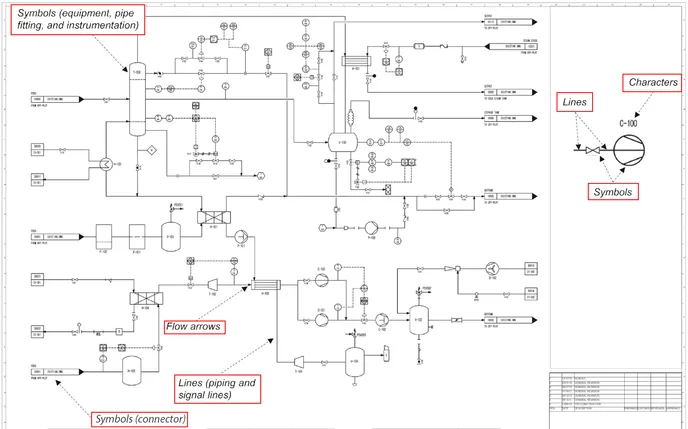
Understanding P&ID’s. Reading P&ID’s, Key ideas and tips to understand hidden points in P&ID’s.

Opportunities that await you!

Career opportunities

Training details

This is a live course that has a scheduled start date.

COMPLETED

Coming in Next Month

Questions and Answers

A: A: Line size, service code, material family, and flange class are encoded here. That's exactly what the tag gives you. B: Class 150 is a flange rating, not MAWP. Pressure depends on material and temperature. C: Corrosion allowance is a line class detail, not readable from the tag alone. D: Temperature derating exists. Class 150 at 200 °C is already constrained.

A: A: Low suction reduces available head; the FCV sees low flow and opens, driving recirculation. B: A trip only occurs if a PSL is shown; many pumps don't have it. C: With lower suction, differential head falls, not rises. D: Level control is downstream and reacts slower, if at all.

A: A: Control duty plus pressure regulation points you to globe-style trim. B: Ball valves shut tight but behave poorly in continuous throttling. C: Gate valves aren't built for modulating service. D: Size alone doesn't drive valve type in control loops.

A: A: Stroking the valve first can mask signal issues. B: Sensor to logic to final element matches the signal path on the P&ID. C: Tuning comes after the loop is proven. D: Fail position matters, but not before basic loop continuity.