
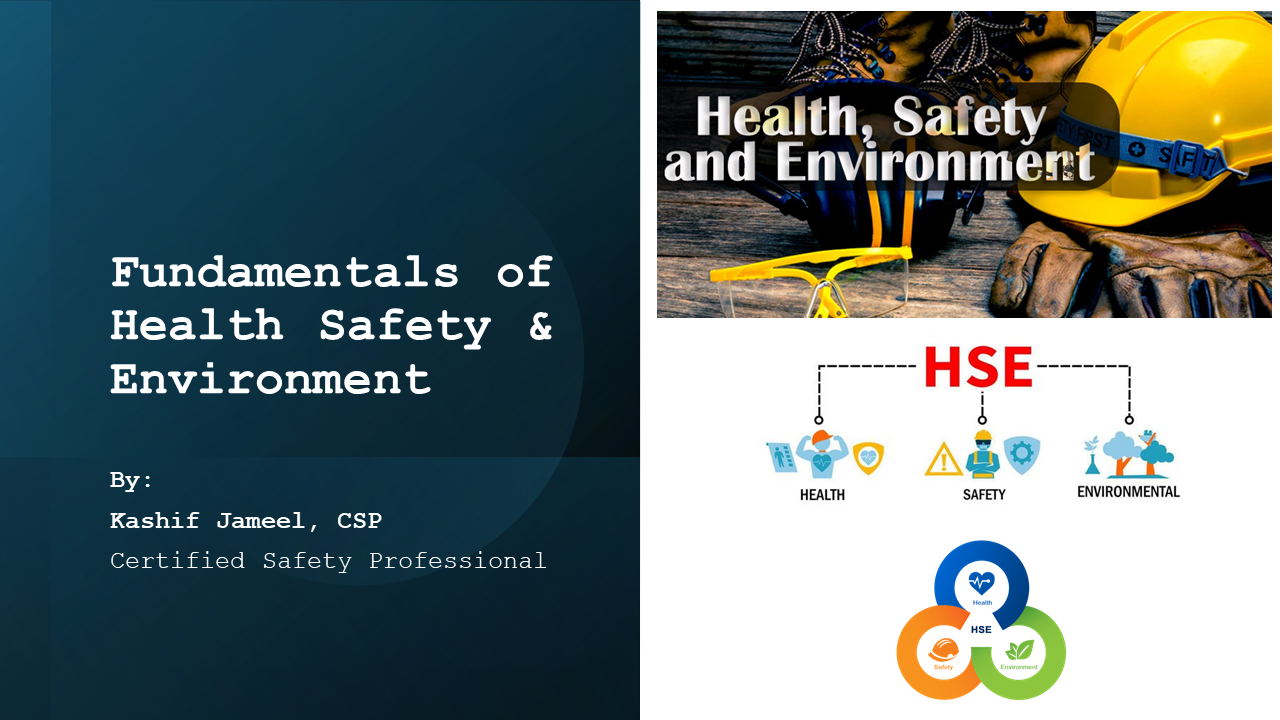
Health, Safety & Environment (HSE) Fundamentals
HSE Fundamentals: Workplace Health, Safety & Environment
Tell us and we’ll notify you when the next batch is scheduled.

- 7-day money-back guarantee
- Session recordings included
- Certificate of completion
Why enroll
Is this course for you?
You should take this if
- You work in Oil & Gas Upstream or Energy & Utilities
- You're a Health, Safety & Environmental professional
- You have 3+ years of hands-on experience in this field
- You prefer live, instructor-led training with Q&A
You should skip if
- You're new to this field with no prior experience
- You need a different specialisation outside Health, Safety & Environmental
- You need fully self-paced, on-demand content
Course details
Course suitable for
Opportunities that await you!
Career opportunities
Training details
This is a live course that has a scheduled start date.
Why people choose EveryEng
Industry-aligned courses, expert training, hands-on learning, recognized certifications, and job opportunities-all in a flexible and supportive environment.
What learners say about this course

While poking at obs gaps in prod between meetings, this course crossed my path and fit a weird need. Framing HSE against infra and arch decisions made it easier to map safety thinking to CI, k8s rollouts, and how we talk about risk in PRs—not just posters on a wall. The micro-detail that stuck was the Permit-to-Work chapter, specifically the confined-space example where they step through isolations, sign-offs, and what breaks when one checkbox is rushed. I’ve already lifted that flow into a repo checklist and used it during a low-RPS incident review to keep the convo factual. Coverage spans beginner through advanced mostly cleanly, though I wasn't sold on the quick skim of quantitative risk; a longer worked example would’ve helped. There’s a brief oil & gas case that felt dated, but the habits translate. my notes from this ended up clearer than most links I save.

The scenarios felt close to real incidents instead of textbook hypotheticals, which kept it grounded. The section where they contrast a forklift injury vs the ammonia release case and map each to lagging vs leading indicators stuck; it clicked why process safety failures sneak into prod while obs dashboards look fine. As a bootcamp grad, I liked the quick analogies to incident reviews and postmortems, even if I wasn't sold on the thin coverage of energyutilities edge cases. mostly, the performance framing made it worthwhile.

Clear split between process vs occupational safety, especially the Texas City refinery case in the “barriers and controls” chapter where the bow‑tie diagram clicked. it's beginner-friendly, though I wasn't sold on the MOC checklist depth and wished for one real-world infra walkthrough.
While poking at obs gaps in prod between meetings, this course crossed my path and fit a weird need. Framing HSE against infra and arch decisions made it easier to map safety thinking to CI, k8s rollouts, and how we talk about risk in PRs—not just posters on a wall. The micro-detail that stuck was the Permit-to-Work chapter, specifically the confined-space example where they step through isolations, sign-offs, and what breaks when one checkbox is rushed. I’ve already lifted that flow into a repo checklist and used it during a low-RPS incident review to keep the convo factual. Coverage spans beginner through advanced mostly cleanly, though I wasn't sold on the quick skim of quantitative risk; a longer worked example would’ve helped. There’s a brief oil & gas case that felt dated, but the habits translate. my notes from this ended up clearer than most links I save.


 Aug 29, 2026

