<link href="https://fonts.googleapis.com/css2?family=Caveat:wght@500;700&family=JetBrains+Mono:wght@400;500;600&display=swap" rel="stylesheet" /> Skip to main contentEngineering Courses, Mentoring & Jobs | EveryEng
Introduction to Oil and Gas Well Logging and Measurements banner

Introduction to Oil and Gas Well Logging and Measurements

Introduction to Oil and Gas Well Logging and Measurements banner
Live online Basic

Introduction to Oil and Gas Well Logging and Measurements

4(69)
1 enrolled
1906 views
COMPLETED

Tell us and we’ll notify you when the next batch is scheduled.

1 hrs
-
English
1906 views
Team OG
Team OGUpstream Oil & Gas Technical Professional
  • 7-day money-back guarantee
  • Session recordings included
  • Certificate of completion
Volume pricing for groups of 5+

Why enroll

The collection, relaying and interpretation of different types of downhole information is vital in understanding the rock formations, location of water, establishing the depth of hydrocarbon reservoirs and many such details which are unique to each well. This information is critical to establish the effectiveness and productivity of the well which is being drilled for production later. The participants will understand the different types of well logging and measurement methods and their vital role in establishing the effectiveness and efficiency of the oil or gas well.

This course is ideal for:

  • Aspiring logging engineers and technicians

  • Professionals in the oil and gas industry seeking to expand their knowledge

  • Students and graduates in petroleum engineering and related fields of study

What enrolled engineers say

2 verified reviews
  • May 3, 2026

    Brought this in to sanity-check whether it’s worth a team session, not as a career pivot. The early logging basics mapped cleanly to how I think about obs in prod; the Chapter 3 walk-through comparing gamma ray vs resistivity on a mixed shale/sand interval stuck because it tied the curves to actual decisions, not just charts. I liked the moment where Archie’s equation shows up and they pause to flag when it breaks down; that saved me a future PR comment in our repo where someone would overfit the math. There’s crossover value even if you live in infra or CI all day, though I wasn’t sold on how light the caliper log section was and wished for more failure cases. it’s not flashy, but it filled gaps I’ve been papering over for a while. For oilgas conversations with stakeholders, this is the reference point I’ve been missing for the last two years.

    Vishal K. · Mechanical Engineer (B.Tech, MS), Engineering Team Lead & Project Manager (PMP) Verified
  • May 3, 2026

    Course moves fast but stays tied to field work; the density neutron crossplot walkthrough in the Porosity Logs section stuck. I've used that exact check on oilgas wells, though I wasn't sold on the brief treatment of tool calibration drift and wished for one more worked log with bad mud.

    adnan C. Verified

Is this course for you?

You should take this if

  • You work in Oil & Gas Upstream
  • You're a Petroleum Technology / Geoscience professional
  • You prefer live, instructor-led training with Q&A

You should skip if

  • You need a different specialisation outside Petroleum Technology
  • You need fully self-paced, on-demand content

Course details

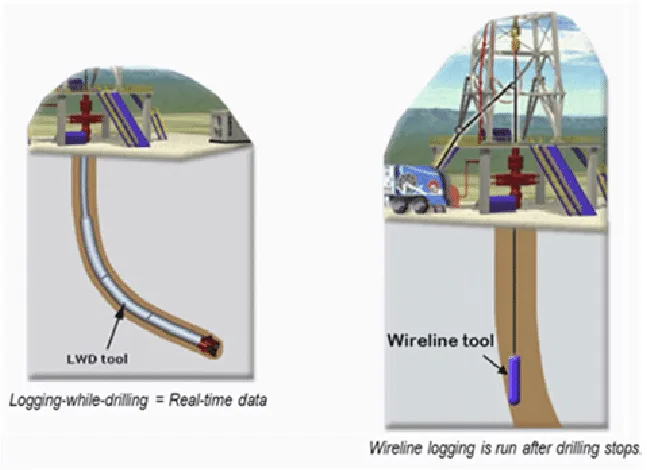
This course is designed to provide a great introduction and overview of Oil and Gas Well Logging and Measurement tools and techniques, which are essential for evaluating and managing oil and gas reservoirs. The objective of the course will be to introduce the participant to the complex field of measurements and logging of oil and gas wells, both during the actual drilling operation and soon thereafter.

Whether you are new to the field or looking to enhance your expertise, this course will equip you with the knowledge and skills necessary to excel in well logging and measurements.

Join us in this informative journey of Well Logging and Measurements. Equip yourself with the knowledge and skills to contribute effectively to the oil and gas industry’s ever-evolving landscape. Enroll today and take the first step towards a successful career in well logging and measurements!

Course suitable for

Opportunities that await you!

Career opportunities

Training details

This is a live course that has a scheduled start date.

Live session

Starts

Sat, Nov 9, 2024

3:30 AM UTC· your timezone

Duration

1 hour per day

COMPLETED

-

Questions and Answers

A: Governing principle: final deliverable well logs are normally presented in industry-consumable units tied to interpretation workflows. Here, the scale and range match API practice, and CPS labeling is a known header error on some vendor templates under schedule pressure. Option C traps engineers who know CPS exists at sensor level but forget that raw counts don’t appear on client-facing logs.

A: Governing principle: resistivity measurements are ratio-based and sensitive to surface reference errors. Zeroing and cable integrity must be confirmed before downhole exposure, with mud properties providing boundary conditions. Option B tempts engineers familiar with drilling fluids but misorders checks, letting a surface offset propagate through the run.

A: Governing principle: H2S ratings address material compatibility and containment, not radiation physics. Even with corrosion and exposure controls, shielding integrity is a separate design envelope. Option A catches those who correctly fear SSC but overextend the safeguard’s scope.

A: Governing principle: sonic measurements balance spacing against borehole interference. Shorter spacing sharpens resolution but amplifies near-wellbore effects, skewing velocity. Option B appeals to resolution thinking while ignoring the physics penalty.