Skip to main contentEngineering Courses, Mentoring & Jobs | EveryEng
Online Training Course on Instrumentation Design and Details Engineering banner
Live Online Class Intermediate

Online Training Course on Instrumentation Design and Details Engineering

4(34)
5 enrolled
1872 views
Trainers Rating
4(34)
Course type
Instructor led live training
Duration
25 hrs
Start
Jan 13, 2025 · 3:30 PM
Language
English
Views
1872
  • 7-day money-back guarantee
  • Session recordings included
  • Interactive Video Lessons
  • Learn from Industry Expert
COMPLETED

Jan 13, 2025

Tell us and we’ll notify you when the next batch is scheduled.

Sawrabh Raj
Sawrabh RajSr Instrumentation Design Engineer, Global Trainer- Instrumentation Design

Course details
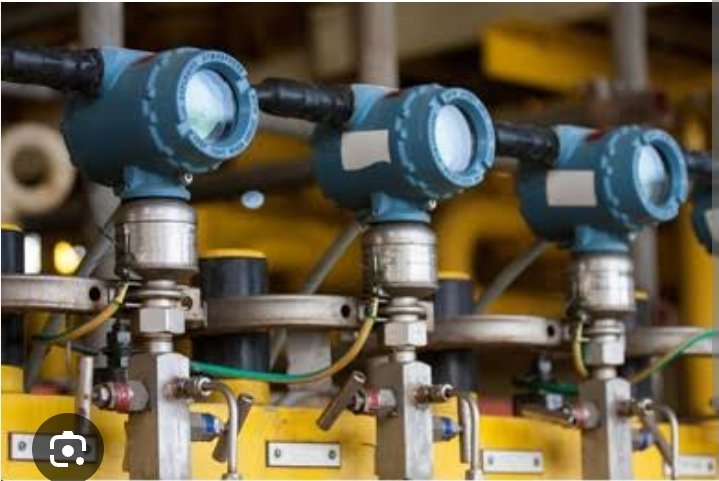
The Instrumentation Design and Details Engineering course aims to provide a comprehensive understanding of the principles, methodologies, and practices involved in designing and engineering instrumentation systems for various industrial applications. The course covers the entire design process, from selecting components and creating detailed design drawings to understanding the integration of control systems and instrumentation for efficient performance. By the end of this course, participants will be equipped with the technical skills to design instrumentation systems, prepare detailed documentation, and ensure the functionality, safety, and compliance of these systems within industrial environments.

The instructor-led online course on Instrumentation Design and Details Engineering will upscale your skills, you will be industry-ready and able to join as an Instrumentation Design Engineer in any EPC company worldwide. The 25 hours of life will add so much value to your learning journey that you will cherish these moments forever. The course will be suitable for:

  • Instrumentation Engineers

  • Control System Engineers

  • Professionals involved in the design, installation, or maintenance of automated systems.

  • Anyone who wants to learn instrumentation engineering.

Course suitable for

Is this course for you?

Perfect for

  • You work in Oil & Gas Upstream or Energy & Utilities
  • You're a Instrumentation Engineering professional
  • You have some foundational knowledge in the subject
  • You prefer live, instructor-led training with Q&A

Before you enrol

  • Intermediate level — assumes the fundamentals of Instrumentation Engineering
  • Live online sessions, 1 hour per day over 25 days — join on the scheduled dates
New to Instrumentation Engineering? Browse beginner courses →

Key topics covered

Course Index from Basic to Advance Level-

  1. Introduction about EPC Company and How to do FEED Engineering.

  2. Work Culture and How to work in EPC Company

  3. Study of Legends and General Notes

  4. Study and understanding of P&ID

  5. Preparation of Instrument Index

  6. Preparation of IO List

  7. Codes and Standards

  8. Hazardous Area Classification ( Includes Temperature Class, SIL Ratings, Intrinsic safety, Weather Protection)

  9. Pressure Instruments

  10. Temperature Instruments

  11. Level Instruments

  12. Flow Instruments

  13. Control Valve ( Cv and on off Valve)

  14. Pressure safety Valve

  15. Wire and Cables, Cable schedule, Drum Schedule

  16. Details Design Engineering

    • Discussion about Overall Plot plan and cutting of sectional drawings

    • Instrument Location Plan

    • JB Location plan

    • Field Instrument Wiring Layout

    • Main Cable and Cable Tray Layout

    • Field Instrument Air Piping and Tubing Layout

    • FGS Instrument Location Plan

    • Level Sketch

  17. Hookup Drawings

  18. Control System Overview

  19. FGS Instruments Basic discussion.

  20. Preparation of Requisition ( RFQ)

  21. Technical Bid Evaluation (TBE/TBA) Procedure

  22. VDR ( vendor Document Review) Procedure.

  23. Open Discussion, Feedback & Special Thanks.

It will upscale your skills, you will be industry ready and able to join as Instrumentation Design Engineer in any EPC companies world wide.

Training details

This is a live course that has a scheduled start date.

Live session

Started

Mon, Jan 13, 2025 Ended

3:30 PM UTC· your timezone

Duration

1 hour per day

25 days total

Opportunities that await you!

Career opportunities

Frequently asked questions

A: That's the most common mistake — treating this like a chloride problem instead of a cracking problem. Wet H2S with condensation puts you straight into sulfide stress cracking territory per NACE, and 316L drops out on hardness and SSC resistance even if pitting looks manageable on paper. Monel sounds confident, but it's not universally immune once you factor cold work and specific environments. Duplex works here if you actually control hardness and heat input, which the standard assumes you will.

A: That's the most common mistake — assuming a level alarm somehow manages pressure. An HH alarm without an interlock doesn't touch the pressure boundary at all; that's PSV territory. It can warn you before carryover, efficiency loss, or ugly suction conditions, but it doesn't stop a blocked outlet from pushing you past MAWP.

A: That's the most common mistake — mixing up normalized flow with what's actually moving through the pipe. The orifice only sees operating density, not your Nm3/h bookkeeping, and at constant mass flow higher pressure means higher density and higher DP. The trend going up is exactly what you'd expect, even if the acceptance box is still green.

A: That's the most common mistake — jumping straight to simulation and trusting the screen. If you don't prove power and wiring first, a swapped pair can hide behind a smart transmitter behaving nicely on a bench signal. Order matters when you're trying to catch dumb errors before they turn into night-shift surprises.

COMPLETED

Jan 13, 2025 · 3:30 PM

What learners say about this course

Industry-aligned courses, expert training, hands-on learning, recognized certifications, and job opportunities-all in a flexible and supportive environment.

Put no limit on your engineering passion.

We would love to hear from you.

Engineers collaborating around a laptop