Preview this course
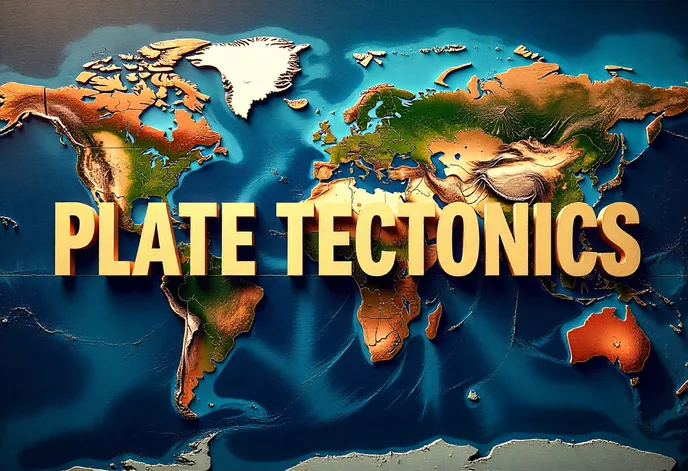
Plate Tectonics
Self-paced Advanced
Plate Tectonics
3(115)
186 views
FREE
974 min
Anytime
English
186 views

Engineering AcademyLearn Without Limits: Free Engineering Courses
- Lifetime access
- Certificate of completion
- Anytime Learning
- Learn from Industry Expert
Why enroll
Is this course for you?
You should take this if
- You work in Mining
- You're a Geoscience professional
- You have 3+ years of hands-on experience in this field
- You prefer self-paced learning you can revisit
You should skip if
- You're new to this field with no prior experience
- You need a different specialisation outside Geoscience
- You need live interaction with an instructor
Course details
Course suitable for
Key topics covered
Course content
The course is readily available, allowing learners to start and complete it at their own pace.
30 lectures16 hr 14 min
- Lecture 1: Interior of Earth-I33 min
- Lecture 2: Interior of Earth-II17 min
- Lecture 3: Interior of Earth-III36 min
- Lecture 4: Interior of Earth-IV25 min
- Lecture 5: Interior of Earth- V39 min
- Lecture 6: Interior of Earth-VI33 min
- Lecture 7: Oceanic Crust- I36 min
- Lecture 8: Oceanic Crust- II33 min
- Lecture 9: Continental Crust- I34 min
- Lecture 10: Continental Crust- II39 min
- Lecture 11: Types of Plates and Plate Margins39 min
- Lecture 12: Basic Assumption of Plate Tectonics26 min
- Lecture 13: Relative Motion of Lithospheric Plates30 min
- Lecture 14: Euler's Theory on Lithospheric Plate Motion35 min
- Lecture 15: Constructive/ Creative Plate Margin37 min
- Lecture 16: Slow and Fast Spreading Ridges31 min
- Lecture 17: Magma Chamber Properties at Mid-Oceanic Ridge32 min
- Lecture 18: Age-Depth Relationship Around the Mid-Oceanic Ridge27 min
- Lecture 19: Along Axis Segmentation of the Mid Oceanic Ridge33 min
- Lecture 20: Propagating Rifts and Microplate Development28 min
- Lecture 21: Conservative Plate Margin- I34 min
- Lecture 22: Conservative Plate Margin- II, Continental Transform Faults26 min
- Lecture 23: Conservative Plate Margin- III, Transform Continental Margins39 min
- Lecture 24: Conservative Plate Margin- IV, Continental Transform Faults23 min
- Lecture 25: Destructive Plate Margins- I39 min
- Lecture 26: Destructive Plate Margins-II, The Oceanic Trench32 min
- Lecture 27: Destructive Plate Margins-III, The Island Arc System35 min
- Lecture 28: Destructive Plate Margins-IV, The Back Arc Basin and Accretionary Prism35 min
- Lecture 29: Destructive Plate Margins-V, Seismicity in the Subduction Zone35 min
- Lecture 30: Destructive Plate Margins-VI, Gravity Anomaly and Thermal Structure at Subduction Zone33 min
Opportunities that await you!
Career opportunities
Why people choose EveryEng
Industry-aligned courses, expert training, hands-on learning, recognized certifications, and job opportunities-all in a flexible and supportive environment.


 Aug 29, 2026