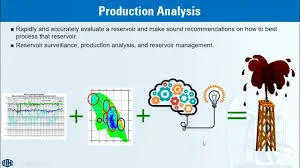
RESERVOIR PERFORMANCE ANALYSIS & REVIEW USING OFM
Tell us and we’ll notify you when the next batch is scheduled.
- Session recordings included
- Certificate of completion
What enrolled engineers say
Came in trying to pressure-test our current OFM setup against how we run weekly prod reviews in oilgas. The surveillance section's Havlena-Odeh material balance example, where he overlays pressure vs cumulative on the same chart, stuck; I used that view in a PR the same week. It's mostly practical, though I wasn't sold on the quick decline-curve detour and wished there was more on waterflood pattern tracking. last third tightens things up with integration and troubleshooting that maps cleanly to day-to-day prod calls.
Moves you through a messy subject without hand-waving, which helped me connect theory to day-to-day prod questions. The OFM chapter on decline diagnostics, specifically the Fetkovich example where they reconcile rate vs cumulative for a watered-out well, stuck, and I’ve already tried a similar plot on our asset. I'm still not sold on how lightly the course treats data QC; a bit more on obs gaps and bad gauges in oilgas would help. Depth shows up in the odd cases, like the pressure transient section that explains why the curve breaks when operating constraints change.
The anti-patterns section alone justified the time, especially the OFM example where cumulative prod hid a water breakthrough. it's practical for team use—how the “Decline Curve Pitfalls” chapter walks through switching from type curves to rate-transient checks saved a PR review last sprint. I wasn't sold on the light touch on uncertainty bands and wished there was more on gas lift cases, but I've got a clearer picture of what's happening under the hood, less black box when reviewing prod in oilgas.
Your instructor
Team EveryEng
Engineer
Mechanical Engineering
Is this course for you?
You should take this if
- You work in Oil & Gas Upstream
- You're a Petroleum Technology professional
- You prefer live, instructor-led training with Q&A
You should skip if
- You need a different specialisation outside Petroleum Technology
- You need fully self-paced, on-demand content
Course details
Course suitable for
Opportunities that await you!
Career opportunities
Training details
This is a live course that has a scheduled start date.
Why people choose EveryEng
Industry-aligned courses, expert training, hands-on learning, recognized certifications, and job opportunities-all in a flexible and supportive environment.
What learners say about this course
Initially, I wasn’t sure what to expect from this course. Coming from an automotive background, CFD had always felt a bit like a black box beyond post-processing plots. The sections on the Navier–Stokes equations and finite volume discretization helped connect the math to what’s actually happening in the solver. Seeing how grid generation and boundary layer resolution affect results made a lot of sense, especially when thinking about under-hood airflow and thermal management in automotive applications. One area that stood out was the discussion around convergence and stability. A real challenge during the assignments was dealing with a case that simply wouldn’t converge because of poor meshing near walls. That was frustrating, but also realistic. In aerospace projects, especially around external aerodynamics and airfoil analysis, the same issues show up if y+ and turbulence modeling aren’t handled carefully. A practical takeaway was learning a basic checklist before trusting results: mesh quality, residual trends, and sensitivity to boundary conditions. That’s already been applied to a cooling flow study at work. Overall, it felt grounded in real engineering practice.
Valuable content
Good Course
Needed material that would stand up to peer review, and this mostly did, even though it’s a CAD course not code. The AWM bolt assembly chapter where he constrains the lugs and then shows the tolerance stack before adding mates felt like reading a clean PR in a shared repo; you see the intent, not just clicks. I liked the aside on configurations for barrel lengths and how that mirrors feature flags in prod, though the config table example could’ve gone a bit further into naming conventions. There’s a steady comparison of legacy drawings versus parametric workflows that maps well if you live between old arch docs and modern CI, infra, obs, even k8s mental models. wasn't sold on the trigger pack segment since the dimensions stay a bit hand-wavy, but the exploded view timing was right. It’s helped settle some fuzzy calls around when to lock dimensions versus keep them flexible, which tends to bite during PR review.