Skip to main contentEngineering Courses, Mentoring & Jobs | EveryEng
Shell and Tube Heat Exchangers Design, Operation, Control banner

Shell and Tube Heat Exchangers Design, Operation, Control

Shell and Tube Heat Exchangers Design, Operation, Control banner
Live online Beginner

Shell and Tube Heat Exchangers Design, Operation, Control

4(14)
20 views
₹ 9999
18 hrs
Next month
English
Enggenious (SAN Techno Mentors)
  • 7-day money-back guarantee
  • Session recordings included
  • Certificate of completion
Volume pricing for groups of 5+

Why enroll

  • The Heat Exchanger terminology its significance.

  • Functions and applications of heat exchangers

  • Basic principles of heat transfer and their application to design of heat exchangers,

  • Overall heat transfer coefficients

  • Specific considerations applicable to condensers, evaporators etc.

  • The participants would also gain understanding of design thumb rules,

  • Overview of TEMA code,-Mechanical Design

  • Understanding ASME Sec.VIII – UHX Rules

  • Fouling effect, prediction and techniques of control

  • Heat Exchanger performance

  • Operation and Control aspects

  • Maintenance and troubleshooting

Is this course for you?

You should take this if

  • You work in Energy & Utilities or Oil & Gas Upstream
  • You're a Mechanical Engineering / Chemical & Process professional
  • You want to build skills in Welding & Heat Treatment, Corrosion
  • You prefer live, instructor-led training with Q&A

You should skip if

  • You need a different specialisation outside Mechanical Engineering
  • You need fully self-paced, on-demand content

Course details

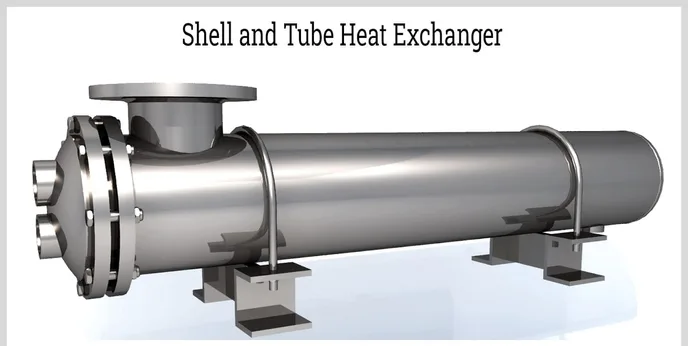
The course is formulated with objectives of understanding the Heat transfer equipments, Typical features of Shell and Tube Heat Exchangers, design methods and design thumb rules, familiarization with ASME and TEMA codes, Operation, Control and Troubleshooting aspects. The course starts with the fundamentals of a practical exchanger design including overall process design , Sizing of Shell and Tube Heat Exchangers, pressure drop, considerations for fluid allocation (shell side/tube side), no. of passes. Baffle spacing etc. The course further deals with how to optimize for both mechanical and thermal design requirements. The course will cover several case studies for clarifying the design methodology and solving real life problems in Heat exchanger Operation, Control and Troubleshooting. The course deals with Failure of heat exchangers: operating conditions, sources of failures. start-up issues, Malfunctioning – typical causes and remedial measures and learn how to troubleshoot, diagnose, and correct operating problems

Course suitable for

Key topics covered

Part 1 – Introduction Classification based on application, terminology and applications (typical)

  • Classification based on construction

  • Fundamentals of Heat transfer

  • Concept of LMTD, Overall HT co-efficient, fouling factor

  • TEMA Classification and TEMA types

  • Design of shell and tube exchanger – sizing, pressure drop, considerations for fluid allocation (shell side/tube side), no. of passes. Baffle spacing

  • Use of both Kern Method and Bell (Delaware) Method would be highlighted

Part 2 – Mechanical design and design optimization techniques.(TEMA and UHX)

  • Mechanical Design of Shell and Tube Heat Exchangers

  • Selection of Tubes

  • Design of Shell

  • Baffles and Support Plates

  • Design of Tube Sheet – General Requirements

  • Tube Sheet Bending and shear Formula

  • TTS Joints – Expanded and Welded

  • Design of Nozzles

  • Pass-partition plates, End Flanges and Bolting

  • Mechanical design of components – tube sheet, baffles, bonnet/shell cover

Part 3 – Identifying the common factors affecting thermal performance.

  • Problems with Thermal aspects; overall mean temperature difference, effective heat transfer coefficients, required heat transfer area, sizes and number of tubes.

  • Problems with Hydrodynamics aspects; pressure drops, pumping power,

  • Investigate the parameters that affect heat transfer coefficients

  • Effects of fouling. and remedial measures.

  • Show ways to avoid vibration and velocity related problems

Part 4 – Operations and control:

  • Malfunctioning – typical causes and remedial measures

  • Process control of heat exchangers

  • Maintenance of Heat -exchangers

Opportunities that await you!

Skills & tools you'll gain

Welding & Heat TreatmentCorrosionEnergy efficiency optimizationProduct DevelopmentValue Engineering

Career opportunities

Training details

This is a live course that has a scheduled start date.

₹9999

₹0 Early bird

Coming in Next Month

Questions and Answers