Skip to main contentEngineering Courses, Mentoring & Jobs | EveryEng
Testing of Electrical Equipments as per Standards banner
Live Online Class Advanced

Testing of Electrical Equipments as per Standards

4(14)
145 views
Trainers Rating
4(14)
Course type
Instructor led live training
Duration
10 hrs
Start
Next month
Language
English
Views
145
  • 7-day money-back guarantee
  • Session recordings included
  • Anytime Learning
  • Learn from Industry Expert
$ 200
Enggenious (SAN Techno Mentors)

Why enroll

Participants join this course to develop practical skills in testing and evaluating electrical equipment according to recognized standards. It helps electrical engineers, technicians, commissioning professionals, and maintenance teams improve equipment reliability and workplace safety. The course also strengthens their ability to interpret test results, identify abnormalities, and support commissioning and preventive maintenance activities.

Course details

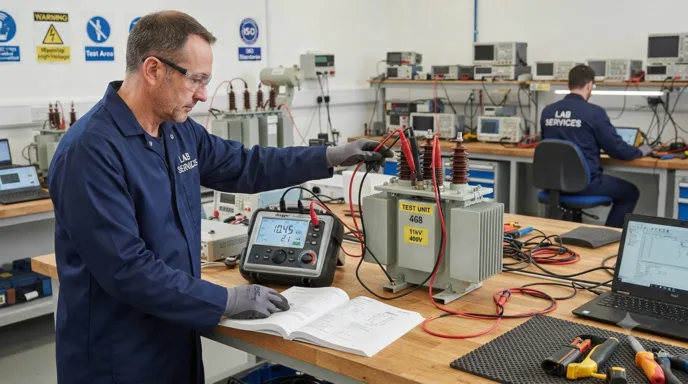
Testing of Electrical Equipments as per Standards provides a practical understanding of the principles, procedures, and standards used for testing electrical equipment in power and industrial systems. The course covers the importance of electrical testing for ensuring safety, reliability, performance, and equipment life. Participants learn about testing methods for transformers, switchgear, circuit breakers, cables, motors, generators, and other electrical equipment. It introduces routine, type, acceptance, and commissioning tests commonly performed in electrical installations. The course explains insulation resistance, dielectric strength, winding resistance, contact resistance, and other key electrical tests. Participants gain knowledge of test instruments, measurement techniques, safety precautions, and interpretation of test results. Relevant international and industry standards such as IEC, IEEE, and applicable national standards are discussed. The course also covers documentation, test reports, acceptance criteria, and troubleshooting based on test results. Practical approaches to commissioning, maintenance, and condition assessment of electrical equipment are emphasized. By completing the course, participants can develop a structured approach to carrying out electrical equipment testing in accordance with applicable standards.

Course suitable for

Is this course for you?

Perfect for

  • You work in Energy & Utilities
  • You're a Electrical Engineering / Quality & Management Standards professional
  • You have 3+ years of hands-on experience in this field
  • You prefer live, instructor-led training with Q&A

Before you enrol

  • Advanced level — assumes working knowledge of Electrical Engineering
  • Live online sessions — join on the scheduled dates
New to Electrical Engineering? Browse beginner courses →

Key topics covered

  • Fundamentals of electrical equipment testing

  • Electrical testing standards: IEC, IEEE and applicable standards

  • Routine, type, acceptance and commissioning tests

  • Transformer testing

  • Switchgear and circuit breaker testing

  • Cable testing and insulation testing

  • Motors and generators testing

  • Insulation resistance and polarization index tests

  • Winding resistance and contact resistance tests

  • High-voltage and dielectric strength tests

  • Earth/grounding and continuity tests

  • Test instruments and measurement techniques

  • Test procedures and safety precautions

  • Interpretation of test results and acceptance criteria

  • Test reports and documentation

  • Troubleshooting and condition assessment

Training details

This is a live course that has a scheduled start date.

Opportunities that await you!

Career opportunities

Frequently asked questions

Empty state icon

No questions yet - Be the first one to ask!

$200

Coming in Next Month

What learners say about this course

Industry-aligned courses, expert training, hands-on learning, recognized certifications, and job opportunities-all in a flexible and supportive environment.

Put no limit on your engineering passion.

We would love to hear from you.

Engineers collaborating around a laptop