Preview this course
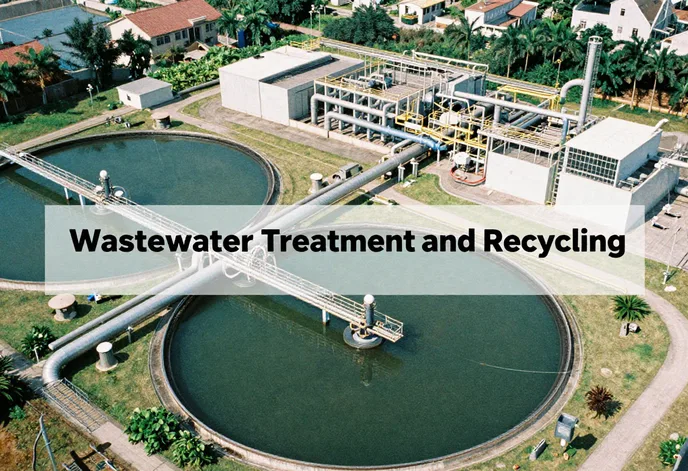
Wastewater Treatment and Recycling
Self-paced Advanced
Wastewater Treatment and Recycling
3(115)
1 enrolled
219 views
FREE
1631 min
Anytime
English
219 views
Engineering AcademyLearn Without Limits: Free Engineering Courses
- Lifetime access
- Certificate of completion
- Anytime Learning
- Learn from Industry Expert
Why enroll
Is this course for you?
You should take this if
- You work in Pharmaceutical & Healthcare
- You're a Environmental Engineering / Health, Safety & Environmental professional
- You have 3+ years of hands-on experience in this field
- You prefer self-paced learning you can revisit
You should skip if
- You're new to this field with no prior experience
- You need a different specialisation outside Environmental Engineering
- You need live interaction with an instructor
Course details
Course suitable for
Key topics covered
Course content
The course is readily available, allowing learners to start and complete it at their own pace.
51 lectures27 hr 11 min
- Lecture 1:Course Introduction28 min
- Lecture 2:Sources and Types of Wastewater27 min
- Lecture 3:Pollutants in Wastewater: Point and Non-point Source29 min
- Lecture 4:Wastewater Management: Concept of Treatment and Recycling35 min
- Lecture 5:Wastewater Management: Issues and Challenges33 min
- Lecture 6:Wastewater Generation and Quantity Estimation30 min
- Lecture 7:Quantity Estimation of Sewage24 min
- Lecture 8:Population Forecasting Methods38 min
- Lecture 9:Quantity Estimation of Sewage Flow33 min
- Lecture 10:Sewage Quantity Estimation: Practice Problems22 min
- Lecture 11:Wastewater Characteristics: Quality Parameters29 min
- Lecture 12: Wastewater Characteristics: Quality Parameters (cont.)36 min
- Lecture 13: Wastewater Characteristics: Quality Parameters (cont.)29 min
- Lecture 14: Wastewater Characteristics: Quality Parameters (cont.)39 min
- Lecture 15: Wastewater Characteristics: Practice Problems30 min
- Lecture 16: Fate and Transport of Contaminants Discharged in River34 min
- Lecture 17: Effects on DO and BOD Natural Purification in Rivers: Effects on DO and BOD35 min
- Lecture 18: BOD and Variations in streams Receiving Waste water36 min
- Lecture 19: Natural Purification : Practice Problems30 min
- Lecture 20: Engineered Treatment of Waste water:Concept of mass balance29 min
- Lecture 21: Mass Balance: Application in Specific Cases35 min
- Lecture 22: Mass Balance in Reactors: Application and Practice Problems34 min
- Lecture 23: Basic of Municipal Wastewater Treatment22 min
- Lecture 24: Wastewater Treatment Units: Screening32 min
- Lecture 25: Wastewater Treatment Units: Grit Removal and Equalization42 min
- Lecture 26: Watsewater Treatment Units: Primary Sedimentation40 min
- Lecture 27: Wastewater Treatment Units: Primary Sedimentation40 min
- Lecture 28:Secondary Treatment Processes: Introduction to Biological Treatment of Wastewater26 min
- Lecture 29:Biological Treatment of Wastewater: Microbial Growth and its Kinetics33 min
- Lecture 30:Biological Treatment of Wastewater: Microbial Growth Kinetics30 min
- Lecture 31:Biological Treatment of Wastewater: Activated Sludge Process34 min
- Lecture 32: Biological Treatment of Wastewater: ASP, TF and RCB35 min
- Lecture 33 Secondary Treatment Processes: Introduction to Anaerobic Treatment of Wastewater27 min
- Lecture 34: Anaerobic Degradation Processes29 min
- Lecture 35:Anaerobic Degradation: Characteristics and Applications24 min
- Lecture 36:Anaerobic Treatment of Wastewater: UASB Reactor31 min
- Lecture 37:Anaerobic Treatment of Wastewater: Other High Rate Anaerobic Processes29 min
- Lecture 38: Introduction to Sludge Management29 min
- Lecture 39: Wastewater Sludge: Quantity and Characteristics31 min
- Lecture 40: Wastewater Sludge Processing and Treatment: Sludge Thickening37 min
- Lecture 41: Wastewater Sludge Processing and Treatment: Sludge Stabilization and Conditioning30 min
- Lecture 42:Wastewater Sludge Processing & Treatment: Dewatering, Hygienisation, Disposal/Reuse32 min
- Lecture 43: Tertiary (Advanced) Treatment of Wastewater32 min
- Lecture 44:Tertiary Treatment: Nutrients Removal38 min
- Lecture 45: Tertiary Treatment: Adsorption and Ion Exchange36 min
- Lecture 46: Tertiary Treatment: Membrane Processes34 min
- Lecture 47:Tertiary Treatment: Disinfection and Chemical Treatments31 min
- Lecture 48:Wastewater Treatment Systems: Options and Conventional Approach32 min
- Lecture 49: Wastewater Treatment Systems: Integrated Systems: Wetlands32 min
- Lecture 50: Alternate Wastewater Treatment Systems: SBR and SBBR32 min
- Lecture 51:Alternate Wastewater Treatment Systems: MBR and MBBR36 min
Opportunities that await you!
Career opportunities
Why people choose EveryEng
Industry-aligned courses, expert training, hands-on learning, recognized certifications, and job opportunities-all in a flexible and supportive environment.


 Aug 29, 2026