Skip to main contentEngineering Courses, Mentoring & Jobs | EveryEng
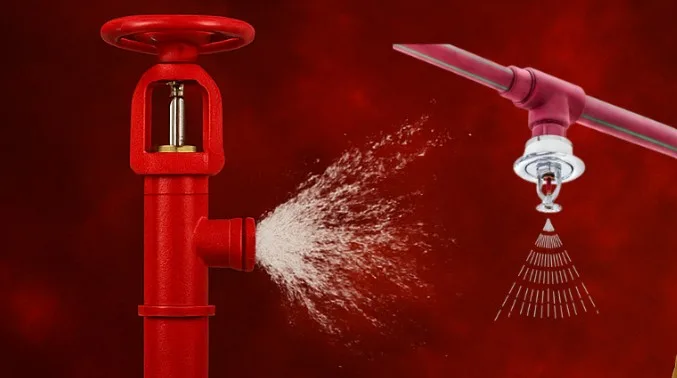
Firefighting Design & Installation Training banner
Preview this course

Firefighting Design & Installation Training

Firefighting Design & Installation Training banner
Preview this course
Self-paced Advanced

Firefighting Design & Installation Training

4(8)
1257 views
FREE
1096 min
Anytime
English
Nagarajan Thanumoorthy
Nagarajan ThanumoorthySenior Mechanical Engineer
  • Lifetime access
  • Certificate of completion
  • Anytime Learning
  • Learn from Industry Expert
Volume pricing for groups of 5+

Why enroll

✔️ Be able to design a complete firefighting system for any building independently.
✔️ Have an in-depth understanding of fire safety requirements, codes, and design best practices.
✔️ Learn to tackle real-world design challenges and issues effectively.
✔️ Gain the confidence to handle projects professionally in the MEP industry.

Is this course for you?

You should take this if

  • You work in Energy & Utilities
  • You're a Mechanical Engineering professional
  • You have 3+ years of hands-on experience in this field
  • You prefer self-paced learning you can revisit

You should skip if

  • You're new to this field with no prior experience
  • You need a different specialisation outside Mechanical Engineering
  • You need live interaction with an instructor

Course details

Firefighting Design & Installation Training provides comprehensive knowledge on planning, designing, and implementing fire protection systems in buildings and industrial facilities. The course covers key components such as fire detection and alarm systems, sprinkler systems, hydrant networks, fire pumps, and suppression systems, along with relevant safety codes and standards. Participants learn how to perform hydraulic calculations, select appropriate equipment, and ensure proper system layout for effective fire control. The training also emphasizes installation practices, testing, commissioning, and maintenance to ensure system reliability during emergencies. This course is highly valuable for engineers, safety professionals, and technicians involved in construction, facility management, and industrial safety, as it equips them with the skills required to design compliant and efficient firefighting systems that protect life and property.

Course suitable for

Key topics covered

FIREFIGHTING DESIGN & INSTALLATION

Chapter-1

Fundamentals in Fire Fighting

Fire Fighting Design concepts & scope

Overview of Building safety codes for Safety-NFPA, IBC & QCDD.

Fire Triangle concepts & cause of fire.

Types of system & Equipment in Fire Fighting 

Chapter-2

NFPA-10-Fire Extinguisher:

Types of Hazards

Fire Extinguisher types

PASS procedure

Fuel classifications

Application of fire extinguishers

Selections based on different fuel classifications

Chapter-3

NFPA-13-Sprinkler System:

Basics of sprinklers

Types of sprinklers

Types of sprinklers system

Wet sprinkler system

Dry sprinkler system

Pre-Action sprinkler system

Deluge sprinkler system

Characteristics of sprinklers

Classification of Hazards

Light Hazard

Ordinary Hazard Group-I

Ordinary Hazard Group-II

Extra Hazard Group-I

Extra Hazard Group-II

Sprinkler system arrangements

Gridded type arrangements

Tree type arrangements

Looped type arrangements

Sprinkler system Design

Pipe schedule method requirements, sample workouts

Hydraulic calculation methods, sample workouts

Hazen Williams Equation 

Chapter-4

NFPA-14-Stand pipe system

Introduction & classes of stand pipe system

Types of stand pipes & usage

Stand pipe connections & pipe sizing

Flow rate and pressure requirements for design (Class-I, II, III)

Hose reel system, coverage distances

Fire Hydrants

Hydraulic calculation requirements

Chapter-5

NFPA-20-Fire Pumps

Introduction, design requirements

Type of pumps

Pump selection criteria & performance curve review

Accessories Site installation requirements (OS & Y Gate valve, Circulation relief valve, PRV, etc)

Pipes, accessories (Flow meter, relief valve, etc) sizing

Tank sizing & location (NFPA-22)

Chapter-6

NFPA-2001-Clean Agent System-FM 200

Agent properties & design methods

Working Mechanism

Total flooding system

Types of hazard & design concepts

Pipe sizing

Pipes, fittings & nozzles selections

Agent Quantity selection

Installation requirements

FM 200 components

Chapter-7

NFPA-12-Carbon Dioxide Management system

Agent properties, design methods

Working Mechanism

Total flooding system

Local application system

Pipe sizing

Pipes, fittings, nozzles selection

Agent Quantity selection

Installation requirements

CO2 system components

Chapter-8

NFPA-72-Fire Alarm system

Alarm devices & ideas of system

Manual & automatic detection

Smoke management system

Heat detection system

Flame detection system

Addressable system

Fire alarm system

Interfacing concepts

Chapter-9

Projects using Elite software

Chapter-10

Practical design issues & how to resolve those problems

Course content

The course is readily available, allowing learners to start and complete it at their own pace.

20 lectures18 hr 16 min

Opportunities that await you!

Career opportunities

FREE

Access anytime

Questions and Answers