Skip to main contentEngineering Courses, Mentoring & Jobs | EveryEng
HVAC Vapor Absorption Systems: Fundamentals and Applications banner

HVAC Vapor Absorption Systems: Fundamentals and Applications

HVAC Vapor Absorption Systems: Fundamentals and Applications banner
Live online Beginner

HVAC Vapor Absorption Systems: Fundamentals and Applications

4(160)
211 views
COMPLETED
10 hrs
Next month
English
Md Firan Mondal
Md Firan MondalLead HVAC Engineer | CEng, MIMechE, UK I CEng, KIVI, Europe I B.E (Mechanical) I Oil & Gas I HVAC Wind Platforms I Green Hydrogen I Blogger
  • 7-day money-back guarantee
  • Session recordings included
  • Certificate of completion
Volume pricing for groups of 5+

Why enroll

People enroll in a HVAC Vapor Absorption Systems course to learn about this energy-efficient alternative to conventional cooling methods, especially useful in settings with access to waste heat or renewable energy. The course provides valuable knowledge on system design, operation, and maintenance, helping professionals expand their expertise in sustainable cooling technologies. It's ideal for engineers, HVAC technicians, and energy managers aiming to reduce energy costs and environmental impact while staying ahead in a rapidly evolving industry.

Is this course for you?

You should take this if

  • You work in HVAC
  • You're a Mechanical Engineering professional
  • You prefer live, instructor-led training with Q&A

You should skip if

  • You need a different specialisation outside Mechanical Engineering
  • You need fully self-paced, on-demand content

Course details

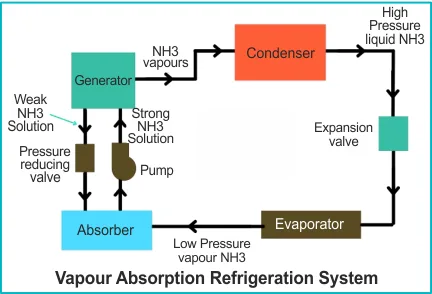
HVAC Vapor Absorption Systems are an alternative cooling technology that uses heat instead of electricity to drive the refrigeration cycle, making them ideal for applications where waste heat or solar energy is available. Unlike traditional vapor compression systems that rely on mechanical compressors, absorption systems use a refrigerant-absorbent pair—commonly water and lithium bromide or ammonia and water—to produce cooling through a chemical process. These systems are quieter, have fewer moving parts, and can be more energy-efficient in the right conditions. Vapor absorption systems are widely used in industrial settings, hospitals, and large commercial buildings where heat sources are readily available, contributing to reduced electricity consumption and improved sustainability. Understanding their fundamentals and real-world applications is essential for HVAC professionals working in energy-conscious or off-grid environments.

Course suitable for

Key topics covered

  • Refrigeration Cycle Introduction

  • Parts of Refrigeration Cycle

  • Evaporator

  • absorber

  • Generator

  • Condenser

  • Expansion Valve

  • How Does Refrigeration Cycle Works?

  • Example of Refrigeration Cycle in VAM


Opportunities that await you!

Career opportunities

Training details

This is a live course that has a scheduled start date.

COMPLETED

Coming in Next Month

Questions and Answers