<link href="https://fonts.googleapis.com/css2?family=Caveat:wght@500;700&family=JetBrains+Mono:wght@400;500;600&display=swap" rel="stylesheet" /> Skip to main contentEngineering Courses, Mentoring & Jobs | EveryEng
Hydrogen Energy: Transportaion and Safety banner

Hydrogen Energy: Transportaion and Safety

Hydrogen Energy: Transportaion and Safety banner
Self-paced Advanced

Hydrogen Energy: Transportaion and Safety

4(12)
2 enrolled
394 views
FREE
412 min
Anytime
English
394 views

Team ChemEE
Team ChemEEConsultant
  • Lifetime access
  • Certificate of completion
  • Anytime Learning
  • Learn from Industry Expert
Volume pricing for groups of 5+

Is this course for you?

You should take this if

  • You work in Pharmaceutical & Healthcare or Energy & Utilities
  • You're a Chemical & Process / Petroleum Technology professional
  • You have 3+ years of hands-on experience in this field
  • You prefer self-paced learning you can revisit

You should skip if

  • You're new to this field with no prior experience
  • You need a different specialisation outside Chemical & Process
  • You need live interaction with an instructor

Course details

This course comprises everything all about Hydrogen Transportaion and safety.

Source: NPTEL, IIT Bombay

Prof. Pratibha Sharma

Prof. Sandeep Kumar

Prof: Saurabh Tiwari

Course suitable for

Key topics covered

Hydrogen Transportation:

  • Hydrogen Transportation via H2 Pipelines

  • Other Options for Long Distance Hydrogen Transmission

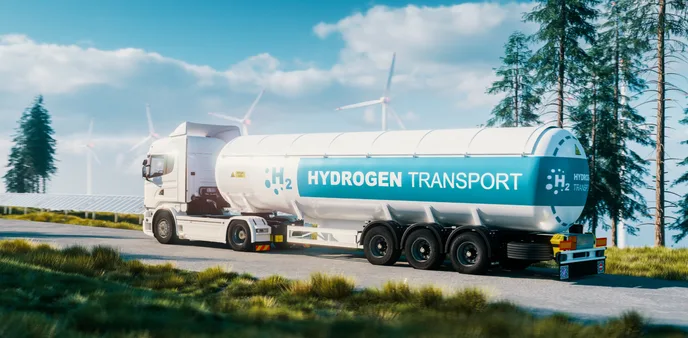
  • Hydrogen Transport via Road

  • Hydrogen Refuelling Stations

  • Use of Hydrogen in Internal Combustion Engines Part -1

  • Use of Hydrogen in Internal Combustion Engines Part -2

  • Hydrogen Sensing Part-1

  • Use of Hydrogen in Fuel Cells

  • Hydrogen Sensing Part-2

  • Properties of Hydrogen Associated with Accidents

  • Classification of Hydrogen related Hazards

  • Compressed and Liquid Hydrogen Related Hazards

  • Regulations, Codes and Standards

  • Utilization in Different Sectors, Global Status and Future Directions

Course content

The course is readily available, allowing learners to start and complete it at their own pace.

14 lectures6 hr 52 min

Opportunities that await you!

Career opportunities

FREE

Access anytime

Questions and Answers

A: That's the most common mistake — treating pressure decay as a flow regime problem instead of a mass balance. The difference matters because the DCS alarm is driven by inventory loss, not nozzle physics. Start with PV=nRT on the bundle, 40 m3 × 5 bar gives about 200 bar·m3 lost. Convert to Nm3, then to kg using 2 kg per 22.4 Nm3. Spread that mass over 10 minutes and you land in the low single‑digit kg/hr range. Sonic flow assumptions explain how it leaks, not how much inventory disappeared.

A: That's the most common mistake — importing natural gas logic and missing hydrogen jet behavior. The difference matters because hydrogen flames are nearly invisible and much longer for the same mass flow, so radiant heat to adjacent steel governs spacing. ISO 19880‑1 leans on flame length and heat flux to prevent escalation, even outdoors, which is why ‘open air’ doesn’t buy you relief.

A: That's the most common mistake — trusting the symbol count instead of reconciling arrows across documents. The difference matters because a reversed flow arrow on the P&ID versus the GA means the check valve was installed to block the wrong direction, and no amount of seat material debate fixes that. Reverse flow alarms follow drawings, not intent.

A: That's the most common mistake — jumping straight to a bump test without proving the signal path. The difference matters because hydrogen detectors often share power and commons that fail quietly. Proving power, range, signal, and logic in order avoids discovering a dead loop when live gas is already in the system.