Search icon
Search icon

Technical Courses

Soft-Skills Trainings

Seminar & Conferences

Articles & Blogs

Jobs / Hiring

Internship Options

Project Based Freelancing

Communities & Consultation

Product image

LPG Basics-- Specialised course for Refreshers and Freshers in LPG industry -- Storage systems for LPG and relevant rules Module 3 of 8

Ashok Khopkar

Ashok Khopkar

Consultant

$ 20

Product image

LPG Basics-- Specialised course for Refreshers and Freshers in LPG industry -- Storage systems for LPG and relevant rules Module 3 of 8

  • Trainers feedback

    0

    (0 reviews)

    Ashok Khopkar

    Ashok Khopkar

    Consultant

  • Course type

    Instructor led live training

  • Course duration

    2 Hrs

  • Course start date & time

    Coming in Next Month

  • Language

    English

Why enroll

Opportunities that awaits you!

Certificate thumbnail

Earn a course completion certificate

Add this credential to your LinkedIn profile, resume, or CV. Share it on social media and in your performance review

Career opportunities

Course details

Objective: To explain the Essential equipment required for storing LPG for bulk consumption at user's premises, and relevant rules in India

Description of subject

Industries using LPG as fuel for their manufacturing activities, need to store LPG in bulk, like 10 ton and more, to hundreds of tons. Being of hazardous nature (highly inflammable), extreme care is taken from design stage to daily consumption, operation, maintenance etc. To ensure safety, PESO has formulated rules --- SMPV Rules -- covering various aspects of storage and handling.

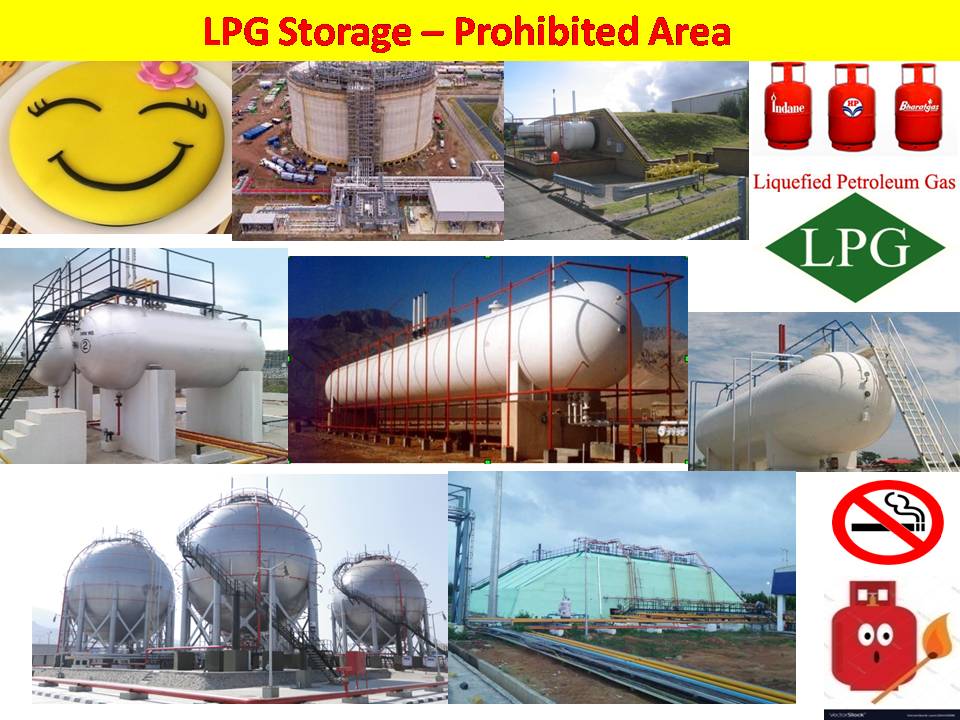
This course focuses on what are minimum essential parts of the storage plant and what are the relevant rules. There are variety of storage vessels /tanks, from which LPG is taken for consumption. So there is piping, valves, pressure regulators, pumps,  compressors, vapourisers, leak detectors, fire fighting equipment and so on. There is an arrangement for refilling these tanks. This course explains in general the system and the flow diagram. Each part of the system is covered under some code and is critical to safety of the plant and the operation.

Everybody working in LPG engineering field, must have basic knowledge of storage system, whether he/ she is working nearby it or far away from it. This course is designed keeping that as the theme.


With basic knowledge of storage system, the person will expand his scope for getting opportunity to work on design of such facilities, erection, commissioning and operation of such facilities where substantial number of manpower is required. The jobs are very satisfying and remunerative.

This course will be like a first step towards that.


You can join remaining modules at discounted price, by making one time payment. Contact EveryEng for details. Topics of remaining modules are listed here for information. Mod. 4. Safety of storage installation and relevant rules.   5. Safety fittings.   6. Transportation of LPG by road and relevant rules.   7.  LPG transfer systems and relevant equipment.   8. Hazards associated with LPG and care taken at different stages

Course suitable for

  • Oil & Gas
  • Energy & Utilities
  • Mechanical
  • Petroleum

Key topics covered

Training details

This is a live course that has a scheduled start date.

Live session

Why people choose EveryEng

Industry-aligned courses, expert training, hands-on learning, recognized certifications, and job opportunities—all in a flexible and supportive environment.

$ 20

- $ 0 Early bird discount

Coming in Next Month

Questions and Answers

Q: Why is grounding and bonding important in LPG storage systems?

A: Grounding and bonding are critical in LPG storage systems to prevent static electricity from accumulating and causing sparks, which could ignite the flammable LPG vapors. Grounding connects the storage equipment to the earth to dissipate static charges safely, while bonding ensures that all conductive parts are electrically connected to eliminate potential differences. Proper implementation reduces the risk of fire or explosion. Relevant guidelines can be found in NFPA 58 and IEC standards (https://www.iec.ch/).