






















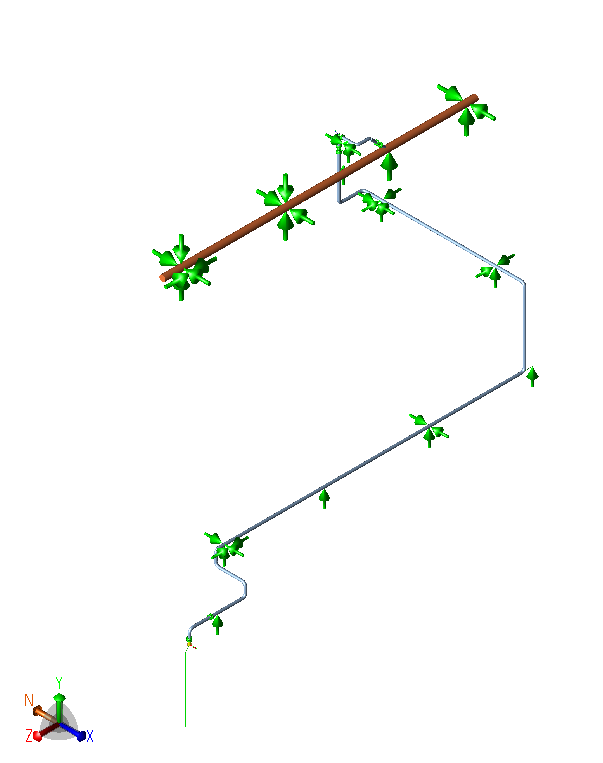























Pressure Relief Valve Piping (PSV Piping) Stress Analysis using Caesar II
Anup Kumar Dey
Owner of https://whatispiping.com/
$ 25
6 already enrolled!
Beginner course for learners
Foundational Learning
Access to Study Materials
Self-Paced Learning
Pressure Relief Valve Piping (PSV Piping) Stress Analysis using Caesar II
Trainers feedback
4
(384 reviews)
Anup Kumar Dey
Owner of https://whatispiping.com/
Course type
Watch to learn anytime
Course duration
78 Min
Course start date & time
Access anytime
Language
English
This course format through pre-recorded video. You can buy and watch it to learn at any time.
Why enroll
Joining the PSV (Pressure Safety Valve)/PRV piping stress analysis course is essential for engineers and professionals involved in the design and maintenance of piping systems, especially in industries like oil and gas, chemical processing, and power generation. This specialized course equips participants with the knowledge and skills to accurately assess and mitigate the stresses and forces acting on piping systems due to PSV operations. By mastering these techniques, professionals can ensure the integrity and safety of critical infrastructure, prevent costly failures, and comply with industry standards and regulations. Furthermore, the course enhances one's expertise in a niche field, increasing career opportunities and the potential for advancement in the engineering sector.
Course content
The course is readily available, allowing learners to start and complete it at their own pace.
Online Course on Pressure Relief Valve Piping Stress Analysis using Caesar II
7 Lectures
78 min
Introduction to PSV piping system stress analysis
15 min
Reaction force calculation
7 min
Applying reaction force in the software
7 min
Practical Case Study
32 min
Analysis Best Practices
7 min
Bonus Lecture: How does a Pressure Relief Valve Work
6 min
Bonus: What is the Difference between Pressure Safety Valve-PSV and Pressure Relief Valve-PRV (PSV Vs. PRV)
4 min
Course details
Course suitable for
Oil & Gas Pharmaceutical & Healthcare Energy & Utilities Chemical & Process Mechanical Piping & Layout
Key topics covered
Brief about Pressure Safety Valve Systems
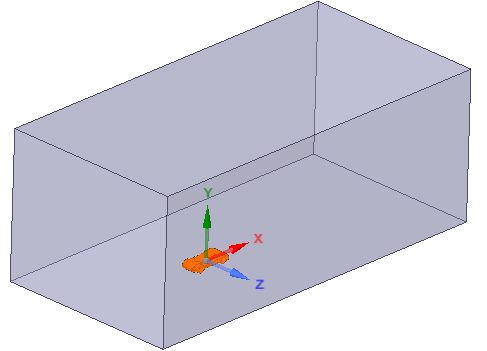
PSV Reaction Force Calculation
Application of PRV Reaction Force in Stress System
Case Study of Stress Analysis of PSV System using Caesar II Software
Best Practices for PSV Piping Stress Analysis
At the same time, the course will be suitable for
Piping Stress Engineers
Piping Engineers
Piping Leads
Piping Stress Analysis Reviewer
Our Alumni Work At
Why people choose EveryEng
Industry-aligned courses, expert training, hands-on learning, recognized certifications, and job opportunities—all in a flexible and supportive environment.
- Industry Veteran
- Trainer Review

SaiDeepa
I’m amazed by the depth of knowledge available on EveryEng. The platform covers various engineering topics in detail, making learning both exciting and rewarding. I would highly recommend it to everyone!

Kranthi Bolineni
COO
Hydrabad, India

Lummus
I love how EveryEng makes complex engineering concepts easy to understand. The platform offers valuable insights, great mentors, and a supportive community. It's truly a one-stop solution for engineers worldwide.

Siddharth Mishra
Project Manager
Frankfrut, Germany

Heelium
EveryEng is my go-to platform for engineering education. The courses are easy to follow, and the instructors are very knowledgeable. The platform has helped my team gain confidence and expertise in our field.

Siddharth Jain
Co-Founder
Pune, India

SaiDeepa
EveryEng has completely transformed the learning experience. The platform is easy to navigate, offers high-quality content, and provides great support. I highly recommend it to anyone looking to upskill in engineering.

Sunil Nukatti
CEO
Hydrabad, India

ADNOC
EveryEng is an amazing platform for engineers looking to upgrade their skills. The detailed lessons, practical approach, and expert guidance make learning enjoyable and effective. I highly recommend it!

Mihir Upadhyay
Sr Contract Engineer
Abu Dhabi, UAE
Anup Kumar Dey
Owner of https://whatispiping.com/
Questions and Answers
A: A is where the API 521 approach actually lands once you use relieving density and sonic velocity at the outlet — it feels high, but that's typical for DN150 at these conditions. B is tempting because engineers reach for operating cases, but momentum thrust is a relieving phenomenon; using normal density undercuts the force badly. C sounds conservative, and some clients do apply load factors, but they belong in the Caesar load case definition, not baked into the physics. D treats thrust like a pressure end cap load, which ignores velocity entirely and misses why elbows see such violent loads during relief.
A: A aligns with ASME B31.3 intent for occasional loads like PSV thrust, recognising rarity and short duration. B sounds safe, but it erases the code distinction between sustained and occasional cases and usually forces unnecessary steel. C mixes thermal expansion logic into a momentum-driven event; the governing check is not displacement-controlled. D is a trap from mechanical design thinking — piping codes never allow you to run up to yield just because the event is brief.
A: A fits the temperature and chemistry — sulfidation rates climb fast above 260 °C and thinning shows up as scale. B is a classic sour-service worry, but SSC needs liquid water and usually lower temperatures. C explains corrosion in cool, wet systems; at 350 °C you don't have stable carbonic acid. D shows up in austenitic stainless steels, not carbon steel, and needs a different temperature window.
A: A ties the symptoms together: high Mach number gas, short events, and failures concentrated on small-bore attachments. B can break things, but you'd expect large supports or elbows to show distress too. C happens over long cycles and usually produces broader cracking patterns. D is always blamed first, yet good welds still crack when excitation frequencies line up with acoustic energy.
A: A goes straight at boundary conditions — if restraints don't behave as modelled, every stress result is suspect. B matters for overpressure protection, but it doesn't change thrust paths. C affects operability and corrosion, not thrust resolution. D is a finishing activity and tells you nothing about load paths during a lift.
A: A is the straight calculation and lands in the range that causes real support problems if ignored. B sneaks in the wrong material property — stainless expands more, not less, and the number doesn't line up anyway. C double counts temperature effect and ignores realistic coefficients. D reflects a common myth; short duration doesn't make expansion disappear when metal heats quickly.
A: A is the functional reason — spring forces balance incorrectly when backpressure rises, and the valve can't behave predictably. B mixes thermal concerns into a pressure control issue. C is a piping consequence, not why API sets the rule. D can happen, but it's not what drives PSV stability criteria.
A: A is a classic trap — over-constraining the valve forces thrust to dump into the first spool, leading to plastic strain there. B affects sag and sustained stress, not a one-off thrust event. C shifts the problem downstream but doesn't explain flange-level distortion. D changes pass/fail reporting, not physical load paths.
A: A closes the loop between analysis and steel — wrong cold settings shift loads and kill the expansion case. B is a relief sizing issue, not a piping response check. C proves pressure integrity but tells you nothing about movement. D sits at the far end of the system and doesn't influence local stress.
A: A matches code intent and relief philosophy — occasional loads follow credible events, not mathematical worst cases. B feels safe but creates non-physical stresses that no real scenario produces. C ignores the dominant driver for relief piping failures. D misclassifies a short-duration momentum event and distorts allowables.
More from Same Author
- Technical Courses
- Articles
4 (384)
3595
38
E-Learning
Unlimited access
Advanced
E-Learning
Unlimited access
Pre-recorded videos
4 (384)
14991
12
E-Learning
Unlimited access
Beginner
E-Learning
Unlimited access
Pre-recorded videos
4 (384)
6961
12
E-Learning
Unlimited access
Beginner
E-Learning
Unlimited access
Pre-recorded videos
Earning and Growth option in same Industry Domain
- Pre-recorded
- Online live session
- Offline
- Articles
4 (14)
2879
4
E-Learning
Unlimited access
Advanced
E-Learning
Unlimited access
Pre-recorded videos
4 (12)
337
4
E-Learning
Unlimited access
Intermediate
E-Learning
Unlimited access
Pre-recorded videos
4 (316)
5753
1
E-Learning
Unlimited access
Beginner
E-Learning
Unlimited access
Pre-recorded videos
More Training & Development option to expand your reach
- Technical courses
- Soft-skills courses
- Seminars
- Articles & Blogs
4 (16)
1941
6
Online
Live courses
December 31
160 Hrs
Advanced
Online
Live courses
Interacting with trainer
4
163
Online
Live courses
February 21
25 Hrs
Advanced
Online
Live courses
Interacting with trainer
4 (16)
792
Online
Live courses
February 21
30 Hrs
Advanced
Online
Live courses
Interacting with trainer