
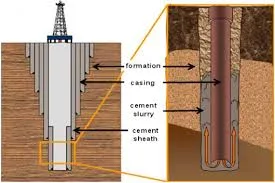
Cement Slurry Design Course
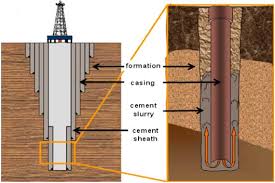
Cement Slurry Design Course

- 7-day money-back guarantee
- Session recordings included
- Certificate of completion
Why enroll
Is this course for you?
You should take this if
- You work in Oil & Gas
- You're a Petroleum professional
- You have 3+ years of hands-on experience in this field
- You prefer live, instructor-led training with Q&A
You should skip if
- You're new to this field with no prior experience
- You need a different specialisation outside Petroleum
- You need fully self-paced, on-demand content
Course details
Course suitable for
Key topics covered
Opportunities that await you!
Career opportunities
Training details
This is a live course that has a scheduled start date.
Our Alumni Work At
Why people choose EveryEng
Industry-aligned courses, expert training, hands-on learning, recognized certifications, and job opportunities-all in a flexible and supportive environment.
What learners say about this course

Coming into this course, I had some prior exposure to the subject through flow assurance work offshore, but this went deeper than the day‑to‑day hydrate avoidance we practice in oil & gas. The breakdown of hydrate formation mechanisms and the different hydrate structures helped connect the thermodynamics to what actually happens in subsea pipelines and wellbores. Coverage of drilling and cementing through hydrate-bearing sediments was especially relevant, since that’s still an edge case most projects try to avoid rather than engineer around. One challenge was the density of the phase behavior and stability zone discussions. Without field examples or real P–T plots from producing assets, it took effort to map the theory to practical decision-making. That said, the discussion on hydrate inhibitors versus operational controls lined up well with industry practice and highlighted where lab assumptions can fail at system level, particularly during shutdowns and restart scenarios. A practical takeaway was a clearer framework for early hydrate risk screening and inhibitor selection, rather than defaulting to over-injection. The section on CO₂ sequestration in hydrates also raised useful questions about long-term well integrity and monitoring. It definitely strengthened my technical clarity.

This course turned out to be more technical than I anticipated. The sections on drilling fluid rheology and wellbore stability went beyond surface-level definitions and actually tied properties like yield point and gel strength back to hole cleaning and ECD management. That helped fill a gap left from earlier field exposure where mud checks were routine but not always fully understood. One challenge was keeping up with the environmental and regulatory discussion, especially around disposal limits and fluid selection trade‑offs. That part moved fast and assumed some prior familiarity with compliance frameworks in oil and gas operations. Still, it was relevant, particularly for offshore or sensitive land rigs. What stood out was the practical framing around fluid selection and troubleshooting. The takeaway that stuck was how small changes in mud composition can directly impact shale inhibition and torque-and-drag trends. That insight was immediately applicable on a current well where cuttings recovery had been inconsistent, and it prompted a more informed discussion with the mud engineer. The course didn’t shy away from real constraints like cost, logistics, and monitoring limitations. Overall, it felt grounded in real engineering practice.

This course turned out to be more technical than I anticipated. The sections on drilling fluid rheology and wellbore stability went beyond slide-level theory and actually tied viscosity profiles, gel strengths, and ECD back to hole cleaning and fracture gradients, which is closer to how problems show up on a rig. Discussion around water‑based vs oil‑based mud systems reflected current oil and gas practices, including the tradeoffs around shale inhibition, disposal limits, and regulatory compliance. One challenge was keeping up with the breadth of topics in a short format. Jumping from mud composition to environmental impact, then into automation and monitoring, required some mental context switching. A few edge cases—like HPHT wells where standard rheology models break down or lost circulation scenarios where mud weight alone isn’t the fix—could have used deeper treatment, especially compared to how service companies handle these in the field. A practical takeaway was a clearer framework for troubleshooting mud-related wellbore instability by linking fluid properties to formation response instead of treating them in isolation. From a system-level view, the emphasis on fluid management decisions impacting drilling performance, NPT, and long-term well integrity was useful. I can see this being useful in long-term project work.

This course turned out to be more technical than I anticipated. The sections on drilling fluid rheology and wellbore stability went beyond surface definitions and actually connected lab properties to downhole behavior, including ECD sensitivity and shale inhibition edge cases. That part aligned well with how mud programs are adjusted in real oil and gas operations, especially compared to the overly simplified models often used during planning. One challenge was that some modules moved quickly through fluid loss control and environmental compliance, so keeping track of how regulatory limits translate into actual mud system choices took effort. In practice, those constraints often drive decisions more than ideal rheology targets, and that tension was evident here. The discussion on water-based versus oil-based mud tradeoffs was useful, particularly when tied to disposal and environmental impact considerations. A practical takeaway was a clearer method for diagnosing hole cleaning issues by linking cuttings return trends with rheological measurements rather than relying only on visual indicators. From a system-level view, the course did a decent job showing how drilling fluids interact with cementing and wellbore integrity later in the well lifecycle. The content felt aligned with practical engineering demands.