<link href="https://fonts.googleapis.com/css2?family=Caveat:wght@500;700&family=JetBrains+Mono:wght@400;500;600&family=Plus+Jakarta+Sans:wght@600;700;800&display=swap" rel="stylesheet" /> Skip to main contentEngineering Courses, Mentoring & Jobs | EveryEng
Control Valve Sizing banner
Preview this course

Control Valve Sizing

Control Valve Sizing banner
Preview this course
Self-paced Beginner

Control Valve Sizing

4(400)
7 enrolled
2031 views
₹ 99
53 min
Anytime
English
2031 views

Process Engineering World
  • 7-day money-back guarantee
  • Lifetime access
  • Certificate of completion
Volume pricing for groups of 5+

Why enroll

Mastering Control Valve Sizing can elevate your career in process engineering, instrumentation, and control systems. With expertise in sizing and selecting control valves, you can advance into senior roles such as Lead Process Engineer, Instrumentation Engineer, or Control Systems Specialist. This specialization can also lead to opportunities in consulting, design, and optimization of process control systems. Stay ahead of the curve and increase your earning potential by developing a deep understanding of control valve sizing principles and applications.

Is this course for you?

You should take this if

  • You work in Oil & Gas Upstream or Pharmaceutical & Healthcare
  • You're a Chemical & Process / Instrumentation Engineering professional
  • You prefer self-paced learning you can revisit

You should skip if

  • You need a different specialisation outside Chemical & Process
  • You need live interaction with an instructor

Course details

To provide participants with the knowledge and skills needed to accurately size control valves, ensuring efficient and reliable process control in various industrial applications.

Explore the principles and methodologies of control valve sizing, covering key concepts such as flow characteristics, pressure drop calculations, and selection criteria. Gain practical insights through real-world examples and case studies.

Course suitable for

Key topics covered

  1. Introduction to Control Valves

    • Overview of control valves and their importance in process control

    • Types of control valves and their applications

  2. Principles of Control Valve Sizing

    • Basic concepts and terminology

    • Flow characteristics and valve coefficients (Cv)

  3. Flow and Pressure Drop Calculations

    • Understanding flow equations and principles

    • Calculating pressure drop across control valves

    • Impact of fluid properties on sizing

  4. Valve Selection Criteria

    • Factors influencing valve selection (process conditions, fluid type, etc.)

    • Sizing control valves for different applications

    • Matching valve types to specific process requirements

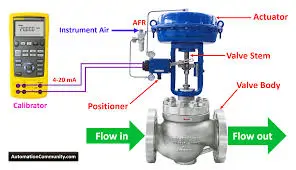
  5. Actuators and Positioners

    • Types of actuators and their selection

    • Role of positioners in control valve performance

    • Sizing actuators for control valves

  6. Noise and Cavitation

    • Causes and effects of noise and cavitation in control valves

    • Methods to predict and mitigate noise and cavitation

    • Designing for minimal noise and cavitation

  7. Control Valve Characteristics

    • Inherent vs. installed flow characteristics

    • Linear, equal percentage, and quick-opening characteristics

    • Selecting the appropriate valve characteristic for the application

  8. Dynamic Performance and Response

    • Understanding valve dynamics and response time

    • Evaluating and improving valve performance

    • Impact of control loop dynamics on valve sizing

  9. Material Selection and Compatibility

    • Material considerations for control valves

    • Ensuring compatibility with process fluids

    • Corrosion, erosion, and wear considerations

  10. Standards and Best Practices

    • Industry standards for control valve sizing (ISA, IEC, etc.)

    • Best practices for accurate and reliable valve sizing

    • Common pitfalls and how to avoid them

Course content

The course is readily available, allowing learners to start and complete it at their own pace.

3 lectures53 min
  1. What is control valve?
    14 min
  2. Basic Part of Control Sizing
    25 min
  3. Classification of Control Valve Sizing
    14 min

Opportunities that await you!

Career opportunities

₹99

Access anytime

Questions and Answers

A: The hard boundary is Pv + FL²(P1−Pv). With typical FL around 0.9, the recoverable ΔP collapses before P2 actually hits Pv. That threshold decides whether cavitation, not simple ΔP, governs valve capacity.

A: The key condition is loss of air with liquid inventory still above normal. Fail-open removes pump deadhead risk, but it doesn't cap liquid rate, so separator internals see transient carryover loads they weren't sized for.

A: The 2x Cv margin pushes normal operation into the first few percent of travel. That region distorts the installed characteristic and amplifies loop gain, so small signal changes create large flow swings.

A: Around 30 m/s with solids above 100 ppm is where erosion accelerates sharply. Hardfacing both mating surfaces and choking velocity through port reduction targets that threshold.